How to Read Anyone in 30 Seconds: Unlocking the Secret Language of Human Behavior
Understanding people quickly and accurately is a superpower in today’s world. Whether you’re closing a deal, meeting someone new, or trying to sense a friend’s unspoken feelings, reading body language and nonverbal cues helps you build deeper connections, make better decisions, and even avoid being misled. This isn’t about judging people—it’s about noticing what’s often left unsaid. Because the truth is, words may lie, but the body rarely does.

Let’s see how you can become a human lie detector—ethically, empathetically, and effectively.
First Impressions Happen Fast—And They Matter More Than You Think
We all know that first impressions matter. But most people don’t realize just how fast they happen. In a blink—literally. In a fascinating study conducted at Princeton University, researchers Janine Willis and Alexander Todorov found that people form judgments about someone’s trustworthiness, competence, likability, and aggressiveness in just 100 milliseconds—that’s one-tenth of a second. You barely have time to register a face before your brain starts deciding whether this person feels safe, confident, or threatening.
But why does this happen so quickly? It goes back to evolution. Our ancestors didn’t have the luxury of long conversations when they encountered a stranger in the wild. They had to figure out—friend or foe?—almost instantly. That survival instinct still lives inside us, quietly working behind the scenes of every interaction we have. Our brains are constantly scanning for clues: Is this person safe? Honest? Strong?
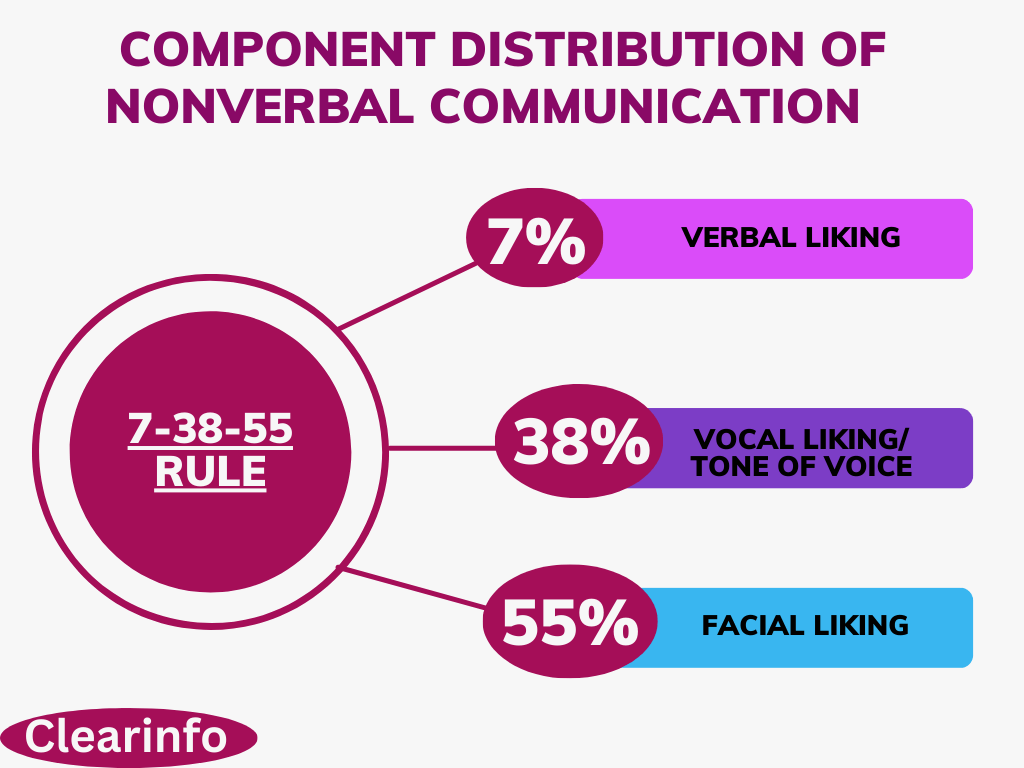
You’ve probably heard someone say, “Only 7% of communication is about the words. The rest is body language and tone.” It sounds dramatic, right? As if the words we speak barely matter. This widely shared idea is known as the “7-38-55 Rule,” and it’s often pulled out in books, seminars, and motivational talks. But here’s the thing—most people get it wrong. The origin of this rule goes back to Dr. Albert Mehrabian, a psychology professor at UCLA in the 1960s. He was studying how people interpret feelings and attitudes, especially when words and body language don’t match—what we call incongruent communication.
Let’s say someone says, “I’m fine,” but they have a sad expression and a flat voice. What do you believe more—the words or how they said it? Mehrabian did experiments around this and found that when someone’s verbal message doesn’t match their tone or body language, people tend to believe the nonverbal cues more. He came up with an approximate breakdown:
- 7% of the message is conveyed through words
- 38% comes from the tone of voice
- 55% is communicated through facial expressions and body language
So yes—in emotional, ambiguous situations, people rely far more on how something is said than on what is said. If I tell you “I’m happy for you” while scowling or sounding sarcastic, you’ll trust my face and voice—not my words.
In everyday life, we experience this all the time. Imagine two people walk into a room. One has relaxed shoulders, steady eye contact, a warm smile, and walks with confidence. The other avoids eye contact, slouches slightly, and gives a weak handshake. Even if both say, “Nice to meet you,” we’re more likely to feel drawn to the first person. Not because of what they said—but how they showed up.
That’s the magic of nonverbal cues—they speak directly to the emotional brain. As bestselling author Joe Navarro explains in his book ‘What Every BODY Is Saying’, “The limbic brain doesn’t think in words—it thinks in images, in sensations, in feelings. So it reacts to what it sees, not what it hears.” Navarro, a former FBI counterintelligence agent and expert in nonverbal communication, emphasizes that our bodies often reveal the truth even when our words do not. He writes, “When people are under stress or feeling threatened, their bodies leak signals—often in the first few seconds of meeting—that betray their true state of mind.”
This is why first impressions aren’t shallow—they’re essential. They’re your brain’s way of protecting you, scanning for signals of emotional safety, sincerity, or potential danger. And these signals come fast and furious—eye contact, facial expressions, posture, even how someone positions their feet or angles their torso.
In his book ‘Blink’, Malcolm Gladwell explores this idea further. He calls it “thin-slicing”—our ability to make quick, accurate judgments with minimal information. According to Gladwell, “We live in a world that assumes that the quality of a decision is directly related to the time and effort that went into making it. But what we’ve found is that decisions made very quickly can be every bit as good as decisions made cautiously and deliberately.” He gives examples from speed dating, emergency rooms, and even art authentication—where experts can instinctively “feel” whether something is real or fake just by a quick glance.
But these snap judgments aren’t just gut feelings—they’re data-driven responses shaped by years of accumulated experience. Gladwell writes, “The power of knowing, in that first two seconds, is not a gift given magically to a fortunate few—it is an ability that we can all cultivate for ourselves.”
And that’s what makes all of this so empowering. You don’t need to be born with Sherlock Holmes-style intuition. You can train yourself to be more observant, more tuned in to nonverbal details, and more conscious of the cues you’re sending out.
Face, Eyes, and Microexpressions: The Real Truth-Tellers
The face is an open window to the human soul—but only if you know how to read it. Long before words come into play, our facial expressions reveal what’s going on deep inside us. And nobody understood this better than Dr. Paul Ekman, one of the world’s most respected psychologists and a pioneer in the study of nonverbal communication.
Ekman traveled the world studying how people express emotions across cultures. And what he found was extraordinary: no matter where you are on the planet—whether in bustling cities or remote tribal villages—people express emotions like happiness, sadness, fear, anger, surprise, and disgust in exactly the same way. Even people who had never been exposed to media or Western facial norms could recognize these emotional expressions in photographs. That tells us something powerful—these facial expressions are not learned. They’re wired into us.

But Ekman didn’t stop there. In his groundbreaking research, he discovered something even more fascinating—microexpressions. These are brief, involuntary facial movements that appear for just a fraction of a second—often as fast as 1/25th of a second—and they expose a person’s true emotions, even when they’re trying to hide them.
Think of it like this: someone says, “I’m happy for you,” and they smile. But just before that smile forms, you notice a tiny flash of something—disgust? Anger? Contempt? You might not even consciously register it, but your gut picks it up. You feel something’s off. That’s the power of microexpressions—they leak the truth before the mask is fully in place.
In his book ‘Emotions Revealed’, Ekman writes, “Emotions change the way we see the world. And those who understand emotion better, understand people better.” He goes on to explain that while people can control their words and even many of their gestures, their facial muscles—especially the ones involved in genuine emotion—are much harder to fake or suppress. For example, a genuine smile—the kind that shows true happiness—involves not just the mouth but also the muscles around the eyes. A fake smile? The eyes stay neutral. Once you learn to spot this, you’ll start noticing it everywhere.
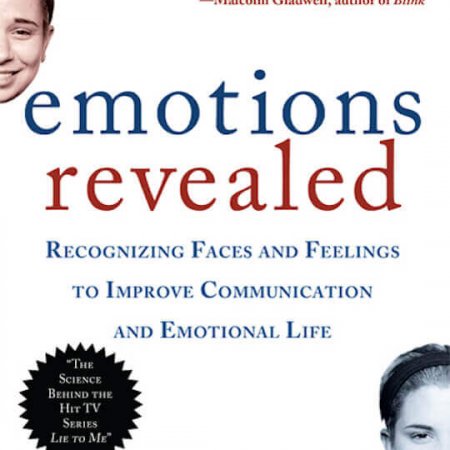
These subtle signals are all around us. Picture this: you’re talking to a friend who says, “I’m fine.” But for a brief moment, her eyebrows pinch together, or her lower lip tightens—both signs of distress. You ask again, and this time she opens up. That one microexpression cracked the surface and allowed a real, honest connection to happen.
It’s important to understand that spotting microexpressions isn’t about catching people in lies. It’s about seeing the truth behind their words, especially when they’re feeling something they’re not ready or able to say out loud. It helps you respond with empathy, not judgment.
But detecting microexpressions takes practice. They’re lightning-fast and easy to miss. Ekman even developed training tools—like the Microexpression Training Tool (METT)—to help people sharpen their observation skills. With time, you can train your brain to pick up on these subtle cues without even thinking about it. You don’t need to stare or analyze like a robot. In fact, the more relaxed and present you are, the more you’ll feel the truth behind the face you’re looking at.
And let’s not forget the eyes. Often called the “windows to the soul,” they play a huge role in expressing emotion. Eye contact, blinking patterns, pupil dilation, and gaze direction all offer subtle hints about what someone is thinking or feeling. If someone avoids your gaze, their discomfort might speak louder than their words. If their eyes light up while talking about something they love, their excitement is unmistakable—even if they say very little.
Learning to read microexpressions and facial cues is like learning a new language—the language of real human emotion. It’s powerful, yes—but it’s also deeply humane. Because it’s not about control or manipulation. It’s about connection. It’s about seeing people more clearly, understanding them more deeply, and responding more wisely.
And in a world full of noise, distraction, and surface-level communication, that’s a rare and beautiful skill.
Posture, Gestures, and the Power of Presence
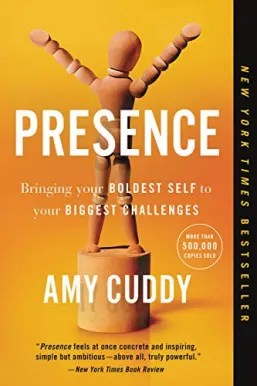
Your posture speaks volumes before you say a word. Social psychologist Amy Cuddy, in her viral TED Talk, shared how “power posing” (standing tall with open gestures) can boost confidence—not just in how others see you, but in how you feel about yourself. While later studies questioned the hormonal changes involved, the psychological effects are clear: your posture shapes your mindset.
Body language expert Joe Navarro says it best: “The feet are the most honest part of the body.” If someone’s feet are pointed away from you—towards a door, for example—it often means they want to leave, no matter what they’re saying. We control our faces, but our feet? Not so much.
And gestures? They amplify communication. Open palm gestures convey honesty. A “hand over heart” gesture can instantly boost trust. A 2011 study in Social Psychological and Personality Science showed people who made this gesture were perceived as more sincere—and were even more likely to admit the truth.
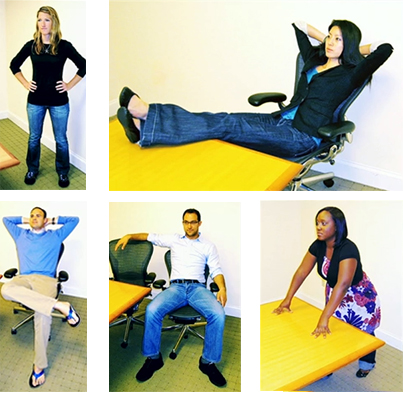
Watch a great public speaker. They use open hands, expressive gestures, and balanced posture. Their body matches their words—and that’s why we believe them.
Eye Contact, Mirroring, and the Magic of Human Connection
Ever notice how you naturally lean in when someone’s really listening? That’s the mirroring effect at work—an unconscious mimicry of another person’s behavior that signals comfort and trust. It’s backed by neuroscience: mirror neurons in our brains activate when we watch someone else move, helping us empathize and connect.
A famous study in the Journal of Personality and Social Psychology found that people who subtly mirror others are perceived more positively. In dating, business, even friendships—mirroring helps build a fast rapport.
The 30-Second People Decoder Toolkit
So, can you really read someone in 30 seconds? Yes—when you know what to look for. Here’s your quick checklist:
- Eyes: Are they engaged, evasive, or darting?
- Mouth: Is that smile reaching the eyes? Are lips tight or relaxed?
- Posture: Upright and open = confidence. Closed or slouched = discomfort.
- Hands: Open = trust. Hidden = hesitation.
- Feet: Pointed at you = interest. Pointed elsewhere = exit strategy.
- Tone: Confident and warm? Or flat and forced?
- Mirroring: Are they in sync with you?
Combine these cues like puzzle pieces. One signal might not mean much, but together, they form a clear picture.
So next time you meet someone, don’t just hear their words—watch their eyes, posture, gestures, and tone. In just 30 seconds, you’ll start to see the world differently. Sharper. Clearer. Truer.
Because once you learn to read people, you don’t just get better at communication—you get better at life.
____________________________________________
Dr Mukesh Jain is a Gold Medallist engineer in Electronics and Telecommunication Engineering from MANIT Bhopal. He obtained his MBA from the Indian Institute of Management Ahmedabad. He obtained his Master of Public Administration from the Kennedy School of Government, Harvard University along with Edward Mason Fellowship. He had the unique distinction of receiving three distinguished awards at Harvard University: The Mason Fellow award and The Lucius N. Littauer Fellow award for exemplary academic achievement, public service & potential for future leadership. He was also awarded The Raymond & Josephine Vernon award for academic distinction & significant contribution to Mason Fellowship Program. Mukesh Jain received his PhD in Strategic Management from IIT Delhi.

Mukesh Jain joined the Indian Police Service in 1989, Madhya Pradesh cadre. As an IPS officer, he held many challenging assignments including the Superintendent of Police, Raisen and Mandsaur Districts, and Inspector General of Police, Criminal Investigation Department and Additional DGP Cybercrime, Transport Commissioner Madhya Pradesh and Special DG Police.

Dr. Mukesh Jain has authored many books on Public Policy and Positive Psychology. His book, ‘Excellence in Government, is a recommended reading for many public policy courses. His book- “A Happier You: Strategies to achieve peak joy in work and life using science of Happiness”, received book of the year award in 2022. After this, two more books, first, A ‘Masterclass in the Science of Happiness’ and the other, ‘Seeds of Happiness’, have also been received very well. His book, ‘Policing in the Age of Artificial Intelligence and Metaverse’ has received an extraordinary reception from the police officers. He is a visiting faculty to many business schools and reputed training institutes. He is an expert trainer of “Lateral Thinking”, and “The Science of happiness” and has conducted more than 300 workshops on these subjects.

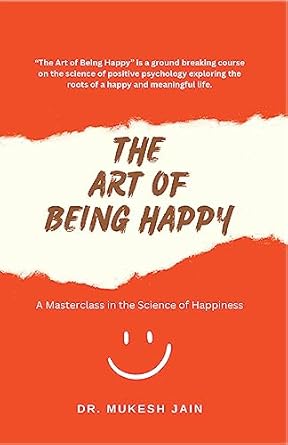

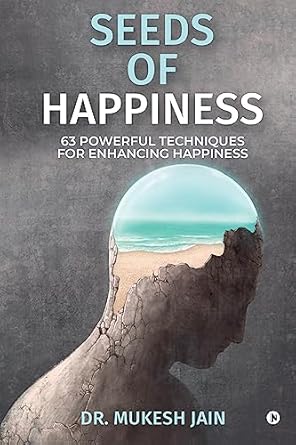

 School Of Happiness by Mukesh Jain
Leave a reply to kerschnerbearett Cancel reply