
Have you ever met someone who seemed so sure of themselves—like absolutely, 100% confident about what they were saying—but the more they talked, the more you realized they didn’t really know what they were talking about? Maybe it was at work. Maybe it was during a family dinner. Or maybe it was on social media, where confident opinions often travel faster than facts.
What makes this even more interesting is that someone else in the same room—someone with real knowledge or experience—might stay quiet, hesitate to speak, or use words like “I think” or “I could be wrong.” Why does this happen? Why are the loudest people not always the most informed? And why do people who actually know their stuff often second-guess themselves?
There’s a name for this strange phenomenon, and once you learn it, you’ll start spotting it everywhere. It’s called the Dunning-Kruger Effect—and it might just change the way you think about confidence, competence, and even your own personal growth.

What Is the Dunning-Kruger Effect?
The Dunning-Kruger Effect is a psychological concept that explains why people with limited knowledge or skill in a certain area tend to overestimate their ability. On the flip side, people who are truly skilled often underestimate themselves. This is because the more you know, the more you realize how much you still don’t know.
One of the psychologists behind the concept, David Dunning, once said, “The problem with ignorance is that it feels just like expertise.”
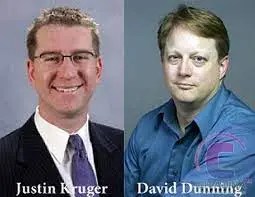
In other words, when we don’t know enough, we don’t even realize what we’re missing. That’s why someone who’s just learned a few things about fitness might start giving out advice to everyone at the gym. Meanwhile, a certified trainer with years of experience might still say, “It depends on your body type and goals.”
It’s not arrogance. It’s just how our minds work.
Real-Life Examples
Imagine two people trying to learn to cook. One watches three YouTube videos and suddenly believes they’re the next MasterChef. They start giving tips, criticizing restaurants, and even correcting others. The second person has been cooking for years, experimenting, learning, and failing along the way. But when someone compliments their cooking, they say, “Thanks, but I still have so much to learn.” That’s the Dunning-Kruger Effect in full force.

Or think about driving. Studies show that over 70% of drivers rate themselves as “above average.” That can’t be true, right? But people often equate “I haven’t had an accident yet” with “I’m a great driver.” A beginner might feel very confident because they haven’t faced a tricky situation yet. An experienced driver, however, knows how many variables are at play on the road—so they drive more carefully and talk about driving with more caution, not confidence.
The same happens with public speaking. Someone who has just given one decent speech may start teaching others how to speak in public. Meanwhile, someone who’s been doing it for years still gets nervous, prepares for hours, and constantly looks for ways to improve.
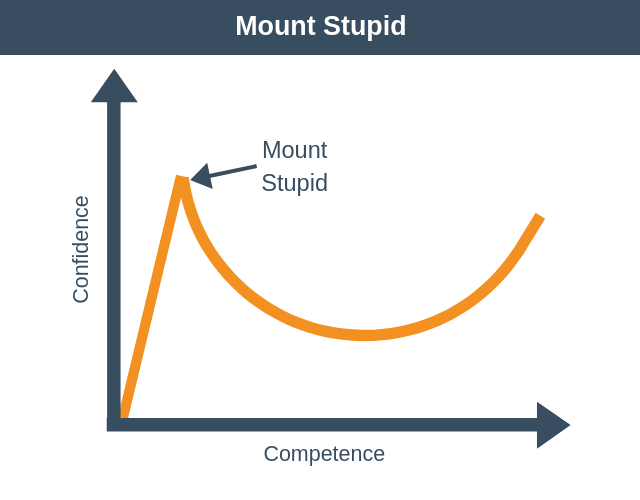
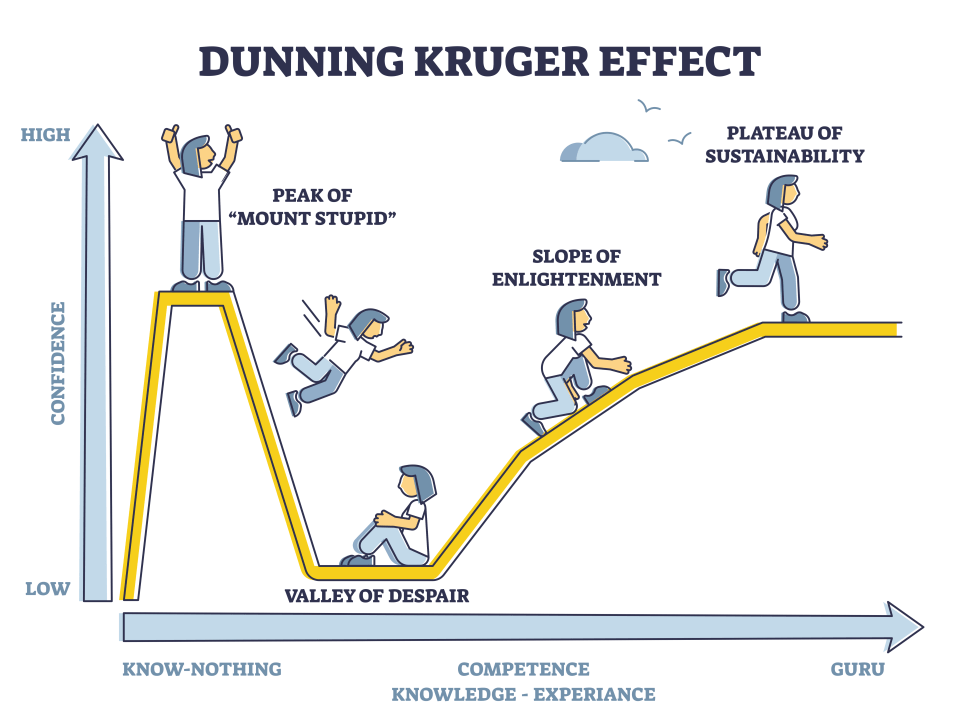
There was this young guy who was moving up the ladder pretty fast. He landed a leadership role early in his career and from the outside, he looked like he had it all together—full of energy, lots of ideas, super confident, and ready to take charge. And honestly, he truly believed he had it all figured out. But under all that enthusiasm, he was missing something big: experience. He didn’t realize it at the time, but he rarely asked for help, didn’t listen enough, and thought that being decisive automatically made him a great leader. The truth? Most of his confidence wasn’t coming from deep understanding—it came from simply not knowing what he didn’t know. It wasn’t until things started going wrong and he got some honest, eye-opening feedback that it finally clicked: leadership is way more complicated than just sounding confident. That was the moment he started coming down from what psychologists jokingly call the “Peak of Mt. Stupid”—that awkward phase where you feel super sure of yourself, but your actual skills haven’t quite caught up yet.
Why Do Smart People Doubt Themselves?
Now, let’s look at the other side of the coin. If people who don’t know much are often overconfident, why do people who actually know a lot often hesitate?
It’s because the more you learn, the more you become aware of the complexity involved. You start seeing the gray areas. You begin to understand that every question doesn’t have just one right answer. That awareness naturally makes you cautious.
Let’s say you’re great at graphic design. It comes easily to you, and you’ve worked hard to develop your skills. But because it feels easy now, you assume it must be easy for others too. So, when someone compliments your work, you shrug and say, “It’s nothing special.” That’s you undervaluing your competence. It’s also part of the Dunning-Kruger curve.
Similarly, a teacher who can explain tough topics in a simple way might not realize how rare that skill is. Or a doctor who stays up-to-date with the latest research might still hesitate before offering a firm opinion—because they know how quickly knowledge evolves.
How This Affects Our Daily Lives and Careers
This gap between confidence and competence can have real consequences. In offices, confident people often get noticed first. They speak up in meetings, volunteer for projects, and make their presence felt—even if their ideas are not always the best. Meanwhile, the more skilled team members might stay quiet, waiting to be absolutely sure before sharing. Over time, the loud ones rise, and the capable ones stay in the background.
It also shows up in relationships. Have you ever had a friend who gave very strong parenting advice without actually having raised a child? Or someone who gave bold financial tips after watching a few videos online? That’s the Dunning-Kruger Effect again.
Even in personal growth, we can fall into this trap. Sometimes we think we’re really good at something because no one has challenged us. Other times, we feel like we’re not good enough—even when we’re actually ahead of most people in the same field.
So, How Do We Avoid This Trap?
First, get comfortable saying, “I don’t know.” It’s one of the most powerful phrases you can use. It shows you’re open to learning, not pretending to know everything. And in the long run, it earns you far more respect than faking it.
Second, seek feedback regularly—not just compliments, but honest input. Ask trusted colleagues, mentors, or friends, “What’s one thing I could improve?” Their insights will help you see yourself more clearly.
Third, surround yourself with people who challenge you. If everyone around you always agrees with you, you might be stuck in an echo chamber. Growth happens when someone points out a blind spot you didn’t know you had.
And fourth, remind yourself that learning is a lifelong process. Even if you’ve been doing something for 10 years, there’s always more to learn. The most respected people in any field are often the most curious.
The Real Power of Humility and Self-Awareness
Here’s the beautiful twist: self-doubt isn’t always a weakness. It’s often a sign that you’re growing. It means you care. It means you’re thinking. It means you’re aware that life is complex and you want to do better.
And confidence isn’t a bad thing either—when it’s grounded in awareness and learning. The goal is not to become quiet or unsure. The goal is to match your confidence with your competence.
If you’re someone who tends to doubt yourself, remember this: the fact that you’re asking questions and trying to grow is already a strength. Don’t let that doubt stop you from speaking up, sharing your work, or taking on new challenges.
And if you’re someone who’s been operating on confidence alone, maybe it’s time to pause and reflect: Am I really listening? Am I open to feedback? Am I still learning?
The next time you feel a wave of self-doubt, don’t silence it—listen to it. Let it be a reminder that you’re becoming more aware, more thoughtful, and more human. And the next time someone speaks with unshakable certainty, don’t automatically assume they’re right. Take a breath. Ask questions. Trust your own curiosity.
Because the people who change the world aren’t always the ones who talk the loudest. They’re often the ones who stay curious the longest.
So stay humble, stay open, and stay learning. That’s not a weakness—that’s wisdom in action.
__________________________________________________________
About the Author:
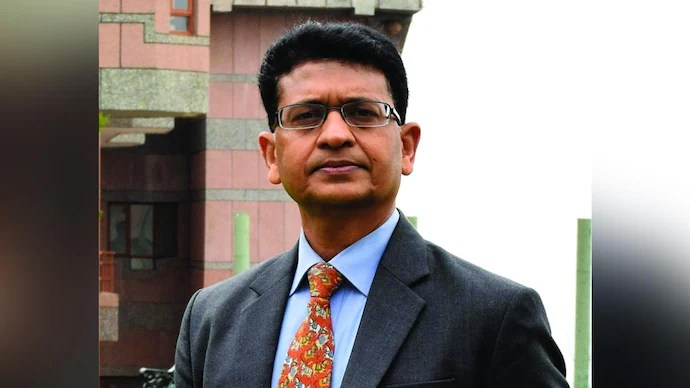
Dr Mukesh Jain is a Gold Medallist engineer in Electronics and Telecommunication Engineering from MANIT Bhopal. He obtained his MBA from the Indian Institute of Management Ahmedabad. He obtained his Master of Public Administration from the Kennedy School of Government, Harvard University along with Edward Mason Fellowship. He had the unique distinction of receiving three distinguished awards at Harvard University: The Mason Fellow award and The Lucius N. Littauer Fellow award for exemplary academic achievement, public service & potential for future leadership. He was also awarded The Raymond & Josephine Vernon award for academic distinction & significant contribution to Mason Fellowship Program. Mukesh Jain received his PhD in Strategic Management from IIT Delhi.
Mukesh Jain joined the Indian Police Service in 1989, Madhya Pradesh cadre. As an IPS officer, he held many challenging assignments including the Superintendent of Police, Raisen and Mandsaur Districts, and Inspector General of Police, Criminal Investigation Department and Additional DGP Cybercrime, Transport Commissioner Madhya Pradesh and Special DG Police.
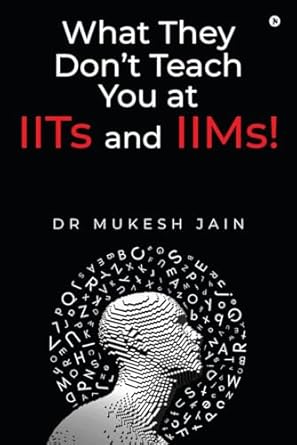
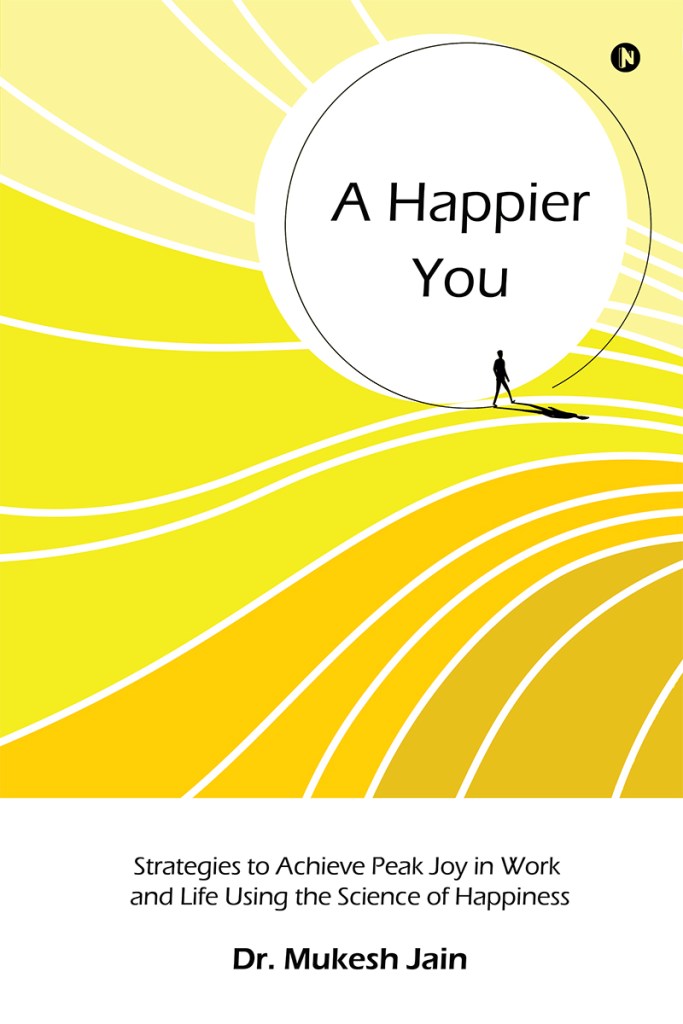
Dr. Mukesh Jain has authored many books on Public Policy and Positive Psychology. His book, ‘Excellence in Government, is a recommended reading for many public policy courses. His book- “A Happier You: Strategies to achieve peak joy in work and life using science of Happiness”, received book of the year award in 2022. After this, two more books, first, A ‘Masterclass in the Science of Happiness’ and the other, ‘Seeds of Happiness’, have also been received very well. His book, ‘Policing in the Age of Artificial Intelligence and Metaverse’ has received an extraordinary reception from the police officers. He is a visiting faculty to many business schools and reputed training institutes. He is an expert trainer of “Lateral Thinking”, and “The Science of happiness” and has conducted more than 300 workshops on these subjects.
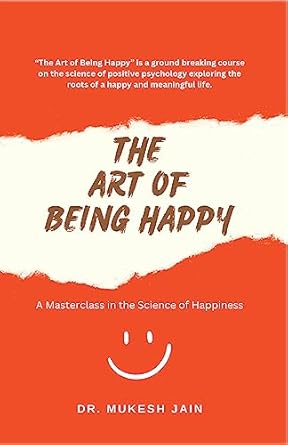


 School Of Happiness by Mukesh Jain
Leave a reply to Mukesh Jain Cancel reply