
Most people assume they will have plenty of time to fix the things they neglect. They believe they will chase their dreams “someday,” spend more time with loved ones “when things settle down,” and finally allow themselves to be happy “when the right moment comes.” But for those who reach the end of their lives, these delays turn into lifelong regrets.
Bronnie Ware, an Australian palliative care nurse, spent years tending to patients in their final days. She listened as they reflected on their lives, and she noticed the same regrets surfacing over and over again. These insights became the foundation of her book, The Top Five Regrets of the Dying, where she explores the most common things people wished they had done differently. What’s even more striking is that modern research confirms these regrets, showing that they are not just emotional reflections but deeply ingrained patterns in human behavior. Understanding these regrets now—while we still have time to change—could be the key to living a truly fulfilled life.
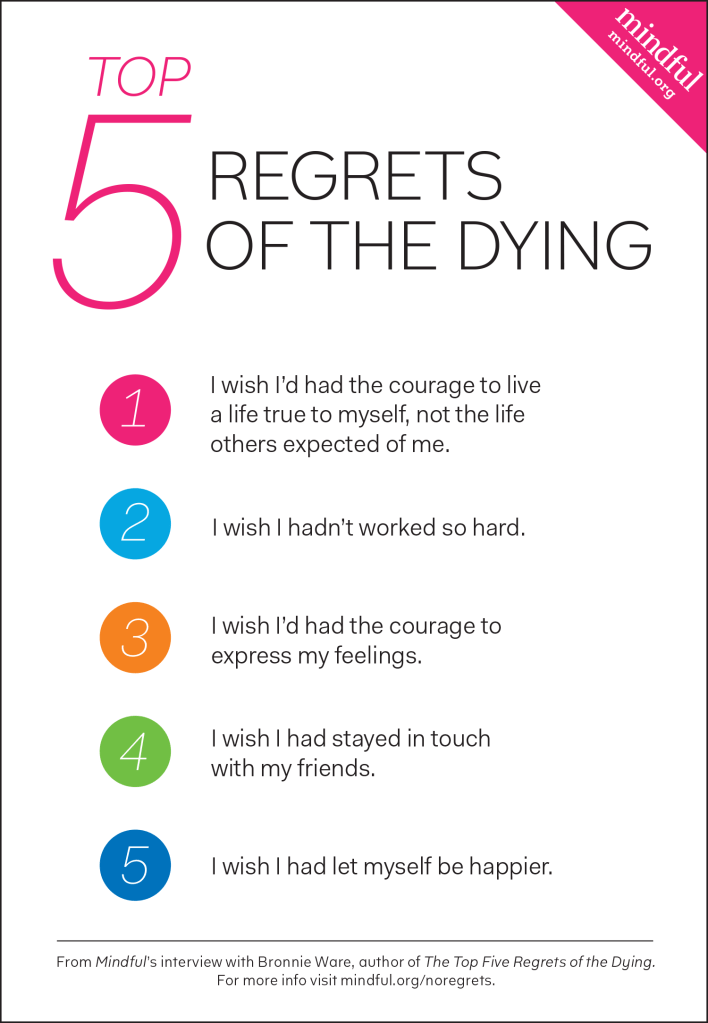
Regret #1: “I wish I had lived a life true to myself, not what others expected of me.”

This regret, the most common from Bronnie Ware’s The Top Five Regrets of the Dying, reveals how many people realize—too late—that they lived according to others’ expectations instead of following their own dreams. Fear of judgment, family pressures, or societal norms kept them from being their authentic selves. The deepest regret of all: living for others, following a path carved by society, family, or fear, instead of stepping into one’s own truth. People nearing death often realize they sacrificed their dreams for approval, security, or convention. They wished they had dared to be themselves.
Psychologists Shai Davidai and Thomas Gilovich found that people regret not becoming their “ideal selves” far more than failing to meet social expectations. Their research suggests that what haunts us most is not what we did wrong, but what we never dared to do. A study in the Journal of Cross-Cultural Psychology confirms that this struggle exists across cultures, as societal norms dictate which paths seem acceptable. A long-term study in the Journal of Personality and Social Psychology found that regrets about unpursued passions linger the longest, far more than career mistakes or failed relationships. Osho once said, “The greatest fear in the world is the opinion of others. And the moment you are unafraid of the crowd, you are no longer a sheep, you become a lion.” The lesson is clear: life is too short to be a shadow of someone else’s expectations. Be a lion. The message is clear: if you ignore your own dreams for too long, you may wake up one day realizing you’ve lived a life that was never truly yours. The time to change that is now.
Why Do People Struggle to Live Authentically?
- Fear of disappointing family, friends, or society
- Worry about rejection or criticism
- Prioritizing obligations over personal dreams
- Lack of confidence to pursue what truly makes them happy
How to Avoid This Regret:
- Listen to Your Inner Voice – What do you truly want, beyond what others expect?
- Let Go of the Need for Approval – Not everyone will understand your choices, and that’s okay.
- Take Small Steps Toward Your Dreams – Even if it’s little by little, start now.
- Surround Yourself with Supportive People – Those who love you will encourage your authenticity.
- Accept That You Can’t Please Everyone – Living for others leads to regret; living for yourself leads to fulfillment.
At the end of life, the biggest regrets aren’t about what others thought—they’re about what you didn’t do for yourself. Be true to who you are, starting today.
Regret #2: “I Wish I Hadn’t Worked So Hard”
This regret, from Bronnie Ware’s The Top Five Regrets of the Dying, is a common realization among those who spent too much of their lives focused on work—often at the cost of family time, personal passions, and meaningful experiences. In the twilight of life, many individuals, reflect with deep regret on the time sacrificed at the altar of work. The relentless pursuit of professional success—long hours at the office, chasing promotions, and the ceaseless climb up the corporate ladder—often comes at a profound personal cost. Relationships with family and friends wane, personal passions are neglected, and the moments that truly matter slip away, unnoticed and uncherished. Workaholism, characterized by an uncontrollable need to work incessantly, has been extensively studied for its detrimental effects on personal health and satisfaction. A comprehensive systematic review and meta-analysis published in the International Journal of Environmental Research and Public Health examined the prevalence of workaholism and its impact on well-being. The study found that workaholics are more susceptible to psychiatric symptoms, including depression and anxiety, compared to their non-workaholic counterparts. Moreover, these individuals often report lower life satisfaction and overall well-being, underscoring the heavy psychological toll of excessive work habits. Further research published in the Journal of Business and Management delves into the relationship between workaholism and authenticity. The study suggests that workaholics often experience a conflict between their professional obligations and personal values, leading to a diminished sense of authenticity. This internal discord contributes to decreased life satisfaction and well-being, as individuals feel they are not living in alignment with their true selves.
The repercussions of excessive work extend beyond the individual, seeping into family life and affecting relationships with children. A longitudinal study featured in the Journal of Family Psychology explored the connection between parents’ work conditions and their children’s development. The research revealed that parents who reported higher job autonomy during the first year of parenthood had children with fewer behavioral problems and enhanced adaptive skills by the time they reached first grade. Conversely, parents constrained by rigid work environments and extended hours often exhibited increased parenting stress, leading to less effective parenting practices and adverse outcomes for their children. Moreover, studies have shown that men working extended hours are at a heightened risk for mental health issues. A longitudinal cohort study conducted in Australia found that men who worked more than 49 hours per week exhibited a significant decline in mental health over a 12-year period. This decline was characterized by increased symptoms of depression and anxiety, highlighting the adverse effects of prolonged work hours on men’s psychological well-being.

Why Do People Work Too Hard?
- Societal pressure to achieve success and financial stability
- Fear of falling behind or disappointing others
- Belief that busyness equals productivity and worth
- Difficulty setting boundaries between work and personal life
How to Avoid This Regret:
- Define Success on Your Own Terms – More money or promotions don’t always equal a fulfilling life.
- Prioritize Work-Life Balance – Set boundaries, take breaks, and make time for loved ones.
- Be Present with Family & Friends – Don’t let work steal the moments that truly matter.
- Make Time for Passions & Hobbies – A fulfilling life isn’t just about career achievements.
Remember: Time is Limited – No one on their deathbed wishes they had spent more time at the office. Work is important, but it’s not everything. Life is about the moments, relationships, and experiences you create outside of your job. Don’t wait until it’s too late to start truly living. In the words of the poet Rumi, “You were born with wings, why prefer to crawl through life?” Embracing a balanced life allows individuals to soar, cherishing the moments that truly matter and fostering deeper connections with those they love.
Regret #3: “I wish I had expressed my feelings.”
This regret, from Bronnie Ware’s The Top Five Regrets of the Dying, reflects how many people suppress their emotions out of fear—fear of rejection, judgment, or conflict. They wish they had been more open about their love, appreciation, struggles, and dreams. Many people regret keeping their emotions bottled up for years, whether out of fear, pride, or the desire to avoid conflict. They realize too late that this suppression led to misunderstandings, broken relationships, and a life lived with unspoken truths.

In the final chapters of life, many individuals look back with a poignant realization: the words left unspoken, the emotions suppressed, and the feelings concealed have woven a tapestry of missed connections and lingering regrets. The fear of vulnerability, the desire to avoid conflict, or the weight of pride often lead to a lifetime of emotional suppression. This restraint not only distances us from others but also exacts a profound toll on our mental and physical well-being.

Suppressing emotions is not merely a psychological act; it has tangible physiological repercussions. A study published in the Journal of Psychosomatic Research examined the long-term effects of emotional suppression on health outcomes. The researchers found that individuals who habitually concealed their emotions had a higher risk of mortality over a 12-year follow-up period. This increased risk was particularly pronounced for cardiovascular diseases, suggesting that the chronic internalization of emotions may lead to detrimental stress responses affecting heart health. Further research indicates that the effortful suppression of negative emotions can have immediate and delayed consequences for stress-induced cardiovascular reactivity. The CALDA Clinic highlights that bottling up emotions can lead to increased aggression and heightened stress responses, which over time may contribute to cardiovascular complications.
Psychologically, the act of hiding one’s true feelings is associated with elevated levels of anxiety and depression. The American Journal of Psychiatry reports that individuals who consistently suppress their emotions are more prone to these mental health challenges. The internal conflict between felt emotions and expressed behavior creates a dissonance that can erode mental stability, leading to persistent feelings of unease and sadness. The decision to withhold emotions doesn’t only affect the self; it reverberates through our relationships. The Journal of Social and Personal Relationships published a study exploring the social costs of emotional suppression. The findings suggest that individuals who habitually suppress their emotions experience decreased positive emotions and social satisfaction. This emotional restraint can lead to misunderstandings, weakened bonds, and a sense of isolation within relationships. Conversely, open emotional expression has been linked to stronger, more fulfilling relationships. Research indicates that high levels of positive emotional expression correlate with greater marital satisfaction. Couples who openly share their feelings tend to experience deeper intimacy and a more robust emotional connection.
Moreover, studies have found that suppression leaves intact the subjective experience of negative emotion but decreases the experience of positive emotions. This imbalance can create a relational environment where negative emotions are felt but not addressed, and positive emotions are diminished, leading to a decline in relationship quality. It’s essential to create environments—both within ourselves and in our relationships—where emotions can be expressed without fear of judgment or reprisal. This openness not only enhances personal well-being but also cultivates a culture of authenticity and trust. In the words of the poet Rumi, “Don’t be satisfied with stories, how things have gone with others. Unfold your own myth.” Embracing and expressing our true feelings allows us to live authentically, free from the shadows of unspoken emotions. The message is clear: the cost of silence is far greater than the temporary discomfort of vulnerability. By choosing to express our feelings, we pave the way for deeper connections, better health, and a life devoid of the regret of words left unsaid.
Why Do People Hold Back Their Feelings?
- Fear of hurting others or being vulnerable
- Worry about how they will be perceived
- Avoiding difficult conversations to keep the peace
- Thinking they have “plenty of time” to say what matters
How to Avoid This Regret:
- Speak from the Heart – Tell people you love them, share your gratitude, and express your emotions honestly.
- Have Difficult Conversations – Avoiding them only builds regret. Be honest but kind.
- Write It Down – If speaking feels hard, write a letter, text, or journal your emotions.
- Let Go of Fear – Vulnerability isn’t weakness—it’s courage. The right people will appreciate your honesty.
- Live Without Unspoken Words – Don’t assume people “just know” how you feel. Say it.
Unspoken feelings can lead to missed connections and lifelong regrets. In the end, people wish they had said “I love you” more, “I’m sorry” sooner, and “this is who I really am” without fear.
Regret #4: “I wish I had stayed in touch with my friends.”
In the tapestry of life, friendships are the vibrant threads that add color, depth, and resilience. Yet, as the years unfold, the demands of careers, marriages, and myriad responsibilities often cause these vital connections to fray. Many, in their final reflections, express a profound regret: allowing cherished friendships to fade into the background, only to realize too late the irreplaceable value they held.

Friendships are not mere social adornments; they are foundational to our well-being and longevity. A comprehensive meta-analysis published in PLOS Medicine examined data from 148 studies, encompassing over 300,000 participants, to assess the impact of social relationships on mortality risk. The findings were striking: individuals with robust social connections had a 50% increased likelihood of survival over a given period compared to those with weaker ties. This effect on survival is comparable to well-established health interventions, underscoring the critical role that social bonds play in our lives. Beyond physical health, the quality of our friendships profoundly influences our emotional and psychological well-being. Research highlighted in the Journal of Happiness Studies indicates that the quality of social relationships is a consistent predictor of life satisfaction. Notably, the study suggests that friendships may have a unique contribution to well-being, distinct from other relationships such as those with family or romantic partners. This underscores the unique role that friends play in enhancing our happiness and overall life satisfaction.
In the words of author Simon Sinek, friendship is the “ultimate biohack” for enhancing longevity and mental health. Investing in friendships not only enriches our lives but also serves as a cornerstone for overall well-being. Life’s journey is enriched by the companions we choose to walk alongside us. By nurturing and prioritizing our friendships, we not only enhance our own well-being but also contribute positively to the lives of those we hold dear. The time to reconnect and cherish these bonds is now, before the opportunity slips away.
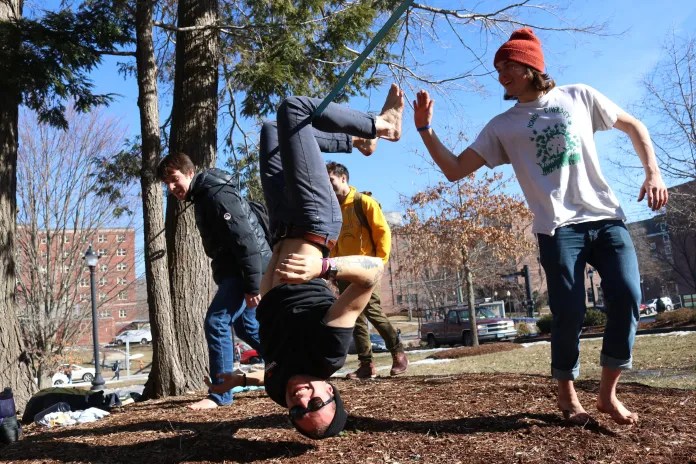
Many people, near the end of their lives, express deep sadness over losing touch with old friends. Life often gets busy with work, family, and responsibilities, and friendships can drift apart.
Why Do People Lose Touch?
- Prioritizing work and daily obligations over relationships
- Moving to different cities or countries
- Assuming friends will always be there
- Fear of reaching out after too much time has passed
How to Avoid This Regret:
- Make an Effort to Reconnect – Send a message, call, or plan a meetup. Most people are happy to hear from an old friend.
- Prioritize Friendships – Just like work or fitness, relationships need effort. Schedule regular catch-ups.
- Embrace Technology – Video calls, social media, and group chats make staying in touch easier than ever.
- Don’t Let Time Stop You – Even if it’s been years, a simple “Hey, I was thinking about you” can rekindle a friendship.
- Be the First to Reach Out – Don’t wait for others. Take the initiative.
Friendships bring joy, support, and shared memories. In the end, people rarely regret spending too much time with loved ones—only too little.
Regret #5: “I wish I had let myself be happier.”
This regret, from Bronnie Ware’s The Top Five Regrets of the Dying, highlights how many people realize—too late—that happiness is a choice. They stayed stuck in routines, worried too much about what others thought, or didn’t allow themselves to fully enjoy life.

One of the most surprising regrets people expressed was that they had spent too much of their lives in unnecessary worry, fear, and self-imposed limitations. They realized, too late, that happiness had been a choice all along. Research confirms that happiness is often within our control. The Journal of Personality and Social Psychology found that people who practice mindfulness and live in the present moment report significantly higher levels of happiness. The Journal of Contextual Behavioral Science demonstrated that those who embrace change and new experiences are more likely to feel fulfilled in the long run. Meanwhile, a study in the Journal of Positive Psychology showed that engaging in simple happiness-boosting activities—such as expressing gratitude or doing things purely for enjoyment—leads to lasting increases in well-being.
If you’re waiting for happiness to find you, you might be waiting forever. The truth is, happiness is something you cultivate, not something you stumble upon. The sooner you realize this, the sooner you can start living a life without regret.
Why Do People Hold Themselves Back from Happiness?
- Fear of change or stepping out of their comfort zone
- Worrying about what others might think
- Staying in unhappy jobs or relationships out of obligation
- Taking life too seriously and forgetting to enjoy the small moments
How to Avoid This Regret:
- Choose Joy Over Perfection – Life will never be perfect. Enjoy the journey instead of waiting for the “right” moment.
- Let Go of Worry – Most of what we stress about won’t matter in the long run.
- Prioritize Fun & Play – Laughter, hobbies, and adventure bring more happiness than material success.
- Surround Yourself with Positivity – Be with people who uplift you and let go of toxic relationships.
- Live in the Present – Stop dwelling on the past or fearing the future. True happiness exists now.
Happiness isn’t about what you have—it’s about how you see life. Many realize too late that they could have laughed more, loved deeper, and lived lighter. Don’t wait—choose happiness today.
What These Regrets Teach Us
These regrets are not just reflections of those who are dying—they are warnings for the living. They remind us that time moves faster than we think and that the things we often take for granted—our dreams, our relationships, our happiness—are the very things we are most likely to regret neglecting. So what can we do? We can choose to live differently now. We can stop postponing the things that truly matter. We can pursue our dreams instead of living for others’ expectations. We can balance work with relationships. We can speak our truths instead of suppressing emotions. We can invest in friendships before they fade. And most importantly, we can allow ourselves to be happy, not someday, but today.
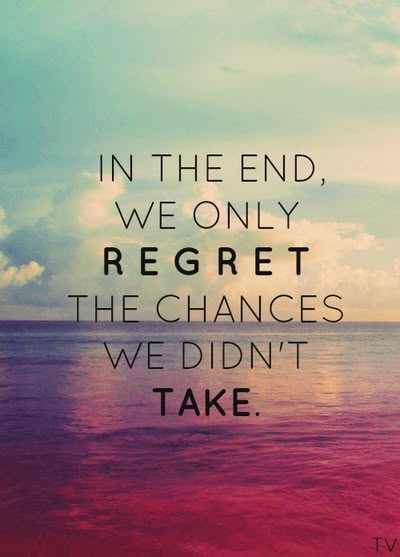
Because at the end of life, the biggest regrets aren’t about what we did—they’re about what we didn’t do. The good news? We still have time to change that.
Author:

Dr Mukesh Jain is a Gold Medallist engineer in Electronics and Telecommunication Engineering from MANIT Bhopal. He obtained his MBA from the Indian Institute of Management Ahmedabad. He obtained his Master of Public Administration from the Kennedy School of Government, Harvard University along with Edward Mason Fellowship. He had the unique distinction of receiving three distinguished awards at Harvard University: The Mason Fellow award and The Lucius N. Littauer Fellow award for exemplary academic achievement, public service & potential for future leadership. He was also awarded The Raymond & Josephine Vernon award for academic distinction & significant contribution to Mason Fellowship Program. Mukesh Jain received his PhD in Strategic Management from IIT Delhi.
Mukesh Jain joined the Indian Police Service in 1989, Madhya Pradesh cadre. As an IPS officer, he held many challenging assignments including the Superintendent of Police, Raisen and Mandsaur Districts, and Inspector General of Police, Criminal Investigation Department and Additional DGP Cybercrime, Transport Commissioner Madhya Pradesh and Special DG Police.
Dr. Mukesh Jain has authored many books on Public Policy and Positive Psychology. His book, ‘Excellence in Government, is a recommended reading for many public policy courses. His book- “A Happier You: Strategies to achieve peak joy in work and life using science of Happiness”, received book of the year award in 2022. After this, two more books, first, A ‘Masterclass in the Science of Happiness’ and the other, ‘Seeds of Happiness’, have also been received very well. His book, ‘Policing in the Age of Artificial Intelligence and Metaverse’ has received an extraordinary reception from the police officers. He is a visiting faculty to many business schools and reputed training institutes. He is an expert trainer of “Lateral Thinking”, and “The Science of happiness” and has conducted more than 300 workshops on these subjects.



One response to ““The Five Life Lessons We Learn Too Late””
Very engaging read and an eye-opener especially for people who pursue their jobs without giving a thought to anything else in life. Congratulations Sir for presenting the thoughts in a lucid, impactful ways and presenting so much in a short write up.
LikeLike