
In our fast-paced world, individuals are inundated with decisions daily, ranging from trivial choices to life-altering determinations. From deciding what to wear in the morning to making career moves that could shape an entire future, the volume of choices we face can often feel overwhelming. The challenge lies not only in making decisions quickly but also in ensuring that these choices align with long-term aspirations, values, and overall well-being. The difficulty of this balancing act is one that many people struggle with—choosing between short-term comfort and long-term benefits, emotional reactions and rational analysis, external expectations and personal fulfillment.
Recognizing this universal struggle, Suzy Welch, a distinguished business journalist, best-selling author, and former editor-in-chief of Harvard Business Review, introduced the 10-10-10 Rule. This decision-making framework was designed to help individuals gain clarity, reduce stress, and make thoughtful, intentional choices by encouraging them to evaluate the potential consequences of their decisions from three distinct time perspectives:
- 10 minutes: What will be the immediate emotional and practical impact of this decision?
- 10 months: How will this decision affect my life in the near future? Will it still seem like the right choice?
- 10 years: Will this choice stand the test of time? How will it shape my future self and my overall happiness?
By applying this structured approach, Welch believed that individuals could break free from reactive decision-making and develop a more deliberate, long-term-focused mindset. Rather than being controlled by emotions, peer pressure, or fleeting circumstances, people who use the 10-10-10 framework evaluate their options through a broader lens, making it easier to act with confidence and integrity.
Who is Suzy Welch?
Suzy Welch is widely recognized for her significant contributions to the fields of business journalism, leadership, and personal development. As a renowned thought leader, she has played a pivotal role in simplifying complex business concepts and making them accessible to a broad audience. Her ability to translate intricate management theories, strategic decision-making processes, and leadership principles into practical, actionable insights has made her a respected figure in both corporate and self-improvement circles.

Welch served as the editor-in-chief of the Harvard Business Review (HBR), a prestigious publication that is considered a gold standard in business thought leadership. Her tenure at HBR allowed her to engage with some of the most influential business thinkers, executives, and academics, refining her understanding of how effective leadership and decision-making shape organizations and personal success. Through her editorial expertise, she helped bridge the gap between academic research and real-world application, making valuable business knowledge more accessible to professionals worldwide.
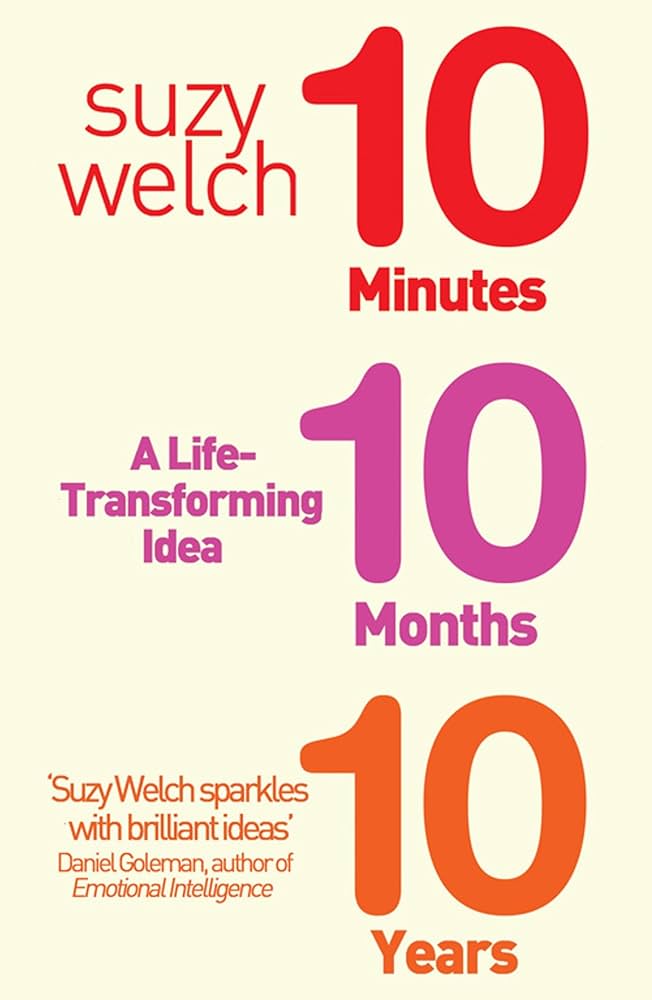
Beyond journalism, Welch has made a mark as a best-selling author and public speaker. Her book, 10-10-10: A Life-Transforming Idea, presents a powerful, intuitive decision-making framework that helps individuals evaluate choices across three different time horizons—10 minutes, 10 months, and 10 years. This approach has been widely embraced by individuals seeking greater clarity, confidence, and alignment in their decision-making, whether in career moves, personal relationships, financial choices, or everyday dilemmas. Welch’s ability to distill profound wisdom into simple, actionable strategies has made her a sought-after speaker and consultant, influencing leaders, professionals, and individuals looking to make wiser, more intentional choices in both their personal and professional lives.
Deciphering the 10-10-10 Rule
At its core, the 10-10-10 Rule is a structured decision-making framework that prompts individuals to evaluate their choices by considering their consequences across three distinct time frames: 10 minutes, 10 months, and 10 years. The simplicity of this approach belies its profound impact, as it provides individuals with a clear, logical, and reflective way to navigate difficult decisions. It allows them to break free from impulsive, emotion-driven choices and instead adopt a more thoughtful, strategic perspective that aligns with both their present needs and long-term aspirations.
The first time frame—10 minutes—focuses on the immediate emotional and practical effects of a decision. It encourages individuals to acknowledge their initial reactions, fears, and desires, which often dominate the decision-making process. Many decisions are heavily influenced by short-term emotions, such as stress, excitement, fear, or social pressure. For instance, quitting a stressful job may feel like an enormous relief in the moment, but without careful consideration of what follows, it could lead to unforeseen challenges. Similarly, choosing to indulge in an unhealthy habit might provide temporary pleasure but could eventually derail long-term health goals. This phase of the framework recognizes that emotions are natural and valid but cautions against allowing them to dictate life-altering choices without further examination.
The second time frame—10 months—forces individuals to consider the short-to-medium-term consequences of their choices. This period represents a more practical, tangible perspective, where the initial emotional intensity has likely faded, and the real implications of a decision begin to take shape. This time horizon asks individuals to assess whether their initial decision continues to hold merit, or if it was driven purely by a fleeting emotional state. For example, if someone decides to move to a new city, the excitement of a fresh start may dominate the first few weeks, but by the 10-month mark, they may either have settled comfortably into their new environment or begun to question their decision due to financial constraints, social isolation, or career stagnation. Similarly, in relationships, the choice to walk away from a partnership or maintain one despite challenges can appear very different after several months of reflection. This phase encourages individuals to step out of the immediacy of emotions and into a space of rational evaluation.
The final time frame—10 years—pushes individuals to think about the long-term implications of their choices and how these decisions align with their broader life goals and values. This is where the real power of the 10-10-10 Rule comes into play, as it forces individuals to evaluate whether the decision they are about to make will contribute to their personal growth, career success, financial stability, and overall well-being in the long run. Many decisions that feel urgent in the moment may seem trivial or even foolish in hindsight, while others that appear daunting could turn out to be the most pivotal moments in shaping a fulfilling life. Consider someone contemplating whether to start their own business. In 10 minutes, the fear of financial instability and uncertainty might dominate their thoughts. In 10 months, they may be struggling to get their venture off the ground but also experiencing the excitement of independence and self-discovery. In 10 years, they may look back and either regret not taking the risk or feel immensely grateful that they chose to pursue their passion.
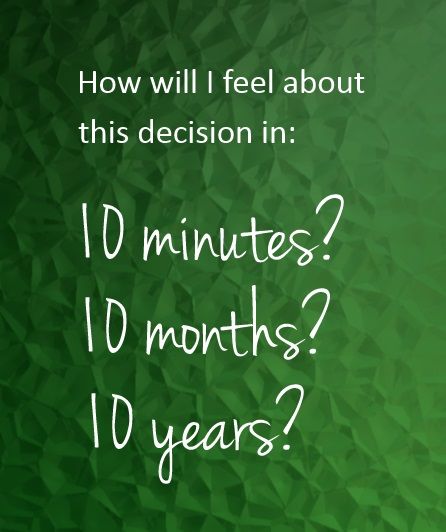
By systematically considering these three time intervals, individuals transcend impulsive reactions and emotional turbulence, gaining a broader, more holistic view of their decisions. The 10-10-10 Rule is not about making perfect choices but about making informed, intentional ones that align with a person’s core values, long-term aspirations, and fundamental beliefs. This method encourages a delicate balance between present desires and future well-being, allowing people to navigate life with greater confidence, clarity, and wisdom. Instead of being trapped in momentary discomfort or immediate gratification, they learn to evaluate the sustainability and true impact of their decisions, fostering choices that stand the test of time.
How to Apply the 10-10-10 Rule in Everyday Life
The 10-10-10 Rule is incredibly versatile and can be applied to both personal and professional decisions. Let’s explore how this method can be used in different life situations:
1. Career and Work Decisions
Many of us grapple with career choices—should I take that new job offer? Should I stay in a position that no longer excites me? Should I pursue an advanced degree or start my own business? The fear of uncertainty and the pressure to make the “right” choice often lead to hesitation and doubt. By using 10-10-10, one can break down the decision like this:
- 10 minutes: The excitement (or anxiety) of making a big career shift may dominate your emotions.
- 10 months: You will have adjusted to the new role, potentially acquired new skills, or, conversely, realized that the job wasn’t a great fit.
- 10 years: Will this decision have set you on a fulfilling path, aligned with your long-term goals, or will you regret not taking a leap?
A study published in the Harvard Business Review found that professionals who consider long-term career impacts rather than short-term setbacks make more strategic and fulfilling career moves. The 10-10-10 approach naturally promotes this kind of strategic thinking.
2. Personal Relationships
Decisions in relationships—whether to stay, leave, apologize, or set boundaries—are often clouded by emotions. The 10-10-10 Rule can bring much-needed clarity by revealing the true long-term implications of interpersonal choices. Imagine you’re deciding whether to have a difficult conversation with a friend or partner:
- 10 minutes: It may feel awkward, uncomfortable, or even confrontational.
- 10 months: If handled well, the relationship may be stronger and healthier. If avoided, resentment might build.
- 10 years: Will you be grateful that you prioritized honesty, or will you regret losing a valuable relationship over unspoken issues?
Relationship experts like Esther Perel emphasize that long-term relational health is built on “honest conversations and shared understanding.” The 10-10-10 Rule helps facilitate this kind of openness, ensuring that short-term fears don’t prevent meaningful long-term relationships.
3. Financial Decisions
Whether it’s saving, investing, or making a major purchase, financial decisions can be stressful. Many people give in to impulsive spending, only to regret it later when financial security is at risk. Consider an expensive purchase you’re contemplating:
- 10 minutes: The excitement of owning the item might be overwhelming.
- 10 months: The initial thrill might have worn off, and you may feel financial strain.
- 10 years: Will this purchase have enhanced your quality of life, or will you regret not investing in something more meaningful?
Financial psychologist Brad Klontz states that “long-term financial success requires the ability to delay gratification and prioritize future stability over momentary pleasure.” The 10-10-10 Rule reinforces this by helping individuals pause and reflect before making impulsive financial decisions.
4. Health and Well-Being
From fitness to mental health, daily habits and self-care routines are shaped by the decisions we make. The temptation to skip a workout, eat unhealthy food, or neglect self-care often wins because of short-term ease. But by applying the 10-10-10 framework:
- 10 minutes: Skipping exercise or indulging in junk food might feel good in the moment.
- 10 months: The habit may begin to affect your energy levels and health.
- 10 years: Will this decision contribute to a healthier, stronger version of yourself, or will you struggle with preventable health issues?
Health experts like James Clear, author of Atomic Habits, emphasize that “small choices, compounded over time, determine the trajectory of your life.” The 10-10-10 method helps reinforce positive choices while minimizing regret.
Making Decisions with Confidence and Purpose
Suzy Welch’s 10-10-10 Rule is more than just a decision-making tool—it’s a philosophy for intentional living. By stepping back from impulsive, emotionally-driven choices, individuals can make decisions that align with their values, goals, and long-term vision.
From career growth to personal relationships, financial stability to health and wellness, the 10-10-10 framework offers a structured, actionable way to make better decisions. It empowers individuals to take control of their choices, reduce regret, and cultivate a life of meaning and purpose.
So the next time you’re faced with a tough decision, take a deep breath and ask yourself: How will I feel about this in 10 minutes, 10 months, and 10 years?
The answer might just change your life.
___________________________________________________________________


 School Of Happiness by Mukesh Jain
Leave a reply to A Sudhakar Rao IPS (Rtd) Cancel reply