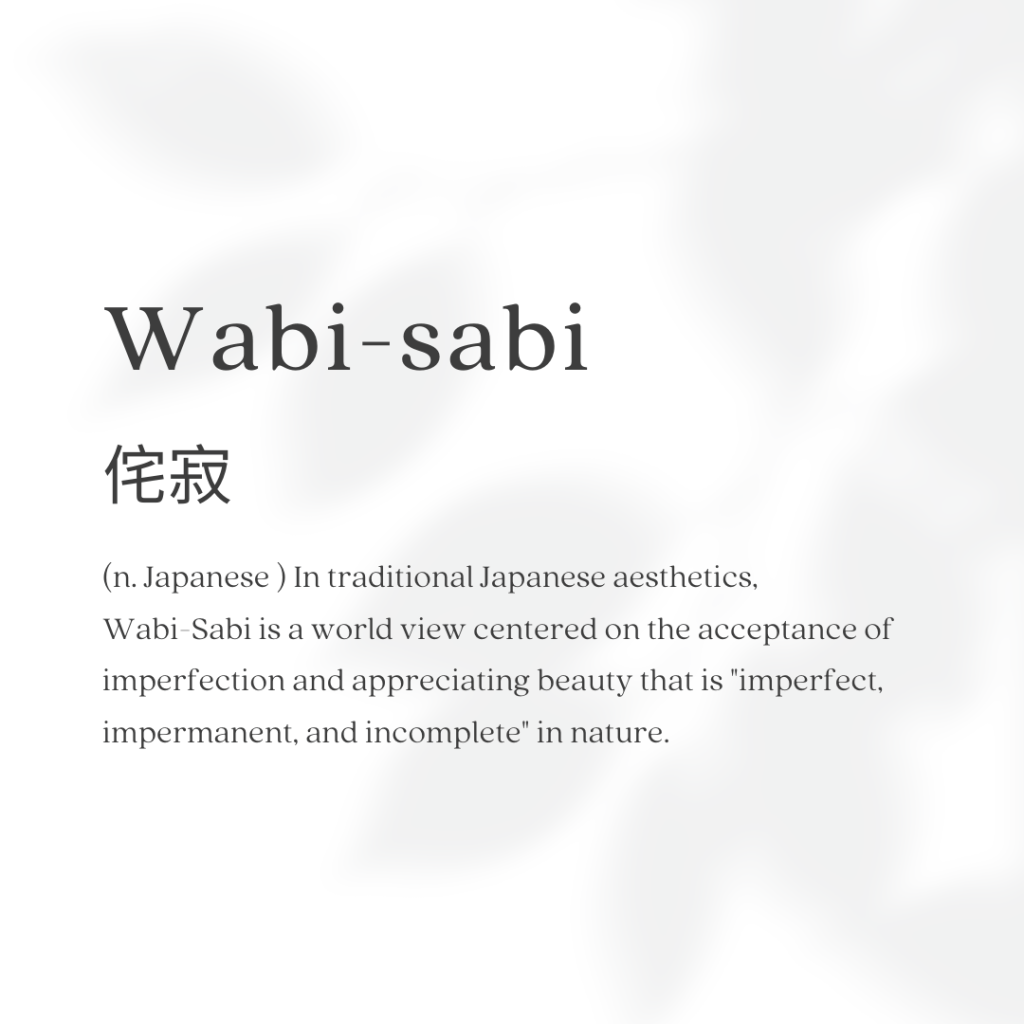
In a world obsessed with perfection, efficiency, and rapid innovation, there exists an ancient philosophy that offers an alternative way of seeing and experiencing life. This is Wabi-Sabi, a Japanese aesthetic and philosophical worldview that invites us to embrace imperfection, appreciate simplicity, and find beauty in the transient nature of life. Instead of striving for flawlessness, Wabi-Sabi encourages us to look at the world through a different lens—one that acknowledges the imperfections, aging, and incompleteness of everything around us, not as faults to be corrected but as essential and meaningful aspects of existence.
At its core, Wabi-Sabi is a celebration of the imperfect and the impermanent. It teaches that true beauty lies in asymmetry, irregularity, and natural wear and tear, rather than in pristine, artificial perfection. Unlike Western ideals, which often emphasize symmetry, flawlessness, and permanence, Wabi-Sabi invites us to appreciate things as they naturally are—unpolished, asymmetrical, and fleeting. Whether it’s a cracked ceramic bowl, the weathered wood of an ancient temple, or the changing colors of autumn leaves, Wabi-Sabi teaches us that these qualities are not shortcomings but rather marks of character and history.
To fully understand the depth of Wabi-Sabi, one must first let go of the modern obsession with control, perfection, and permanence. In many ways, Wabi-Sabi is a form of acceptance—a way of aligning ourselves with the natural rhythms of life, rather than resisting them. The cracks in a beloved tea cup do not make it worthless; rather, they add to its story, marking the passage of time and reminding us that nothing remains the same forever. Similarly, the wrinkles on a person’s face are not signs of decay, but evidence of a life fully lived—a tapestry of memories, wisdom, and experience etched into the skin.
The Origins and History of Wabi-Sabi
Wabi-Sabi is a deeply ingrained aesthetic and philosophical concept in Japanese culture, emphasizing imperfection, simplicity, and the beauty of transience. While modern society often celebrates perfection, symmetry, and permanence, Wabi-Sabi offers a refreshing alternative that values the flawed, the incomplete, and the fleeting. This philosophy evolved over centuries, shaped by Zen Buddhism, Japanese tea culture, and traditional aesthetics. It has left a lasting impact on art, architecture, design, and even everyday life. To fully grasp Wabi-Sabi, we must explore its linguistic roots, historical evolution, and its influence on Japanese culture and beyond.
The Meaning of Wabi-Sabi
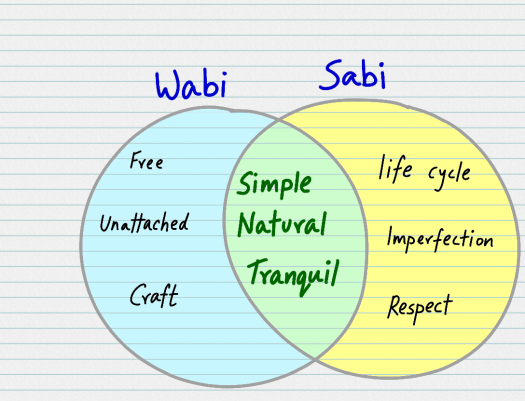
The term Wabi-Sabi is derived from two separate but complementary words, Wabi and Sabi , each carrying deep philosophical significance.
1. Wabi: The Beauty of Simplicity and Imperfection
Originally, Wabi meant loneliness, melancholy, and the beauty of solitude, often associated with the lifestyle of hermits, monks, and poets who found spiritual fulfillment in nature. Over time, the meaning of Wabi shifted to express a quiet, humble beauty—a kind of beauty that is subtle, imperfect, and deeply personal. In Japanese poetry and literature, Wabi often referred to the peacefulness of rustic living, a sense of harmony with nature, and an appreciation for the simple joys of life. Unlike Western ideals of grandeur and luxury, Wabi celebrates the small, the modest, and the unrefined—a cracked teacup, a rough wooden table, or an empty room bathed in soft light.
2. Sabi :The Beauty of Aging and Impermanence
Sabi refers to the natural beauty that comes with time, wear, and age. It celebrates the slow decay of objects, the weathering of materials, and the graceful passage of time. The rust on an old iron gate, the fading ink of an ancient manuscript, or the cracks in a beloved ceramic bowl—all of these embody Sabi. The word Sabi carries a profound message: Nothing lasts forever, but that does not diminish its beauty. Instead, the marks of time add depth, character, and uniqueness. In this sense, Sabi is about embracing the inevitability of change and finding beauty in life’s impermanence. Together, Wabi and Sabi form a complete philosophy—one that encourages us to find beauty in the unpolished, the aged, and the impermanent.
Historical Roots: Zen Buddhism and the Tea Ceremony
The origins of Wabi-Sabi are deeply intertwined with Zen Buddhism, which profoundly shaped Japanese aesthetics and cultural values.
1. Zen Buddhism and the Philosophy of Simplicity
Zen Buddhism, introduced to Japan from China in the 12th century, played a crucial role in shaping Wabi-Sabi philosophy. Zen teachings emphasize mindfulness, simplicity, and detachment from material excess, encouraging people to find beauty in the present moment and the natural world. One of Zen’s core teachings is mujō , or impermanence—the idea that everything in life is constantly changing and nothing remains the same. This belief aligns perfectly with Wabi-Sabi, which celebrates the fleeting nature of life and the beauty found in things that are incomplete and in transition.
Zen monks practiced a minimalist lifestyle, living in simple, unadorned spaces, eating basic meals, and wearing humble robes. They rejected extravagance and artificial refinement, instead focusing on natural, unpolished beauty. Over time, this way of thinking influenced Japanese art, architecture, and daily life, leading to the development of Wabi-Sabi aesthetics.
2. The Role of the Japanese Tea Ceremony
Perhaps the most significant historical event that solidified Wabi-Sabi as an aesthetic and cultural philosophy was the Japanese tea ceremony, particularly as influenced by the legendary tea master Sen no Rikyū (1522–1591). Before Rikyū’s influence, tea ceremonies were often elaborate affairs that showcased expensive Chinese porcelain, ornate decorations, and grand, symmetrical designs. However, Rikyū radically transformed the ceremony by removing unnecessary ornamentation and focusing on simplicity, humility, and natural beauty.
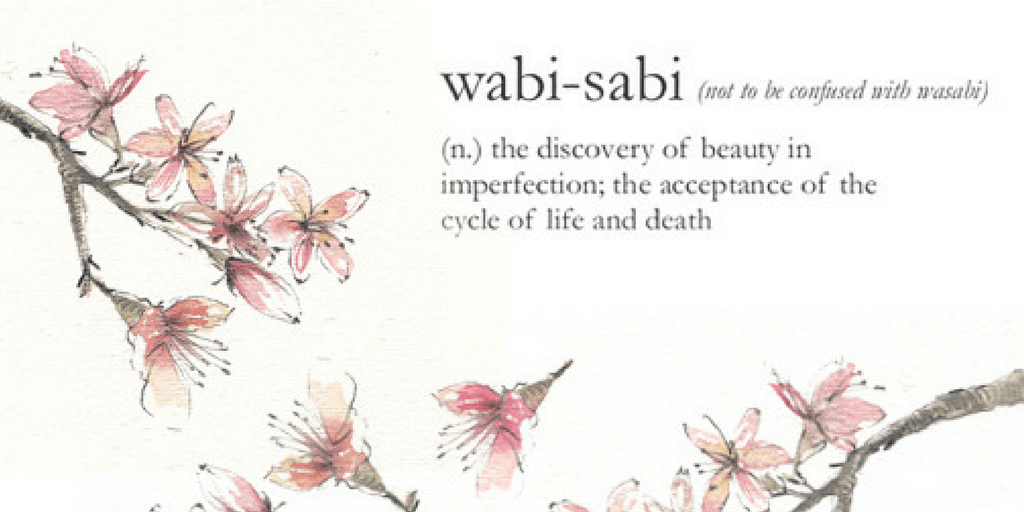
The Essence of Wabi-Sabi: Embracing Imperfection, Impermanence, and Simplicity
Wabi-Sabi is a profound Japanese philosophy that teaches us to see beauty in imperfection, impermanence, and simplicity. Rooted in Zen Buddhism and traditional Japanese aesthetics, it encourages a deep appreciation for life’s transient and imperfect nature. Unlike modern ideals that celebrate flawlessness and excess, Wabi-Sabi invites us to embrace what is raw, incomplete, and evolving. This perspective is notjust an aesthetic choice but a way of thinking that brings peace, gratitude, and a more profound connection with the world around us.
Core Principles of Wabi-Sabi
One of the foundational ideas of Wabi-Sabi is imperfection—the recognition that flaws make things more beautiful and unique. A perfect example is Kintsugi, the Japanese art of repairing broken pottery with gold. Instead of hiding cracks, Kintsugi highlights them, turning brokenness into a source of beauty. This idea can be applied to life as well—our struggles, scars, and setbacks are not something to be ashamed of but something to be embraced as part of our unique story.
Another key principle is impermanence—an acknowledgment that everything is temporary and constantly changing. The Japanese tradition of appreciating cherry blossoms (sakura) is a perfect metaphor. The blossoms bloom for only a short time, yet their fleeting beauty makes them even more precious. Wabi-Sabi teaches us that rather than fearing change or clinging to permanence, we should cherish each moment as it unfolds.
Simplicity is another fundamental Wabi-Sabi value. Traditional Japanese homes embody this through the use of neutral colors, natural materials like wood and stone, and uncluttered spaces that create a sense of peace. This principle teaches us to let go of excess, both physically and mentally, and focus on what truly matters.
Another important idea is asymmetry—the notion that beauty lies in the unfinished, the irregular, and the organic. Unlike mass-produced, flawless items, handmade ceramics with uneven edges or an asymmetrical bonsai tree are valued more in Wabi-Sabi culture. This reflects the belief that uniqueness and irregularity are more meaningful than perfection.
Lastly, appreciation of nature is at the heart of Wabi-Sabi. Natural elements are left untouched to age gracefully, whether it is an old wooden table that darkens over time or a stone pathway covered in moss. This principle teaches us to harmonize with nature rather than trying to control it.
Applying Wabi-Sabi to Everyday Life
Wabi-Sabi can transform how we live, work, and interact with others. In home design, using natural materials, simplifying spaces, and accepting the wear and tear of objects rather than discarding them aligns with this philosophy. In personal growth, embracing our imperfections, letting go of control, and practicing mindfulness bring a sense of peace and fulfillment. In relationships, accepting people for who they are, rather than chasing idealized perfection, leads to deeper and more authentic connections.
Even in creativity and work, Wabi-Sabi has profound lessons. Writers, artists, and musicians who embrace imperfections rather than striving for unattainable perfection often create more authentic and impactful work. Businesses can apply this philosophy by focusing on authenticity rather than artificial perfection.
Ultimately, Wabi-Sabi reminds us that imperfection is not a flaw—it is what makes life truly beautiful. Instead of chasing unattainable ideals, we can learn to find beauty in what is simple, natural, and real. By embracing this philosophy, we cultivate a sense of gratitude, reduce stress, and experience life in a more profound and fulfilling way.
Scientific Research on the Psychological Benefits of Wabi-Sabi
The philosophy of Wabi-Sabi, which embraces imperfection, simplicity, and transience, is not just a poetic idea—it is increasingly being validated by scientific research. Over the years, multiple studies have explored how adopting a Wabi-Sabi mindset impacts mental well-being, stress reduction, emotional resilience, and overall happiness. Let’s delve into some of the most compelling scientific findings that support the psychological benefits of this ancient Japanese aesthetic.
One of the most relevant studies comes from Harvard University (2018), which examined the psychological effects of perfectionism and imperfection. Researchers found that individuals who accept imperfections in themselves and their environment tend to experience significantly lower stress and anxiety levels. In contrast, those who strive for perfection often suffer from chronic dissatisfaction, burnout, and excessive self-criticism. The study highlighted that perfectionists tend to focus on their flaws and shortcomings, leading to negative self-talk and heightened mental distress. On the other hand, people who practice self-compassion and acceptance—both key elements of Wabi-Sabi thinking—report greater life satisfaction, emotional resilience, and overall well-being. This research strongly supports the Wabi-Sabi principle that letting go of the unattainable ideal of perfection leads to greater peace of mind and improved psychological health.
Another fascinating study from Stanford University (2021) explored how simplicity in lifestyle and surroundings affects well-being. The researchers analyzed two groups of participants to examine the effects of their living environments on mental health. One group lived in minimal, clutter-free spaces featuring simple furniture and natural elements, while the other resided in crowded, over-decorated, high-tech spaces filled with digital distractions. The results were striking: the group that lived in minimalist spaces reported higher levels of calmness, improved focus, and reduced anxiety. In contrast, those in overly cluttered and high-stimulation environments exhibited higher stress levels, greater mental fatigue, and lower overall happiness. This study validates Wabi-Sabi’s core principle that simplicity and minimalism contribute to mental clarity, lower stress, and increased life satisfaction.
In addition to psychological studies, neuroscience research has also provided insights into the benefits of embracing imperfection. A 2020 study on mindfulness and acceptance examined how letting go of control affects brain function. The findings revealed that practicing acceptance and embracing imperfection increases activity in the prefrontal cortex, the area responsible for decision-making, emotional regulation, and problem-solving. Additionally, people who actively embrace imperfection were found to have higher levels of dopamine and serotonin—neurotransmitters linked to happiness and emotional well-being. Moreover, the study demonstrated that practicing Wabi-Sabi thinking helps reduce activation in the amygdala, the brain’s fear center, which is responsible for stress responses. This means that people who learn to appreciate imperfection and transience are neurologically wired to experience greater resilience, reduced stress, and a more present-focused, peaceful state of mind.
Collectively, these studies offer compelling scientific evidence that Wabi-Sabi is not merely a cultural aesthetic but a deeply beneficial psychological approach to life. Embracing imperfection fosters emotional resilience, simplicity enhances mental clarity, and acceptance rewires the brain for happiness. In a world that constantly pushes for flawlessness and excess, Wabi-Sabi provides a research-backed antidote—reminding us that true peace and well-being come from appreciating things as they are, rather than chasing an impossible ideal.
About the author

Dr Mukesh Jain is a Gold Medallist engineer in Electronics and Telecommunication Engineering from MANIT Bhopal. He obtained his MBA from the Indian Institute of Management Ahmedabad. He obtained his Master of Public Administration from the Kennedy School of Government, Harvard University along with Edward Mason Fellowship. He had the unique distinction of receiving three distinguished awards at Harvard University: The Mason Fellow award and The Lucius N. Littauer Fellow award for exemplary academic achievement, public service & potential for future leadership. He was also awarded The Raymond & Josephine Vernon award for academic distinction & significant contribution to Mason Fellowship Program. Mukesh Jain received his PhD in Strategic Management from IIT Delhi.
Mukesh Jain joined the Indian Police Service in 1989, Madhya Pradesh cadre. As an IPS officer, he held many challenging assignments including the Superintendent of Police, Raisen and Mandsaur Districts, and Inspector General of Police, Criminal Investigation Department and Additional DGP Cybercrime, Transport Commissioner Madhya Pradesh and Special DG Police.
Dr. Mukesh Jain has authored many books on Public Policy and Positive Psychology. His book, ‘Excellence in Government, is a recommended reading for many public policy courses. His book- “A Happier You: Strategies to achieve peak joy in work and life using science of Happiness”, received book of the year award in 2022. After this, two more books, first, A ‘Masterclass in the Science of Happiness’ and the other, ‘Seeds of Happiness’, have also been received very well. His book, ‘Policing in the Age of Artificial Intelligence and Metaverse’ has received an extraordinary reception from the police officers. He is a visiting faculty to many business schools and reputed training institutes. He is an expert trainer of “Lateral Thinking”, and “The Science of happiness” and has conducted more than 300 workshops on these subjects.
 School Of Happiness by Mukesh Jain
2 responses to “Wabi-Sabi: The Beauty of Imperfection, Simplicity, and Transience”
Very interesting read! Its like a permission slip from the universe to stop chasing perfection and start celebrating life as it is, raw, real, and wonderfully imperfect…… to be ourselves without constantly polishing ourselves to fit into someone else’s idea of perfection.. It’s like the universe saying, “You don’t have to try so hard, you’re enough.”
LikeLike
Beautifully written Article providing Wabi Sabi philosophy in simple words relating with daily life routine. In today’s complex world and materialistic way of life wabi Sabi is the solution to strive for living life peacefully with Happiness. Congratulations to Mukesh Jain Sir for this write up 👏💐
LikeLike