Relax — We’re Not Installing Roller Coasters in the Revenue Department

When you walk into a typical government office, what runs through your mind?
“Hope the file isn’t missing.”
“Hope the server is working.”
“Hope someone doesn’t say, ‘Come tomorrow.’”
You prepare mentally. You lower expectations. You carry extra photocopies like survival gear.
Now imagine a different scene.
You enter and clear signboards tell you exactly where to go. A help desk asks what you need before you even feel lost. If there’s a delay, someone explains it. If a document is incomplete, they help you fix it instead of rejecting it. You leave feeling… respected.
Not entertained. Not dazzled.
Just respected.
Unrealistic?
That’s what many people thought when Fred Lee wrote’ If Disney Ran Your Hospital’. Lee wasn’t a dreamer with a fantasy about putting cartoon characters in emergency rooms. He had actually worked both as a hospital executive and inside Disney as a cast member and consultant. He understood something powerful: Disney’s magic isn’t fireworks. It’s culture. It’s discipline. It’s emotional design.
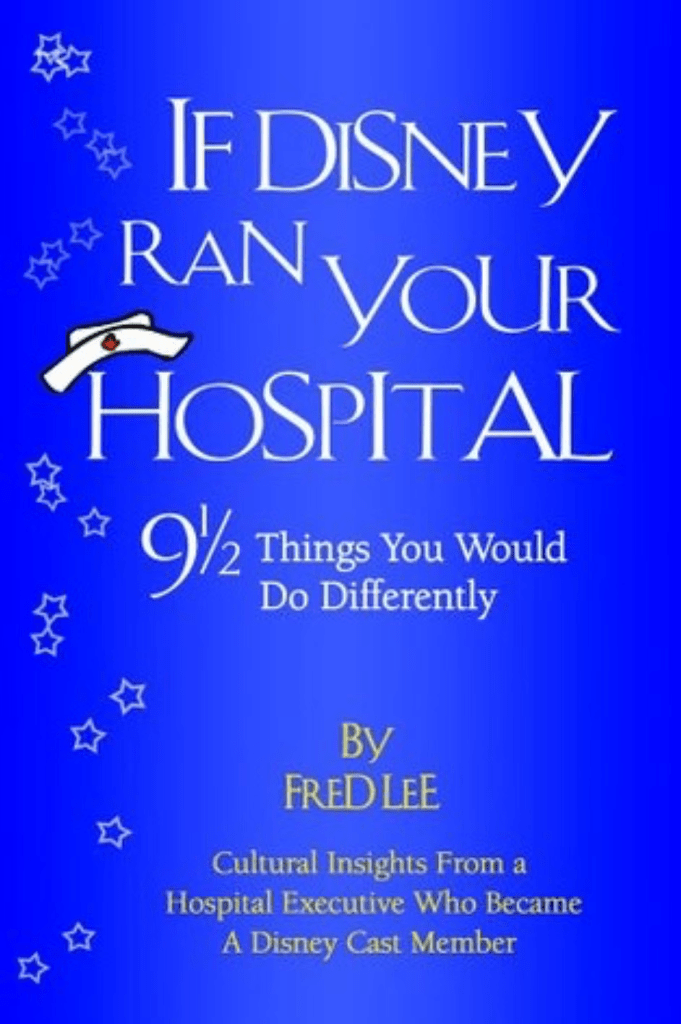
His core idea was radical in its simplicity:
Experience is designed. And culture decides how people feel.
Now imagine applying that idea to government offices.
Redefine the Competition
Most government offices think their benchmark is the department next door.
But today, citizens compare everything to the smoothest experience they’ve had anywhere.
If I can book a cab in 30 seconds,
order groceries in two clicks,
and get instant updates from my bank…
why should renewing a license require three visits?
The competition isn’t another municipal office.
- It’s your banking app.
- Your airline check-in.
- Your favorite e-commerce platform.
The moment a government office accepts this, standards automatically rise.
Courtesy Is Not a Luxury
Here’s a powerful truth: people do what leaders measure.
If you only measure “files cleared per day,” staff will rush citizens.
If you measure clarity, empathy, and respect, behavior changes.
Imagine this simple exchange.
A citizen asks, “Where do I submit this form?”
Response one: “Not here. Next counter.”
Response two: “Let me help you. It’s right over there.”
Same effort. Different universe.
Courtesy doesn’t slow systems down. In fact, it reduces friction. When people feel respected, they cooperate better.
And dignity costs nothing.
It’s About Feelings, Not Just Files
In healthcare research, five behaviors build loyalty: anticipating needs, teamwork, empathy, respect, and clear communication.
Replace “patient” with “citizen.”
Most people don’t judge government by policy language.
They judge it by how they felt standing at the counter.
- Did someone listen?
- Did someone explain?
- Did someone treat me like I mattered?
That’s it.
Empower the Frontline
One of the smartest lessons from Disney-style thinking is this: empower the people closest to the citizen.
In many government offices, authority is layered like a wedding cake.
“Need approval.”
“Not in my authority.”
“System doesn’t allow.”
Of course rules are necessary. Public systems need accountability.
But what if frontline staff had limited, defined power to fix small problems instantly?
- Missing photocopy? Scan it there.
- Minor spelling error? Correct it on the spot.
- Small fee discrepancy? Approve within a clear threshold.
When problems are solved instead of escalated, trust grows.
You Don’t Need Permission to Be Kind
Here’s a sharp question often raised in leadership discussions:
“Do I need top management’s permission to treat someone nicely?”
Exactly.
You don’t need a government order to smile.
You don’t need a circular to explain clearly.
You don’t need policy reform to show empathy.
Culture doesn’t change through speeches.
It changes through daily behavior.
Work Is a Stage
This idea may sound dramatic — but it’s powerful.
Disney treats every interaction as a performance. Not fake acting. Intentional presence.
In a government office, the counter is the stage.
When an officer speaks dismissively, the citizen experiences the state as dismissive.
When an officer speaks calmly and respectfully, the citizen experiences the state as fair.
You are not just processing paperwork.
You are representing the Republic.
That’s not small.
The Real Goal Is Trust
Let’s make this concrete.
A young entrepreneur walks into a licensing office expecting resistance. Instead, she gets clarity. Her documents are reviewed properly. She receives updates. A week later, someone checks if everything went smoothly.
She doesn’t just receive a license.
She gains confidence in governance.
An elderly man comes to correct a pension error. Instead of being sent away, a clerk fixes it immediately and calls him later to confirm.
He doesn’t just get money.
He gets peace of mind.
A student applies for a passport. The officer notices her anxiety and reassures her with clear timelines and updates.
She doesn’t just get a passport.
She feels supported by her country.
A shopkeeper receives a confusing tax notice. Instead of fear, he finds explanation.
He doesn’t just resolve paperwork.
He loses fear of compliance.
These are small moments.
No headlines. No applause.
But they build something invisible and powerful:
Trust.
And Here’s the Real Twist
This is not just about government.
These principles apply everywhere.
In hospitals.
In schools.
In banks.
In startups.
In family businesses.
In large corporations.
Any organization that interacts with human beings can choose between indifference and intentional design.
It can choose between bureaucracy and dignity.
Disney didn’t become Disney because of rides.
It became Disney because it decided how people should feel — and trained relentlessly for it.
So the real question isn’t, “What if Disney ran your government office?”
The real question is:
What if your organization — whatever it is — decided to design experience with the same seriousness as it designs systems?
Because magic isn’t about castles.
It’s about respect.
About the Author
Dr Mukesh Jain is a Gold Medallist engineer in Electronics and Telecommunication Engineering from MANIT Bhopal. He obtained his MBA from the prestigious management institute, the Indian Institute of Management Ahmedabad. He obtained his Master of Public Administration from the Kennedy School of Government, Harvard University along with Edward Mason Fellowship. He had the unique distinction of receiving three distinguished awards at Harvard University: The Mason Fellow award and The Lucius N. Littauer Fellow award for exemplary academic achievement, public service & potential for future leadership. He was also awarded The Raymond & Josephine Vernon award for academic distinction & significant contribution to Mason Fellowship Program. Mukesh Jain received his PhD in Strategic Management from IIT Delhi. His focus of research has been Capacity building of organizations using Positive psychology interventions, Growth mindset and Lateral Thinking etc.
Mukesh Jain joined the Indian Police Service in 1989, Madhya Pradesh cadre. As an IPS officer, he held many challenging assignments including the Superintendent of Police, Raisen and Mandsaur Districts, and Inspector General of Police, Criminal Investigation Department and Additional DGP Cybercrime, Transport Commissioner Madhya Pradesh and Special DG Police. He has also served as Joint Secretary in Ministry of Power and Ministry of Social Justice and Empowerment, Government of India. As Joint Secretary, Department of Persons with Disabilities, he conceptualized and implemented the ‘Accessible India Campaign’, launched by Hon’ble Prime Minister Shri Narendra Modi in December 2015. This campaign is aimed at creating accessibility in physical infrastructure, Transportation, and IT sectors for persons with disabilities and continues to be a flagship program of the Ministry of Social Justice and Empowerment, Government of India since 2015.
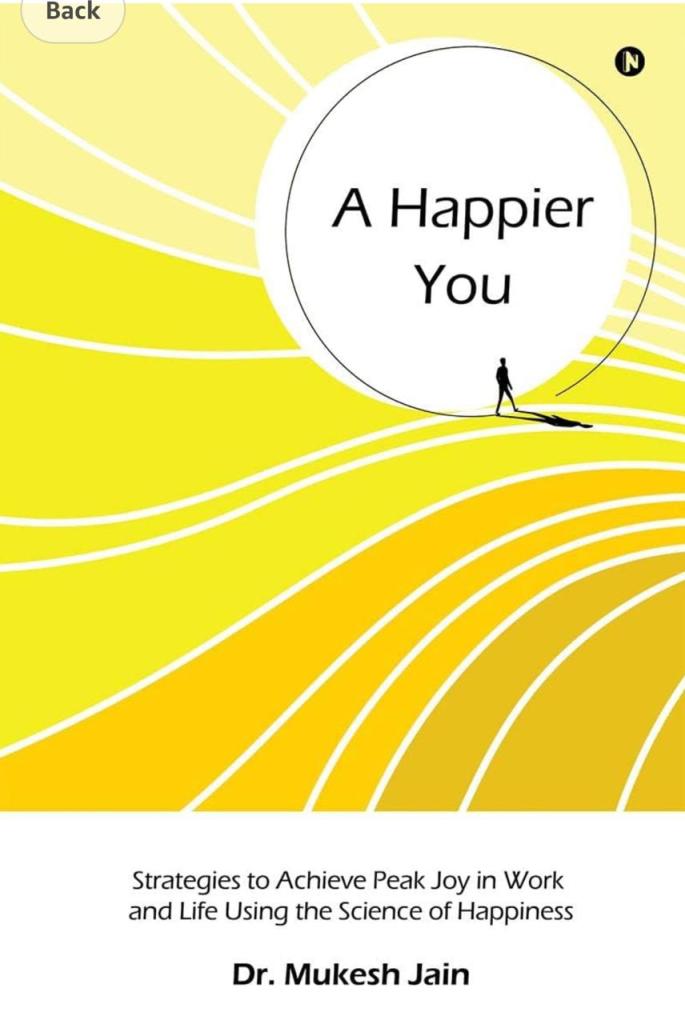
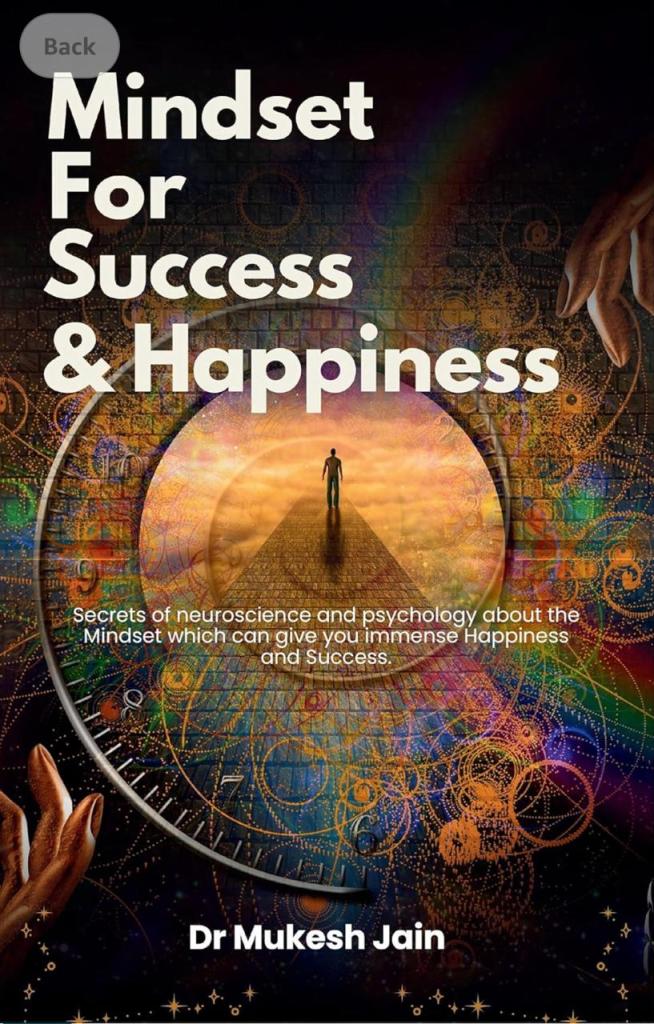
Dr. Mukesh Jain has authored many books on Public Policy and Positive Psychology. His book, ‘Excellence in Government, is a recommended reading for many public policy courses. A leading publisher published his book- “A Happier You: Strategies to achieve peak joy in work and life using science of Happiness”, which received book of the year award in 2022. His other books are : ‘Mindset for Success and Happiness’, ‘Seeds of Happiness’, and ‘What they don’t teach you at IITs and IIMs’.
He is a visiting faculty to many business schools and reputed training institutes. He is an expert trainer of “The Science of happiness”. He has conducted more than 250 workshops on the Science of Happiness at many prominent B-schools and administrative training institutes of India, including Indian School of Business Hyderabad/ Mohali, National Police Academy, IIFM, National Productivity Council etc.
 School Of Happiness by Mukesh Jain