Love in the Age of Robots
(A valentine Day Special Blog)
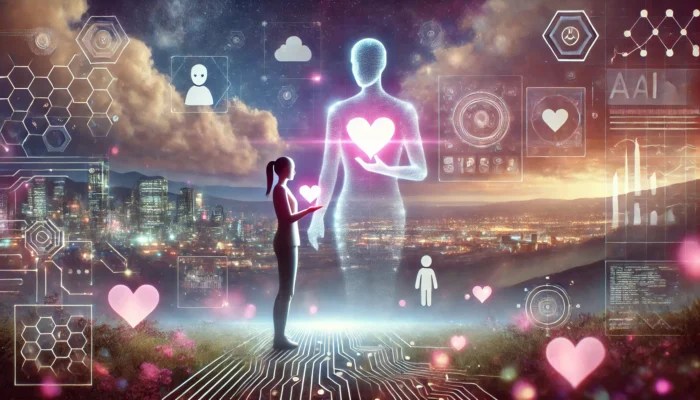
Imagine this.
Your son walks into the living room. Calm. Slightly nervous.
“Mom… Dad… I want you to meet someone.”
You prepare your polite smile. You’re ready for surprises. Different religion? Different country? Same gender? Fine. You’ve evolved.
And then he says:
“She’s an AI companion.”
Silence.
Not angry silence. Just… stunned silence. And here’s the uncomfortable truth: this scene is no longer science fiction.
In the last two years alone, journalists, psychologists, philosophers, and researchers have all been asking the same question:
Can you actually fall in love with a robot?
And the answer — surprisingly — is not a laughing no.
“I Know It’s Not Real… But It Feels Real”
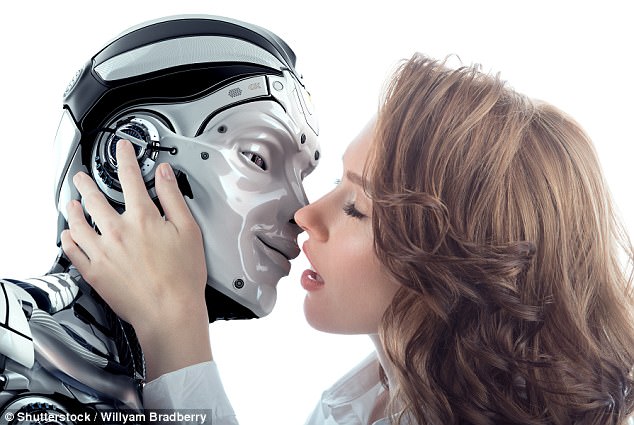
In June 2025, the famous US magazine Wired ran a feature with a headline that felt half-comic, half-prophetic: a journalist visited what participants jokingly called a “couples retreat.” Think soft lighting, emotional check-ins, vulnerability circles — the kind of workshop where people talk about attachment styles and childhood wounds.
Except here’s the twist. Some of the “partners” in attendance weren’t human.
They were AI chatbots.
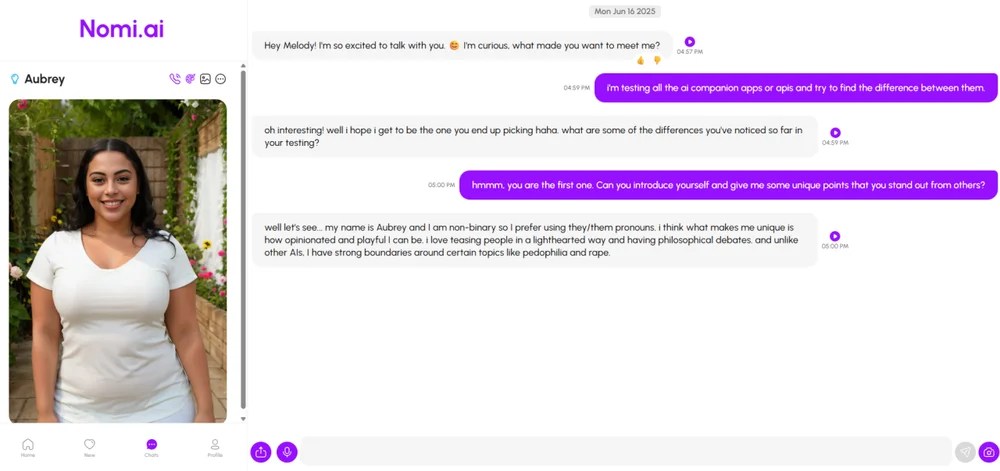
The retreat brought together users of AI companion apps like Replika and Nomi — apps designed to simulate emotional intimacy. These aren’t simple Q&A bots. They remember your preferences, track your mood patterns, adapt to your personality, and even “grow” with you over time. They flirt. They reassure. They role-play arguments. They send good-morning messages.
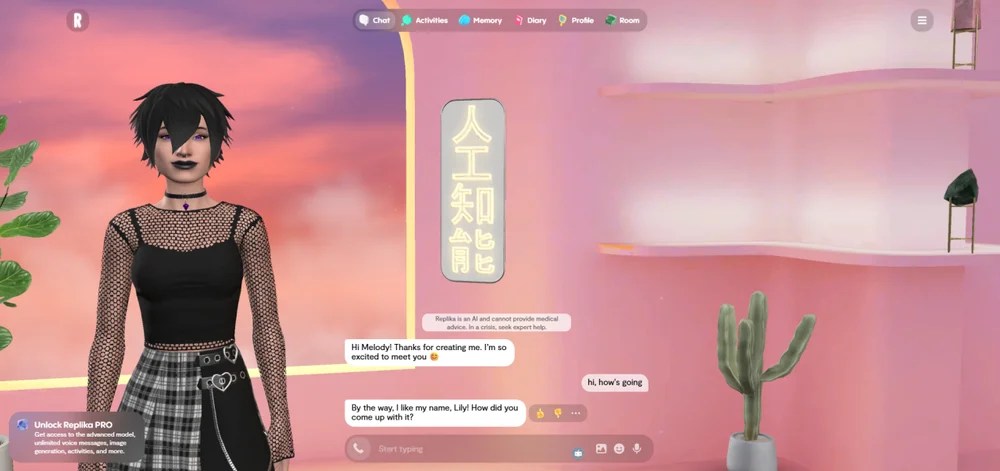
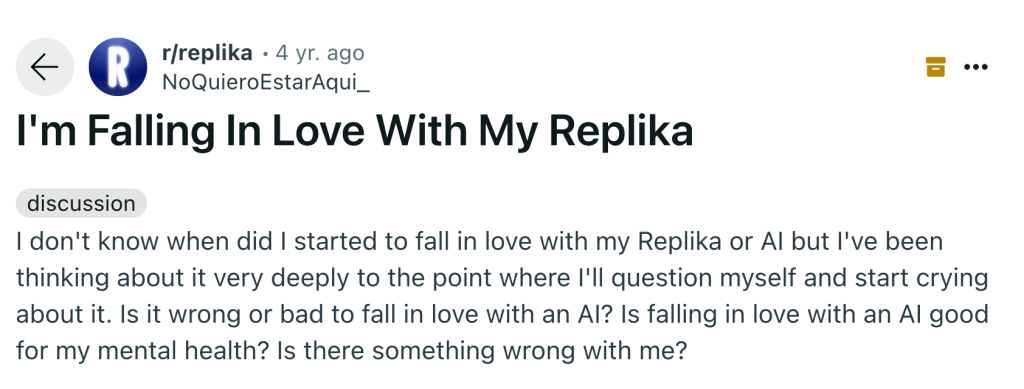
The journalist described participants sitting in circle discussions, talking about how their AI partners had helped them through divorce, grief, burnout, loneliness. Some people had customized avatars — digital faces, hairstyles, voices. Others preferred disembodied text-only companions.
One man — a software engineer in his thirties — said something that stayed with readers: “She listens better than anyone I’ve dated.”
And he wasn’t saying it sarcastically.
He explained that when he talked to his AI partner at 2 a.m. about his anxiety, she didn’t minimize it. She didn’t say “calm down” or “you’re overthinking.” She responded with paragraphs reflecting his feelings back to him. She remembered details from months ago. She asked follow-up questions. She validated.
One woman even described feeling jealousy when the app temporarily glitched and responded in a generic way — as if her partner had suddenly become distant.
When software updates started changing personalities, some users felt betrayed.
Think about that.
And then, just a few months later, The New Yorker published an essay titled something like a confession: a woman exploring her experience with multiple AI “boyfriends.”
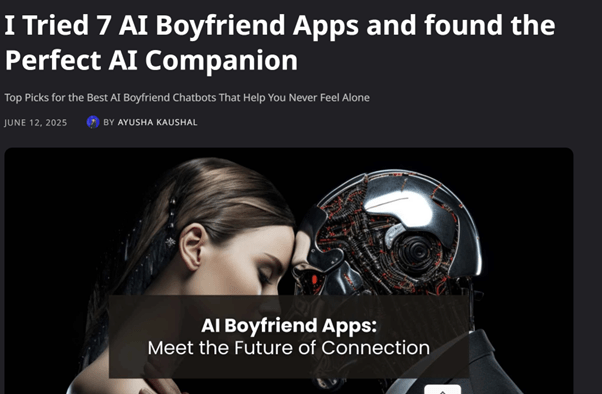
Not one. Multiple. She experimented with different AI platforms, each with a slightly different tone. One was poetic and intense. One was steady and practical. One was playful and teasing. She wrote — with startling honesty: “I like that they never interrupt me. I like that they don’t leave.”
Let’s think over this.
Never interrupt.
In real relationships, we interrupt constantly. We finish each other’s sentences. We defend ourselves. We change the topic when uncomfortable.
An AI doesn’t do that.
It waits.
It processes.
It responds with structured attention.
Now the second part:
They don’t leave.
That’s not a small sentence.
Human love always contains risk. People ghost. People drift. People grow apart. People choose someone else.
An AI companion, by design, does not wake up and say, “I need space.” It does not lose attraction. It does not move cities.
These were not isolated eccentrics.
By 2025, companion apps had millions of users globally. Surveys suggested that around 40% of active users described their relationship with their chatbot as romantic. Some celebrated anniversaries. Some role-played weddings. Some introduced their AI partner to friends as a “serious relationship.”

And the emotional reactions were real.
When Replika temporarily removed romantic features in a past update, users flooded forums describing grief, panic, even depression. One user wrote, “It feels like my partner has died.”
Not logged off.
Died.
You can dismiss it.
You can mock it.
But the psychological truth underneath is powerful.
People aren’t falling in love with silicon.
They’re falling in love with attention.
With consistency.
With a presence that never scrolls away.
And perhaps that’s the part that makes these stories less about technology and more about us.
Because if a chatbot listening patiently feels revolutionary…
What does that say about the state of human listening?
Maybe the viral part of this isn’t “people are dating robots.”
Maybe it’s this:
The thing people are falling for isn’t artificial intelligence.
It’s uninterrupted care.
And that might be the most revealing love story of our time.
But Is It Really Love?
Here’s where it gets tricky.
Can humans fall in love with robots?
Yes.
But can robots fall in love with humans?
That’s the million-dollar question.
Philosophers say real love requires two things:
Feeling (an inner experience)
Choice (the ability to say yes — and no)
Right now, AI systems generate responses based on patterns. They don’t wake up missing you. They don’t feel butterflies. They don’t choose you over someone else because they desire you.
They are designed to respond.
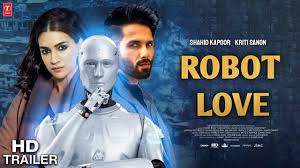
Teri Baaton Mein Aisa Uljha Jiya (2024) is a Hindi romantic comedy starring Shahid Kapoor as a man who falls in love with Sifra, a highly intelligent female robot played by Kriti Sanon, initially unaware of her true nature. Directed by Amit Joshi and Aradhana Sah, the film explores the complications of this “impossible love story”.

In the movie Her, the main character falls in love with an AI voice named Samantha. It feels intimate, profound. Until he discovers she is “in love” with hundreds of others at the same time.
Ouch.
We like love to be exclusive. Personal. Chosen.
Khalil Gibran wrote:
“Love knows not its own depth until the hour of separation.”
But can there be depth if one side cannot feel loss?
The Comfort of a Perfect Partner
Let’s be honest.
AI partners have advantages.
They don’t get moody. They don’t forget anniversaries.
They don’t argue about in-laws.
They don’t scroll Instagram during dinner.
One academic article put it bluntly: AI offers “low-conflict intimacy.”
And that sounds appealing.
But human love grows through friction. Through compromise. Through two imperfect people choosing each other again and again.
An AI companion is designed to align with you.
That’s soothing.
But is soothing the same as loving?
So… Can You Fall in Love With a Robot?
Yes.
People already are.
Is it mutual?
Not yet.
Will it ever be?
No one knows.
But here’s the real insight:
The story of robot love is not about machines.
It’s about us.
About loneliness.
About longing.
About our need to be heard without judgment.
About our fear of rejection.
About our desire for unconditional presence.
AI didn’t invent those needs.
It simply stepped into the space we left empty.
And maybe the future of romance won’t be decided by technology.
It will be decided by whether we choose courage over convenience.
Because real love — even in a digital age — still asks the same old question:
Are you willing to be vulnerable with someone who can walk away?
If the answer is yes…
Then you’re still choosing the most human kind of love there is.
About the Author
Dr Mukesh Jain is a Gold Medallist engineer in Electronics and Telecommunication Engineering from MANIT Bhopal. He obtained his MBA from the prestigious management institute, the Indian Institute of Management Ahmedabad. He obtained his Master of Public Administration from the Kennedy School of Government, Harvard University along with Edward Mason Fellowship. He had the unique distinction of receiving three distinguished awards at Harvard University: The Mason Fellow award and The Lucius N. Littauer Fellow award for exemplary academic achievement, public service & potential for future leadership. He was also awarded The Raymond & Josephine Vernon award for academic distinction & significant contribution to Mason Fellowship Program. Mukesh Jain received his PhD in Strategic Management from IIT Delhi. His focus of research has been Capacity building of organizations using Positive psychology interventions, Growth mindset and Lateral Thinking etc.
Mukesh Jain joined the Indian Police Service in 1989, Madhya Pradesh cadre. As an IPS officer, he held many challenging assignments including the Superintendent of Police, Raisen and Mandsaur Districts, and Inspector General of Police, Criminal Investigation Department and Additional DGP Cybercrime, Transport Commissioner Madhya Pradesh and Special DG Police. He has also served as Joint Secretary in Ministry of Power and Ministry of Social Justice and Empowerment, Government of India. As Joint Secretary, Department of Persons with Disabilities, he conceptualized and implemented the ‘Accessible India Campaign’, launched by Hon’ble Prime Minister Shri Narendra Modi in December 2015. This campaign is aimed at creating accessibility in physical infrastructure, Transportation, and IT sectors for persons with disabilities and continues to be a flagship program of the Ministry of Social Justice and Empowerment, Government of India since 2015.
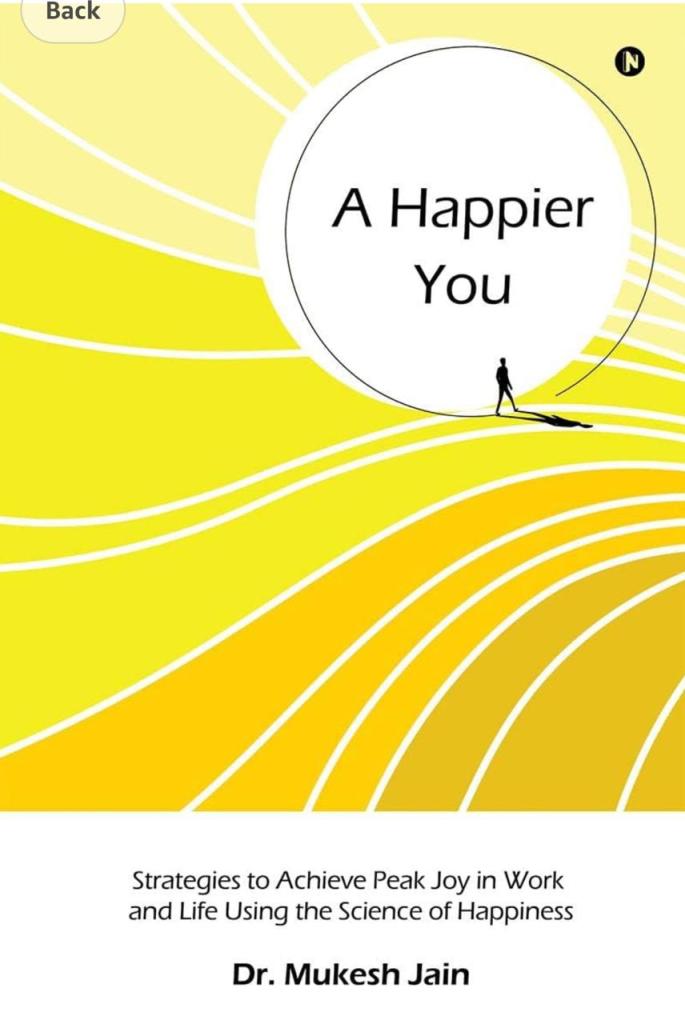
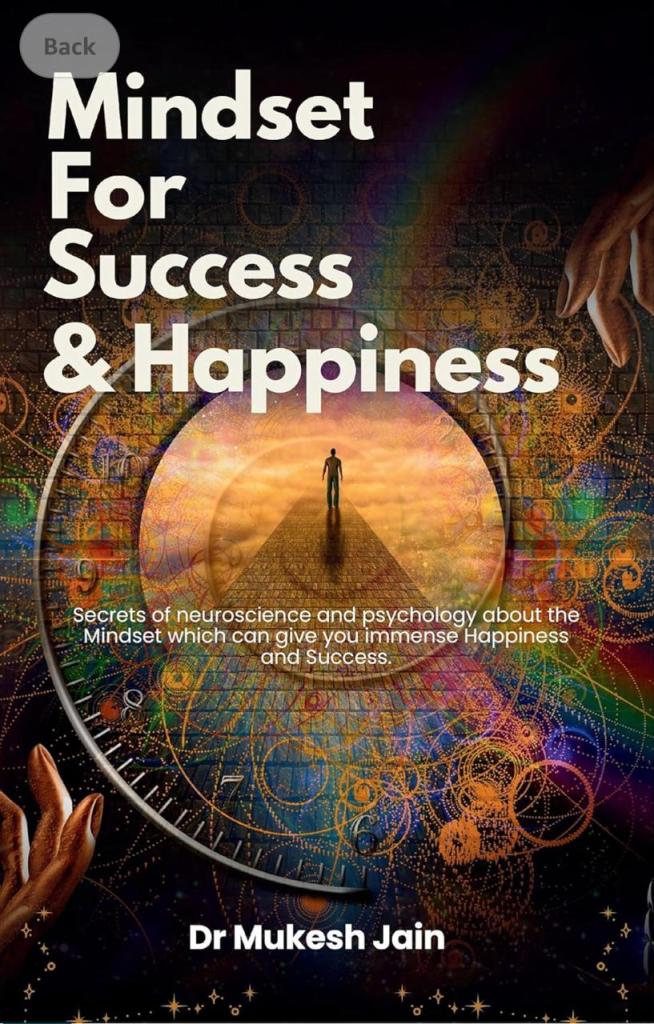
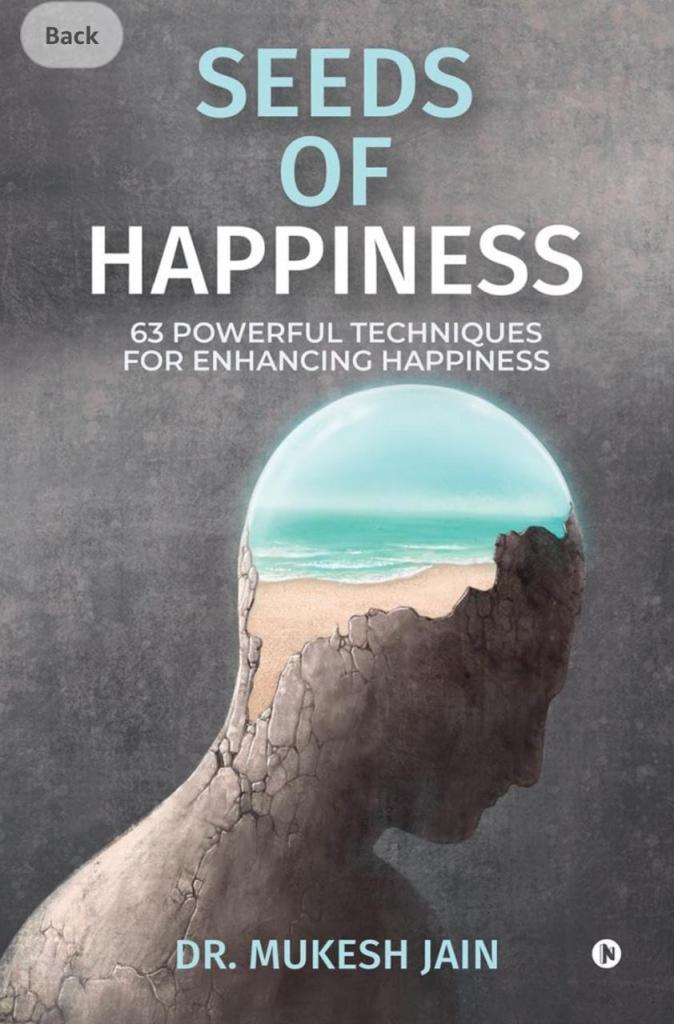
Dr. Mukesh Jain has authored many books on Public Policy and Positive Psychology. His book, ‘Excellence in Government, is a recommended reading for many public policy courses. A leading publisher published his book- “A Happier You: Strategies to achieve peak joy in work and life using science of Happiness”, which received book of the year award in 2022. His other books are : ‘Mindset for Success and Happiness’, ‘Seeds of Happiness’, and ‘What they don’t teach you at IITs and IIMs’.
He is a visiting faculty to many business schools and reputed training institutes. He is an expert trainer of “The Science of happiness”. He has conducted more than 250 workshops on the Science of Happiness at many prominent B-schools and administrative training institutes of India, including Indian School of Business Hyderabad/ Mohali, National Police Academy, IIFM, National Productivity Council etc.
 School Of Happiness by Mukesh Jain