Why our schools still run like factories
“What do you like most about school?” A few years ago, I asked a school-going child this question.
He smiled instantly. “Recess.”
“And what do you like least?”
“Everything between two recesses.”
He wasn’t being funny. He was being honest.
That one answer quietly reveals what countless children experience every day but rarely articulate. School, for many of them, is not a place of excitement or discovery. It is something to endure. Something to finish. Something that interrupts life rather than enriching it.
Once you notice this, you start seeing it everywhere.
Step Inside Any Classroom—Any Decade
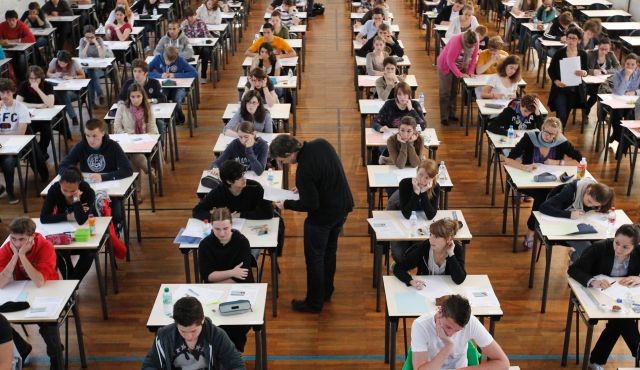
Walk into almost any school classroom today. The desks are lined up in rows. The teacher stands in front. Students sit quietly. A bell rings. Everyone moves. Another bell rings. Everyone stops. At the end of the year, exams decide who is “excellent,” who is “average,” and who needs to “work harder.”
Now here’s the unsettling part.
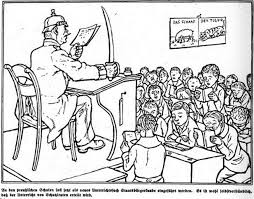
If you had walked into a classroom like this 80 or even 100 years ago, it would have looked almost the same.
New boards. New screens. Same system.
This is not because education has perfected itself. It is because it hasn’t really changed.
The Factory Model of Schools — Why Classrooms Work Like Assembly Lines
Our schools increasingly resemble exam-training factories rather than places of real learning. The primary task has shifted to drilling students to absorb large amounts of information at high speed and reproduce it during tests. Learning becomes a process of stuffing isolated facts into young minds, with little concern for students’ interests, abilities, life experiences—or even the reality that they are human beings, not machines.
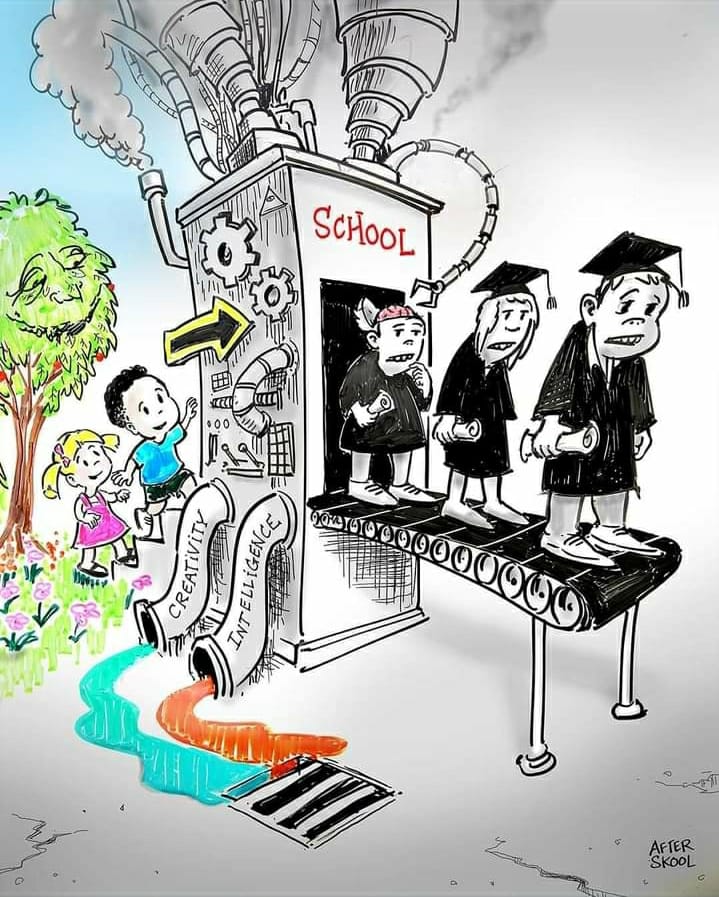
This way of thinking did not arise by accident. It grew out of the factory model of education, inspired by the ideas of Frederick Taylor, who popularized “scientific management” in his 1911 work The Principles of Scientific Management. Schools borrowed this approach, treating learning as a process to be optimized, standardized, and controlled—much like work on an assembly line.
To understand why schools feel the way they do, we have to travel back about 150–200 years.
Modern schooling did not begin as a grand idea about nurturing children’s curiosity or helping them discover their talents. It took shape during the Industrial Revolution, a time when factories were spreading rapidly across Europe and later the rest of the world.
Factories needed a very specific kind of human being.
- Not thinkers.
- Not artists.
- Not questioners.
They needed people who could:
- arrive on time every day
- follow instructions exactly
- repeat the same task again and again
- not question authority
- work efficiently for long hours
So, when governments began designing mass education systems, they borrowed directly from the factory mindset. That is why schools started looking and functioning the way factories did.
The school bell is not really about learning. It works exactly like a factory shift bell—telling everyone when to start, stop, move, or rest. Curiosity does not end when a bell rings, but learning is forced to.
Students sitting in rows look remarkably like an assembly line. Everyone faces the same direction. Everyone is expected to move at the same speed.
A single syllabus for millions of children assumes all minds work identically—just like machines coming off the same production line.
One exam for everyone tries to measure wildly different intelligences using the same narrow yardstick, much like quality checks in factories.
The system was designed for efficiency and control, not individuality or creativity.
This is why education thinker Ken Robinson struck such a deep chord when he delivered his famous TED Talk ‘Do Schools Kill Creativity?’—one of the most watched talks in TED history. Robinson explained that schools were designed for a different age—and they never really updated their operating system. (https://www.youtube.com/watch?v=iG9CE55wbtY).
To Be Fair: The Old System Once Worked. The factory model of education was not foolish or cruel when it was created. For our parents’ and grandparents’ generation, it actually worked quite well.
- The world moved slowly then.
- Jobs were stable.
- Careers often lasted a lifetime.
- Skills remained useful for decades.
- A degree almost guaranteed employment.
If you studied hard, memorized well, followed rules, and passed exams, society rewarded you. Becoming an engineer, a doctor, or a government officer offered security, respect, and a predictable future.
In that world, obedience made sense.
Memorization paid off.
Discipline was rewarded.
So the system felt fair.
Parents trusted it because it delivered results. Institutions trusted it because society itself was stable and predictable. Charlie Chaplin, one of the most innovative filmmakers of all time, and a social critic, said it best:
The Real Problem: The World Changed, Schools Didn’t
Here is where things went wrong.
The world transformed—but classrooms stayed frozen.
Today:
- machines do repetitive work better than humans
- information is instantly available on phones
- skills become outdated in a few years
- creativity, adaptability, and learning ability matter more than obedience
But schools still train children as if they are preparing for factory jobs that barely exist anymore.
- Students are still rewarded for memorizing instead of understanding.
- They are still punished for mistakes instead of learning from them.
- They are still told to sit quietly instead of explore loudly.
What once helped society run smoothly is now quietly holding it back.
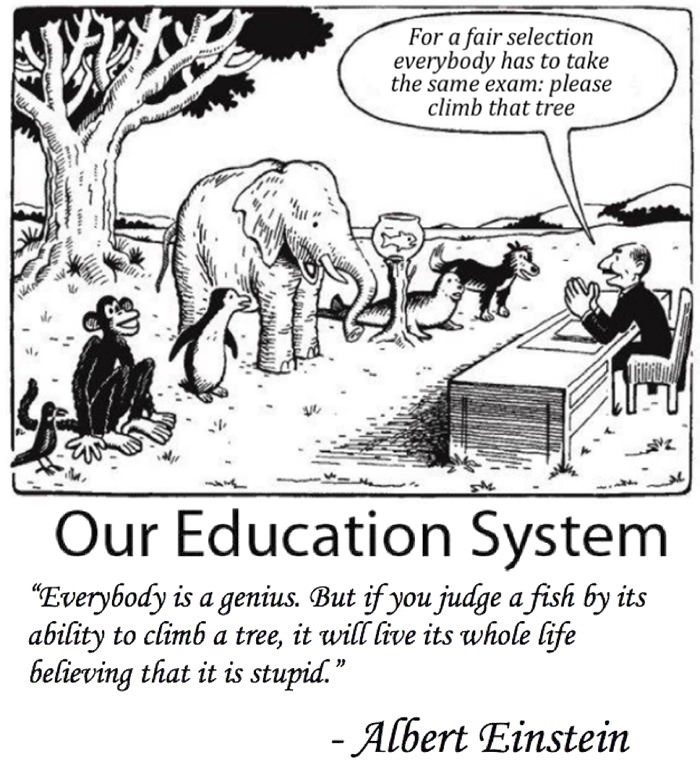
That is why classrooms feel disconnected from real life.
That is why children feel restless.
That is why learning often feels like pressure instead of joy.
The factory model did not suddenly fail. It simply outlived the world it was built for. And until schools move beyond this old logic, they will continue preparing children for a past that no longer exists—while the future waits impatiently outside the classroom.
Why the System Feels Broken Today
Today, machines do routine work better than humans ever could. Computers memorize faster. Artificial intelligence follows instructions perfectly. And yet, schools still spend years training children to do exactly these things.
Students memorize answers that can be found online in seconds. They copy notes without understanding them. They fear mistakes because mistakes cost marks. Curiosity is often seen as distraction. Asking “why” can feel dangerous.
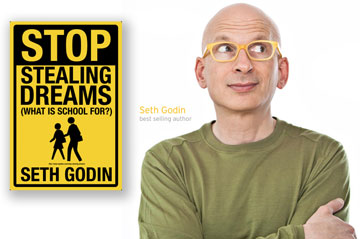
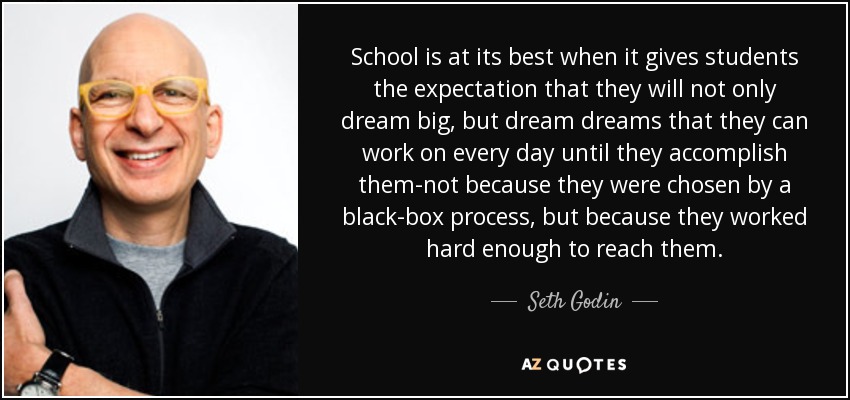
Author Seth Godin puts it bluntly in ‘Stop Stealing Dreams: schools were designed to produce obedient workers, not creative thinkers’. Once you see education through this lens, many everyday frustrations suddenly make sense.
Degrees: From Golden Ticket to Default Setting
The pressure becomes even heavier in higher education. Many students choose degrees not because they love the subject, but because it feels “safe.” Engineering, medicine, management—often chosen out of fear, not curiosity.
Degrees were once rare. Today, they are everywhere.
And employers know this.
They no longer ask only where you studied. They ask what you can actually do. Can you solve real problems? Can you communicate clearly? Can you learn new skills when old ones become useless?
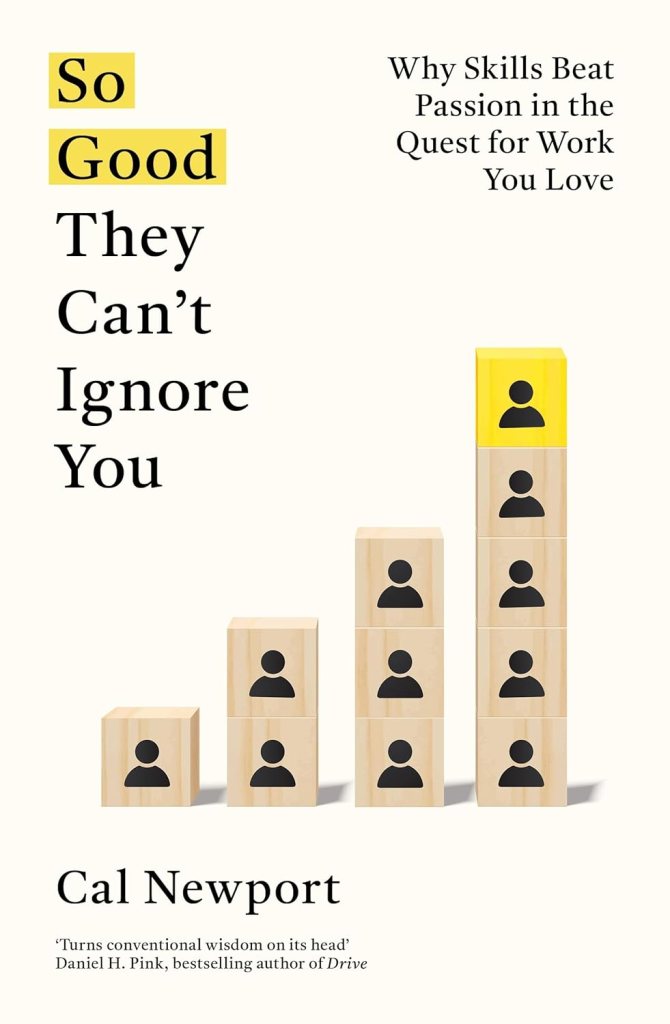
In ‘So Good They Can’t Ignore You’, author Cal Newport makes a simple but powerful point: real opportunities come from building useful skills, not from collecting certificates. A degree without skills may feel comforting—but it is fragile.
Why Parents Still Trust the Old Path
Parents are not wrong or uncaring. For them, education once worked exactly as promised. Degrees led to jobs. Jobs led to stability. Encouraging children to follow familiar paths feels like protection.
Futurist Alvin Toffler warned long ago that the biggest challenge of the modern age would be learning how to unlearn. Parents are using maps that once worked, unaware that the terrain has completely changed.
Children Are Not Rejecting Learning—They’re Rejecting Boredom
What is fascinating is that young people sense this mismatch instinctively. They are not running away from learning. They are simply learning elsewhere.
They learn coding from online videos. They design, write, edit, sell, and build while still studying. They ask questions freely to AI tools without fear of being judged. They learn by trying, failing, and trying again.
They are not anti-education.
- They are anti-fear.
- Anti-routine.
- Anti-assembly line.
The real tragedy of factory-style schooling is that it feels normal. Rows, bells, exams, ranks—because they are familiar, we assume they must be right. We confuse tradition with truth.
Explain this system to someone seeing it for the first time and it sounds strange. Children must sit silently for hours, listen to one person, and prove learning by answering identical questions under pressure. That is not how humans naturally learn. That is how systems train workers.
What We Must Keep—and What We Must Change
This does not mean schools are useless. Schools provide structure, friendships, safety, and community. In India, they also provide nutrition and protection for millions of children. These roles matter deeply.
But structure does not require fear.
Discipline does not require silence.
Community does not require crushing curiosity.
Education does not need to be destroyed. It needs to be redesigned.
As Ken Robinson often reminded us, education should help children discover their talents, not bury them. Human intelligence is diverse—logical, creative, emotional, practical. A system that rewards only one narrow type wastes enormous human potential.
Children are not products.
They are possibilities.
And the moment we stop letting a bell control curiosity, education can finally become what it was always meant to be—not a factory, but a place where minds come alive.
About the author
Dr Mukesh Jain is a Gold Medallist engineer in Electronics and Telecommunication Engineering from MANIT Bhopal. He obtained his MBA from the prestigious management institute, the Indian Institute of Management Ahmedabad. He obtained his Master of Public Administration from the Kennedy School of Government, Harvard University along with Edward Mason Fellowship. He had the unique distinction of receiving three distinguished awards at Harvard University: The Mason Fellow award and The Lucius N. Littauer Fellow award for exemplary academic achievement, public service & potential for future leadership. He was also awarded The Raymond & Josephine Vernon award for academic distinction & significant contribution to Mason Fellowship Program. Mukesh Jain received his PhD in Strategic Management from IIT Delhi. His focus of research has been Capacity building of organizations using Positive psychology interventions, Growth mindset and Lateral Thinking etc.
Mukesh Jain joined the Indian Police Service in 1989, Madhya Pradesh cadre. As an IPS officer, he held many challenging assignments including the Superintendent of Police, Raisen and Mandsaur Districts, and Inspector General of Police, Criminal Investigation Department and Additional DGP Cybercrime, Transport Commissioner Madhya Pradesh and Special DG Police. He has also served as Joint Secretary in Ministry of Power and Ministry of Social Justice and Empowerment, Government of India. As Joint Secretary, Department of Persons with Disabilities, he conceptualized and implemented the ‘Accessible India Campaign’, launched by Hon’ble Prime Minister Shri Narendra Modi in December 2015. This campaign is aimed at creating accessibility in physical infrastructure, Transportation, and IT sectors for persons with disabilities and continues to be a flagship program of the Ministry of Social Justice and Empowerment, Government of India since 2015.
Dr. Mukesh Jain has authored many books on Public Policy and Positive Psychology. His book, ‘Excellence in Government, is a recommended reading for many public policy courses. A leading publisher published his book- “A Happier You: Strategies to achieve peak joy in work and life using science of Happiness”, which received book of the year award in 2022. His other books are : ‘Mindset for Success and Happiness’, ‘Seeds of Happiness’, and ‘What they don’t teach you at IITs and IIMs’.
He is a visiting faculty to many business schools and reputed training institutes. He is an expert trainer of “The Science of happiness”. He has conducted more than 250 workshops on the Science of Happiness at many prominent B-schools and administrative training institutes of India, including Indian School of Business Hyderabad/ Mohali, National Police Academy, IIFM, National Productivity Council etc.

 School Of Happiness by Mukesh Jain