Think about this for a second.
For most big decisions in life, we prepare seriously.
- We study for years before choosing a career.
- We ask doctors before taking medicines.
- We compare ten options before buying a phone.
But for the one decision that shapes our happiness every single day — who we choose as a life partner — we’re told to just “feel it.” No training. No thinking too much. No slowing down. That mismatch explains a lot of broken hearts, quiet regrets, and unhappy homes.
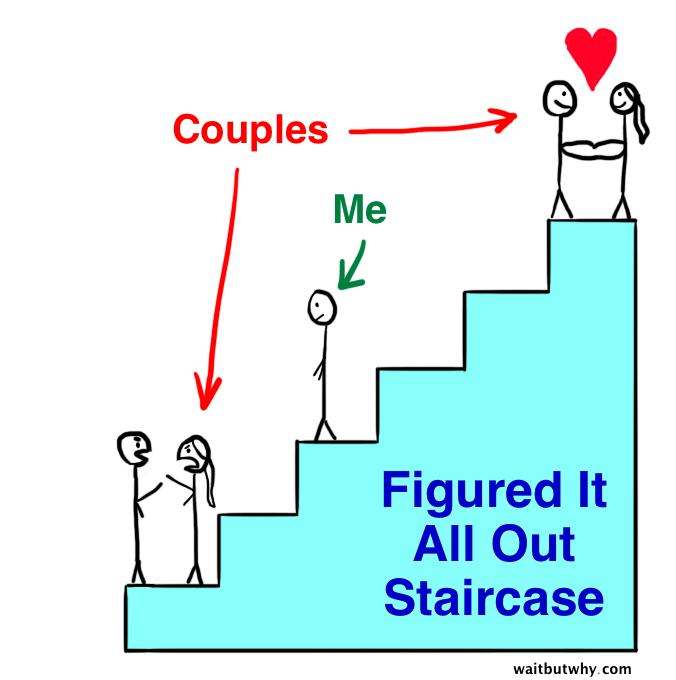
For a long time, people assumed that marriage itself was a kind of happiness upgrade — that once you crossed the finish line of marriage, life satisfaction would automatically rise. Research tells a far more interesting, and far more honest, story.
When psychologists and sociologists followed people over many years — before marriage, during marriage, and sometimes after divorce — they noticed a clear pattern. People in healthy, supportive marriages consistently reported the highest levels of happiness, emotional stability, and even physical health. They slept better, handled stress better, and recovered faster from life’s shocks. A good marriage worked like an emotional shock absorber. Life didn’t become easy, but it became more manageable.
But here’s the part that changes how we should think about relationships: people in unhappy marriages were often less happy than people who were single. Not slightly less happy — sometimes significantly so. Chronic conflict, emotional neglect, constant criticism, or a feeling of being unseen created a low-grade stress that never switched off. Over time, that stress showed up as anxiety, depression, fatigue, irritability, and even physical illness.
Single people, on average, landed somewhere in the middle. They didn’t enjoy the emotional support of a good partnership, but they were also spared the daily emotional drain of a bad one. Loneliness came and went. Chronic tension did not.
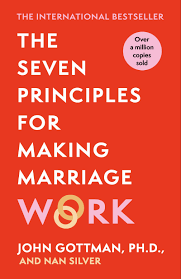
This is why the work of John Gottman became so influential. By observing couples over decades, he found that it wasn’t love, attraction, or compatibility on paper that predicted happiness — it was the emotional tone of everyday interactions. Couples who handled conflict with respect, who repaired after fights, who avoided contempt and constant criticism, stayed healthier and happier. Couples who lived in a climate of negativity slowly deteriorated, emotionally and physically.
Other large population studies back this up. When people leave deeply distressed marriages, their happiness often increases over time — despite the pain of separation. That finding alone dismantles the myth that marriage is always better than being alone. What matters is not whether you are married, but what kind of marriage you are living inside.
Happiness does not come from checking the “married” box. It comes from emotional safety, mutual respect, and the feeling that life is lighter — not heavier — with the person beside you. A good marriage can be one of life’s greatest sources of joy. A bad one can slowly drain it away. That is why choosing carefully matters far more than choosing quickly. So if you’re single and wondering whether you’re “late” or “behind,” relax. Being single is not the problem. Being stuck with the wrong person is.
Then why do so many intelligent, sensible people still rush into relationships that slowly drain them?
One simple reason: we are not very good at knowing what we actually need in a partner.
Studies on speed dating show something awkward but honest. People confidently say they want kindness, emotional maturity, shared values — and then choose someone completely different within minutes. Attraction hijacks the plan.
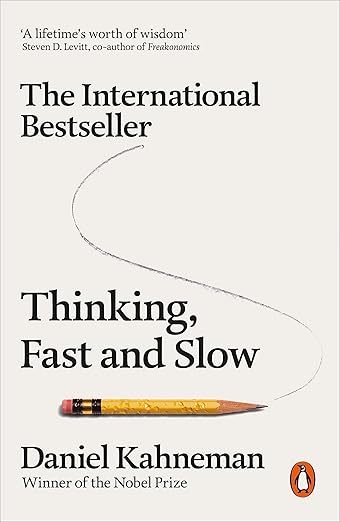
Psychology explains why. In ‘Thinking, Fast and Slow’, Nobel Prize–winning psychologist Daniel Kahneman explains that the mind works in two modes:
- One is fast, emotional, automatic. It decides instantly: I like this person. I trust them. They feel exciting.
- The other is slow, logical, and effortful. It explains decisions after they’ve already been made.
In real life, we like to believe logic is driving the bus. In reality, emotion grabs the steering wheel first, and logic comes later to justify the route. That’s why we meet someone, feel a spark, and later say things like, “Our values align,” “We connect deeply,” “It was meant to be.” The story feels thoughtful, but often it’s just a polished explanation of a feeling. Kahneman puts it beautifully: “We are blind to our own blindness.” We don’t realize how much the first emotional reaction decided everything. This doesn’t mean feelings are bad. It means feelings are powerful — and powerful things need respect.
Another problem is that we imagine relationships using our single-person logic. But relationship-you is a very different version of you. Traits that feel exciting early — intensity, unpredictability, emotional highs and lows — often become stressful years later. Calm starts to look attractive only after chaos gets exhausting.
And just when we need clarity, society steps in and makes things worse.
In almost every area of life, thinking deeply is praised. In love, it’s mocked. Someone who carefully studies relationships or takes time before committing is called “too analytical.” Someone who marries quickly because “it felt right” is celebrated.
Sociological research shows how illogical this is. We don’t choose the best partner for our life. We choose the best option available in our small social circle at a particular moment. As Modern Romance shows, who we end up with is shaped more by timing, geography, and opportunity than destiny.
Then biology adds fuel to the fire.
Anthropologist Helen Fisher explains that early attraction floods the brain with chemicals. Dopamine makes the person feel extraordinary. Oxytocin bonds us quickly. Excitement rises. Judgment drops. Biology whispers one message: Commit now. Think later.
This system is brilliant for starting relationships. It is terrible for evaluating them. That’s why people ignore red flags during the honeymoon phase. Constant fights are renamed “passion.” Emotional distance becomes “mystery.” Feeling smaller becomes “self-growth.”
As ‘The Science of Happily Ever After’ shows, many of us make the same mistake again and again: we confuse strong feelings with the right choice. This is a book is written by Ty Tashiro, a psychologist who studied why relationships fail even when people are smart, kind, and serious about commitment. His main finding is surprisingly simple: what feels exciting at the start is often not what makes a relationship work in the long run.
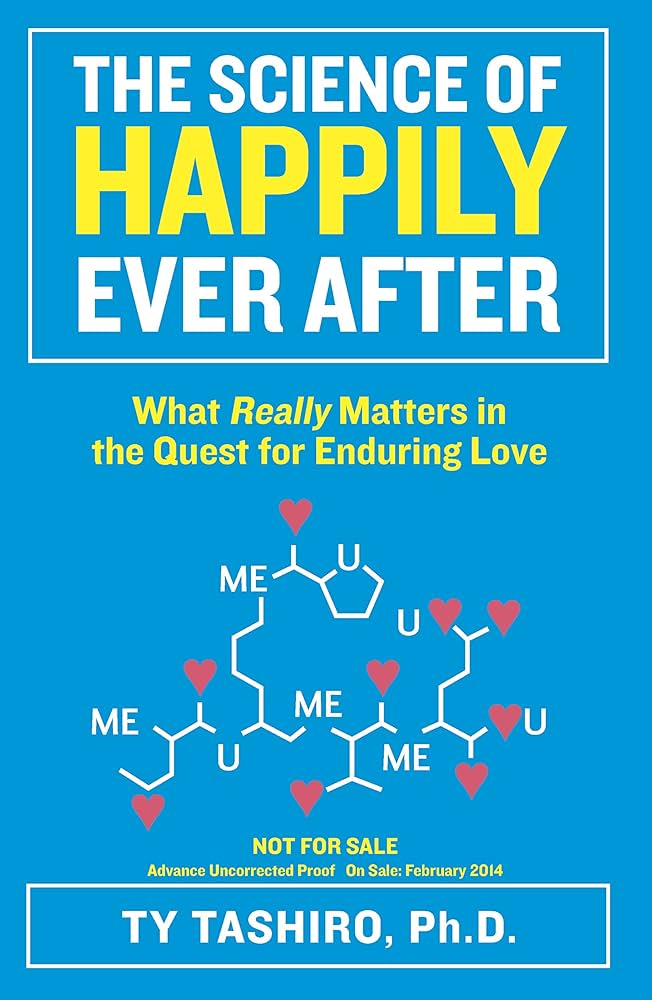
Strong attraction, emotional highs and lows, drama, and intensity feel powerful. They make us think, “This must be special.” But intensity is easy to create and hard to live with. Compatibility, on the other hand, is quieter. It shows up as emotional safety, ease of talking, shared values, and mutual respect. Because it doesn’t feel dramatic, people often overlook it.
Tashiro found that many people choose partners based on the wrong things.
- Some believe love alone will solve everything. They think that if the feeling is strong enough, problems will disappear. In reality, love doesn’t fix problems — it makes existing patterns stronger.
- Some people settle because of fear. Fear of getting older. Fear of being alone. Fear of what others will say. Ironically, this fear often leads to long-term unhappiness inside the relationship.
- Others choose based on “résumé” factors — salary, status, looks, education, family background. These things look good on paper, but they don’t tell you how a person handles stress, conflict, boredom, or disappointment — which is what marriage is mostly made of.
- And many people let family or society make the decision for them. The relationship looks right from the outside, but only the couple lives it from the inside.
The simple lesson from The Science of Happily Ever After is this: intensity can start a relationship, but compatibility is what keeps it alive. What feels exciting today is not always what will feel peaceful ten years from now.
Long-term research tells a very different story about what actually predicts relationship success. It’s not shared hobbies. It’s not constant romance. It’s how couples handle conflict. Gottman’s research shows that contempt, constant criticism, defensiveness, and emotional shutdown predict divorce far better than lack of love. On the other hand, happy couples repair quickly. They apologize. They soften arguments. They make each other feel emotionally safe.
Attachment research supports this too. Secure relationships often feel calm, even boring, in the beginning. Anxious or avoidant relationships feel thrilling, dramatic, addictive. But what feels boring early often feels peaceful later. And what feels exciting early often feels exhausting later. This is explained clearly in ‘Attached’.
So instead of asking, “Am I madly in love?”, better questions are:
- Do I feel calmer or more anxious around this person over time?
- Do conflicts leave us closer or drained?
- Can we repair after fights?
- Do I respect how they treat people who can’t offer them anything?
- Do I like who I’m becoming in this relationship?
These questions may not sound romantic. But they are kind — especially to your future self.
Modern marriage asks one person to be everything: lover, best friend, co-parent, therapist, cheerleader, and emotional anchor. As The ‘All-or-Nothing Marriage’ argues, expectations are higher than ever. That makes the foundation more important than ever.
Choosing a life partner isn’t about maximizing butterflies. Butterflies fade. It’s about choosing someone with whom life becomes easier to carry. Someone who makes hard days softer. Someone whose presence feels like relief, not tension. You will share thousands of meals. Hear the same stories again and again. Age together. Sit in silence together. Romance matters — but endurance matters more.
Being single longer is not failure. It is often wisdom.
The real danger isn’t being alone for a few years.
The real danger is spending decades feeling lonely with someone.
Science doesn’t kill romance. It simply reminds us that the most important decision of our life deserves more than hope and hormones. It deserves patience, clarity, and respect for the long game.
Marriage, Gibran suggests, is not about dissolving into each other, but about standing together while remaining whole. Love should not bind or possess; it should give space, like the distance between the pillars of a temple that hold the same roof. Share your joys and sorrows, but do not lose your inner world. Give freely, yet do not demand ownership. Walk side by side, not in each other’s shadows. For love grows strongest not when two lives merge into one, but when two complete individuals choose, again and again, to walk the same path with respect, freedom, and grace.

About the Author
Dr Mukesh Jain is a Gold Medallist engineer in Electronics and Telecommunication Engineering from MANIT Bhopal. He obtained his MBA from the prestigious management institute, the Indian Institute of Management Ahmedabad. He obtained his Master of Public Administration from the Kennedy School of Government, Harvard University along with Edward Mason Fellowship. He had the unique distinction of receiving three distinguished awards at Harvard University: The Mason Fellow award and The Lucius N. Littauer Fellow award for exemplary academic achievement, public service & potential for future leadership. He was also awarded The Raymond & Josephine Vernon award for academic distinction & significant contribution to Mason Fellowship Program. Mukesh Jain received his PhD in Strategic Management from IIT Delhi. His focus of research has been Capacity building of organizations using Positive psychology interventions, Growth mindset and Lateral Thinking etc.
Mukesh Jain joined the Indian Police Service in 1989, Madhya Pradesh cadre. As an IPS officer, he held many challenging assignments including the Superintendent of Police, Raisen and Mandsaur Districts, and Inspector General of Police, Criminal Investigation Department and Additional DGP Cybercrime, Transport Commissioner Madhya Pradesh and Special DG Police. He has also served as Joint Secretary in Ministry of Power and Ministry of Social Justice and Empowerment, Government of India. As Joint Secretary, Department of Persons with Disabilities, he conceptualized and implemented the ‘Accessible India Campaign’, launched by Hon’ble Prime Minister Shri Narendra Modi in December 2015. This campaign is aimed at creating accessibility in physical infrastructure, Transportation, and IT sectors for persons with disabilities and continues to be a flagship program of the Ministry of Social Justice and Empowerment, Government of India since 2015.
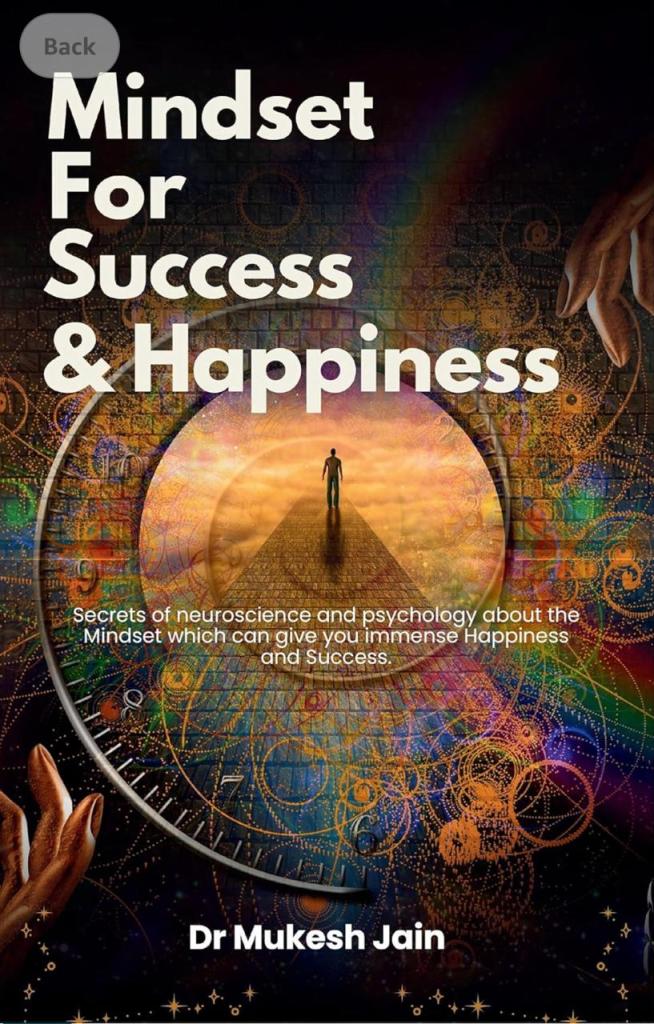
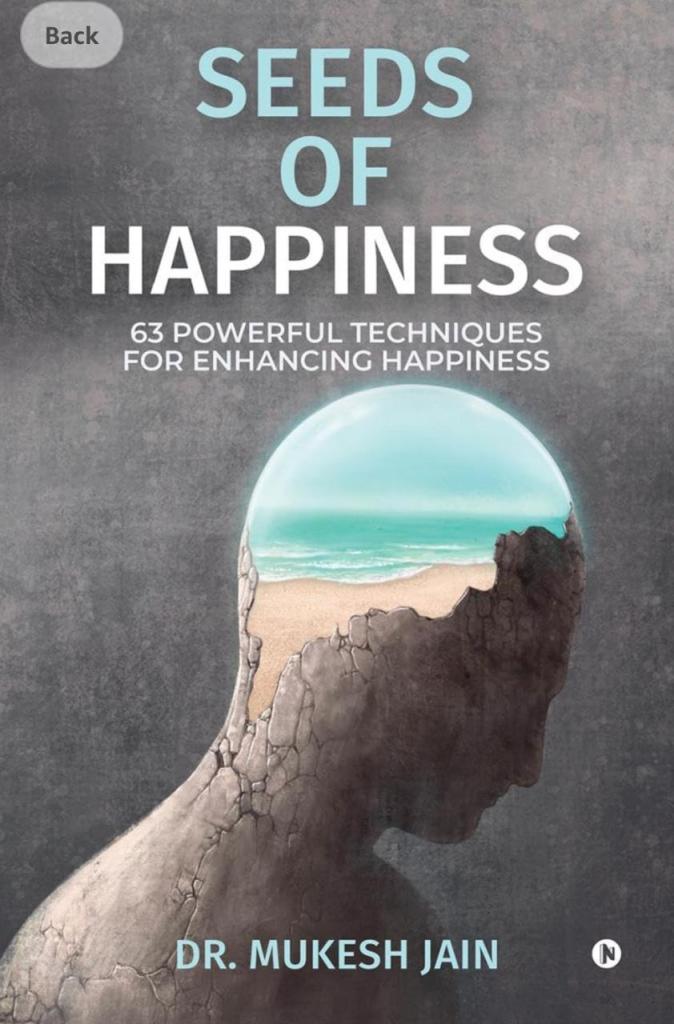
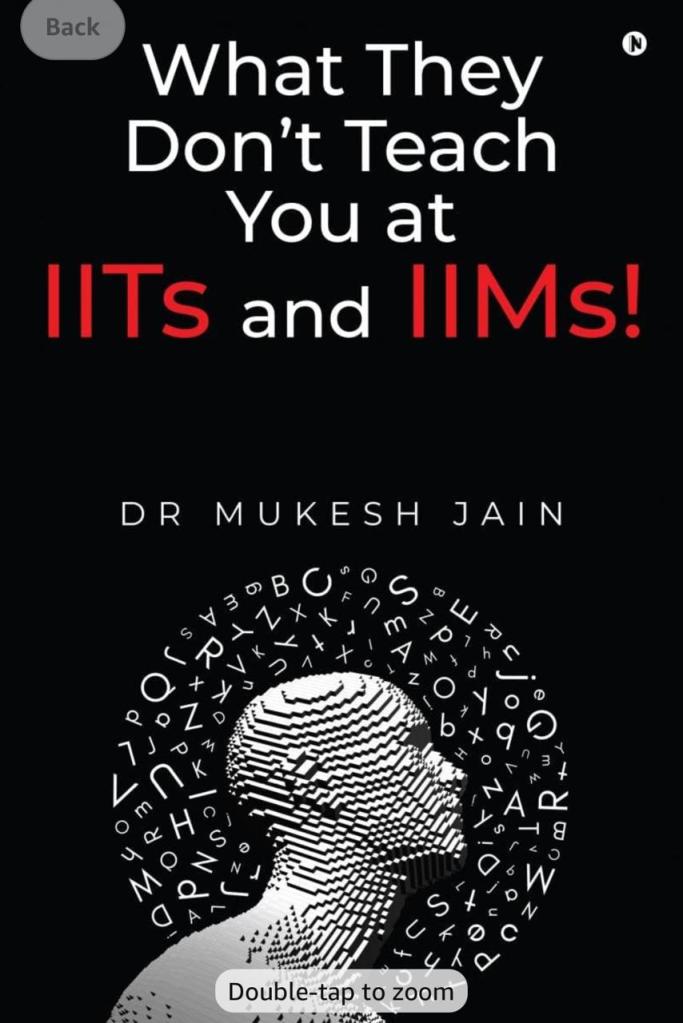
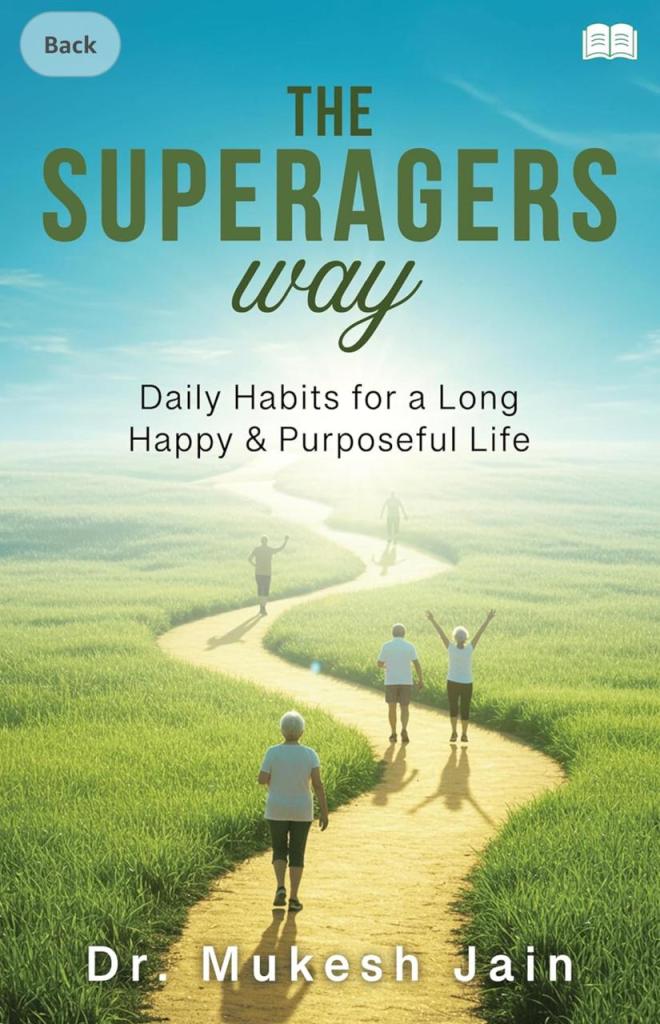
Dr. Mukesh Jain has authored many books on Public Policy and Positive Psychology. His book, ‘Excellence in Government, is a recommended reading for many public policy courses. A leading publisher published his book- “A Happier You: Strategies to achieve peak joy in work and life using science of Happiness”, which received book of the year award in 2022. His other books are : ‘Mindset for Success and Happiness’, ‘Seeds of Happiness’, and ‘What they don’t teach you at IITs and IIMs’.
He is a visiting faculty to many business schools and reputed training institutes. He is an expert trainer of “The Science of happiness”. He has conducted more than 250 workshops on the Science of Happiness at many prominent B-schools and administrative training institutes of India, including Indian School of Business Hyderabad/ Mohali, National Police Academy, IIFM, National Productivity Council etc.
 School Of Happiness by Mukesh Jain