Vilfredo Pareto, an Italian economist and sociologist, probably never imagined that a simple observation about peas in his garden would become one of the most powerful mental models of modern life. Yet that’s exactly what happened.
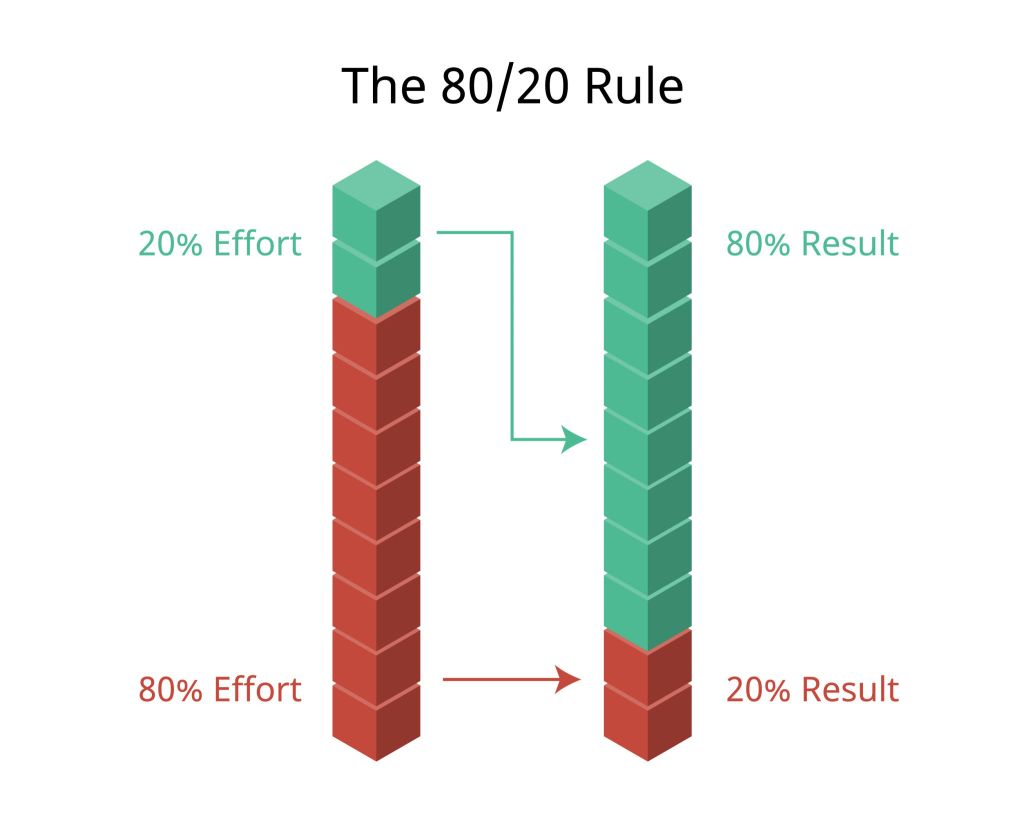
In the late 1800s, Pareto noticed that around 80% of the peas in his garden came from just 20% of the pods. When he looked beyond gardening, he saw the same pattern everywhere: about 80% of wealth in Italy was owned by 20% of the people. That simple observation slowly evolved into what we now call the Pareto Principle, or more popularly, the 80/20 rule.
The Pareto principle, also known as the 80/20 rule, comes from many such observations of Vilfredo Pareto, who noticed that outcomes in life are rarely evenly distributed. In simple terms, it suggests that a small part of causes usually creates a large part of results. Roughly speaking, 20% of inputs lead to 80% of outcomes — whether it is 20% of customers generating 80% of profits, 20% of habits shaping 80% of health, or 20% of efforts producing 80% of success.
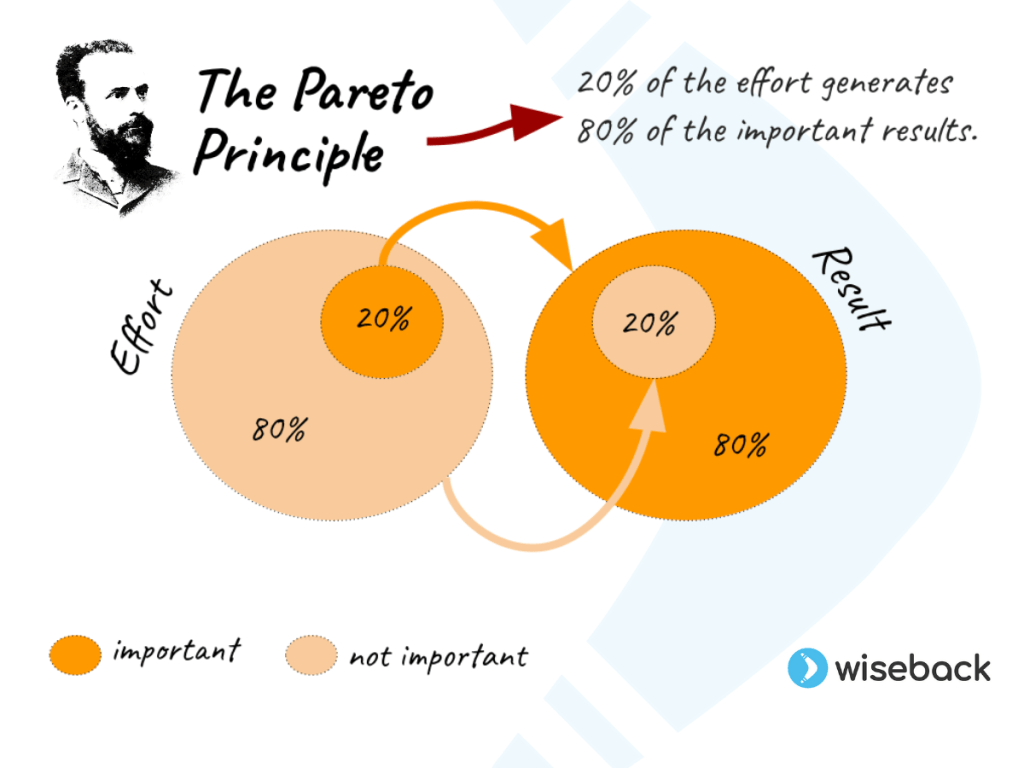
At its heart, the idea is beautifully simple: A small minority of causes usually produces a large majority of effects. Not exactly 80 and 20 every time — but unevenness is the rule, not the exception. The exact numbers are not important; the insight is. Life works through imbalance and leverage. Understanding Pareto helps us focus less on doing everything and more on doing what truly matters, making it one of the most powerful ideas for work, learning, decision-making, and everyday living. The idea is not about exact numbers. Life is not a math exam. The deeper insight is this:
Results are not evenly distributed. A few causes usually create most effects.
Once you understand this idea, you start seeing it everywhere — almost like putting on a new pair of glasses.
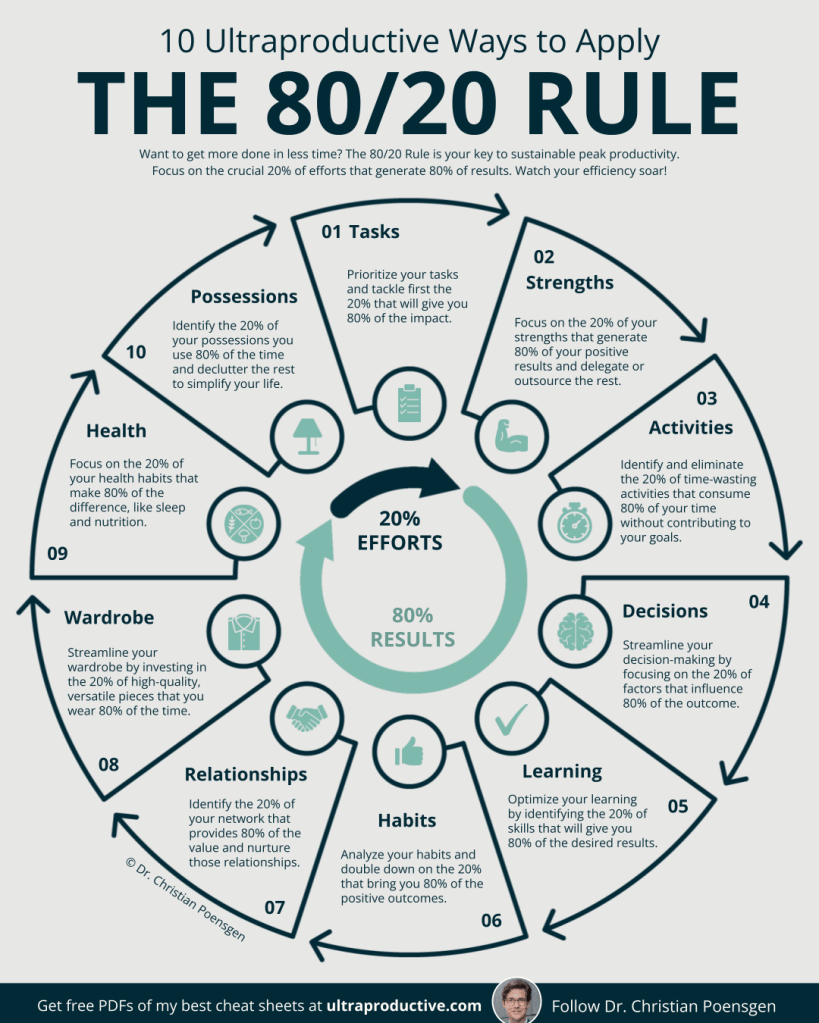
At work, a small number of tasks create most value. You may answer dozens of emails, but it is usually just a few key decisions or conversations that actually move things forward. In business, a minority of customers generate most profits, while a large number contribute very little. That’s why companies that understand this focus on serving their most valuable customers better instead of trying to please everyone equally.

In health, the pattern is just as clear. A handful of habits decide most outcomes. Regular sleep, daily movement, basic strength, and simple, balanced eating influence health far more than supplements, detox plans, or miracle products. Doctors also see this at a population level: a small number of risk factors like smoking, high blood sugar, high blood pressure, and obesity account for most chronic diseases.
Even crime follows this rule. Studies across countries show that a small percentage of people commit a large share of crimes, and a small number of locations or streets account for most criminal activity. That’s why policing strategies often focus on “hotspots” rather than spreading resources thin everywhere. Fixing a few problem areas can reduce crime far more than blanket measures.
In education, students experience this daily. Not every page of every book matters equally. A limited set of core ideas explains most exam questions. Students who identify and master these concepts often perform better than those who try to memorise everything. Learning is less about covering more and more content, and more about understanding what truly matters.
Fitness works the same way. Sleep, movement, and nutrition do most of the heavy lifting. Walking regularly, sleeping well, and eating sensibly bring far greater benefits than fancy gym routines or expensive supplements.
Even personal life follows the 80/20 pattern. A few relationships bring most happiness, while many remain pleasant but not deeply nourishing. At the same time, a few worries create most stress, while dozens of small irritations hardly matter.

This unevenness is not a flaw in life. It is a feature. Author Richard Koch, who brought Pareto thinking into popular management through his book ‘The 80/20 Principle’, puts it simply: most effort produces little, while a small amount of effort produces a lot. The practical wisdom lies in identifying that small amount.
Over the years, the 80/20 rule has quietly guided decisions across fields. In economics, wealth and productivity follow power-law distributions. In medicine, a few risk factors account for most disease burden. In public administration, a handful of bottlenecks create most citizen frustration. Fixing those few often improves trust more than launching dozens of new schemes.
The Pareto principle does not say life is fair or balanced. It says life is lopsided.
- A few inputs matter far more than the rest.
- A few efforts create most of the results
- A few problems cause most of the pain
- A few relationships bring most of the joy
As management thinker Peter Drucker famously hinted: efficiency is doing things right, effectiveness is doing the right things. The 80/20 rule is really a shortcut to effectiveness.
For decades, it felt almost like a natural law of life. Business, economics, learning, health, creativity — everywhere we looked, effort and reward were unevenly distributed. But now, in the age of AI, some thinkers are asking a bold question:
What if AI doesn’t just reveal the 80/20 pattern — but actually changes it?
How AI is changing the 80/20 rule
According to innovation expert Michael Schrage, AI is not replacing the 80/20 rule — it is making it much stronger and sharper.
Earlier, people guessed which 20% mattered most. Now AI looks at massive amounts of data and tells us clearly. It shows which employees create most value, which product features people truly use, and which small changes make customers happy or angry. What once took years to understand can now be seen in days — sometimes hours.
But here is the surprise.
In many AI-driven companies, the pattern is no longer 80/20. It is becoming 90/10 or even 99/1. This means very few things create almost all results. A tiny number of gamers may generate most revenue. A handful of features may decide whether people love or delete an app.
The “important few” are becoming even fewer.
This changes how organisations think. Instead of focusing only on big teams or full products, they focus on small details — tiny actions, specific features, or simple behaviours that create big impact. Sometimes, removing unnecessary features actually makes products better, cheaper, and easier to use.
AI also connect information that earlier stayed separate. Sales data, customer service data, and marketing data are now seen together. When these pieces are combined, new opportunities appear — opportunities no one noticed before.
The core idea is very simple: Earlier, the 80/20 rule helped us understand what worked in the past. Today, AI helps us predict what will work next. AI turns the 80/20 rule from a lesson into a practical tool. In the AI age, success will not come from doing more and more. It will come from understanding which very small things matter most — and focusing on them wisely, humanely, and with care.
About the Author

Dr Mukesh Jain is a Gold Medallist engineer in Electronics and Telecommunication Engineering from MANIT Bhopal. He obtained his MBA from the prestigious management institute, the Indian Institute of Management Ahmedabad. He obtained his Master of Public Administration from the Kennedy School of Government, Harvard University along with Edward Mason Fellowship. He had the unique distinction of receiving three distinguished awards at Harvard University: The Mason Fellow award and The Lucius N. Littauer Fellow award for exemplary academic achievement, public service & potential for future leadership. He was also awarded The Raymond & Josephine Vernon award for academic distinction & significant contribution to Mason Fellowship Program. Mukesh Jain received his PhD in Strategic Management from IIT Delhi. His focus of research has been Capacity building of organizations using Positive psychology interventions, Growth mindset and Lateral Thinking etc.
Mukesh Jain joined the Indian Police Service in 1989, Madhya Pradesh cadre. As an IPS officer, he held many challenging assignments including the Superintendent of Police, Raisen and Mandsaur Districts, and Inspector General of Police, Criminal Investigation Department and Additional DGP Cybercrime, Transport Commissioner Madhya Pradesh and Special DG Police. He has also served as Joint Secretary in Ministry of Power and Ministry of Social Justice and Empowerment, Government of India. As Joint Secretary, Department of Persons with Disabilities, he conceptualized and implemented the ‘Accessible India Campaign’, launched by Hon’ble Prime Minister Shri Narendra Modi in December 2015. This campaign is aimed at creating accessibility in physical infrastructure, Transportation, and IT sectors for persons with disabilities and continues to be a flagship program of the Ministry of Social Justice and Empowerment, Government of India since 2015.
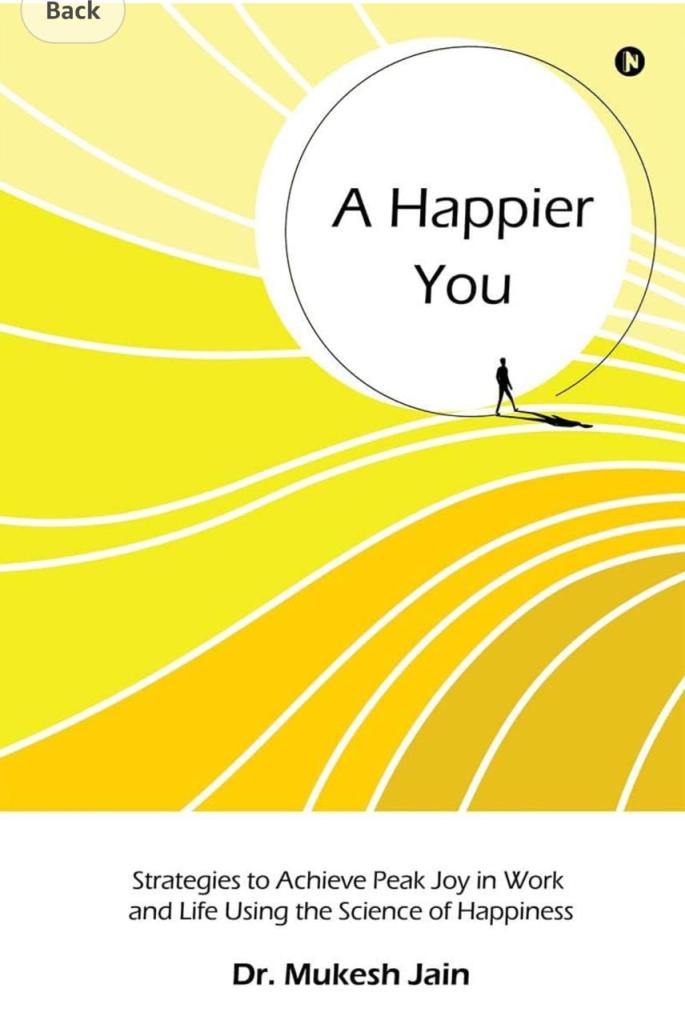
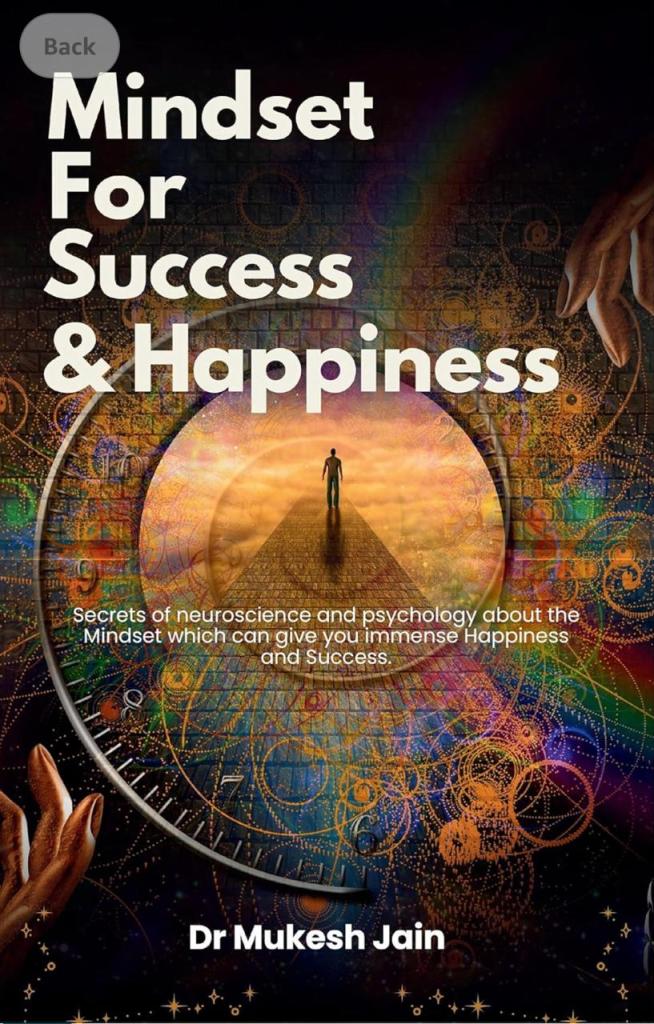
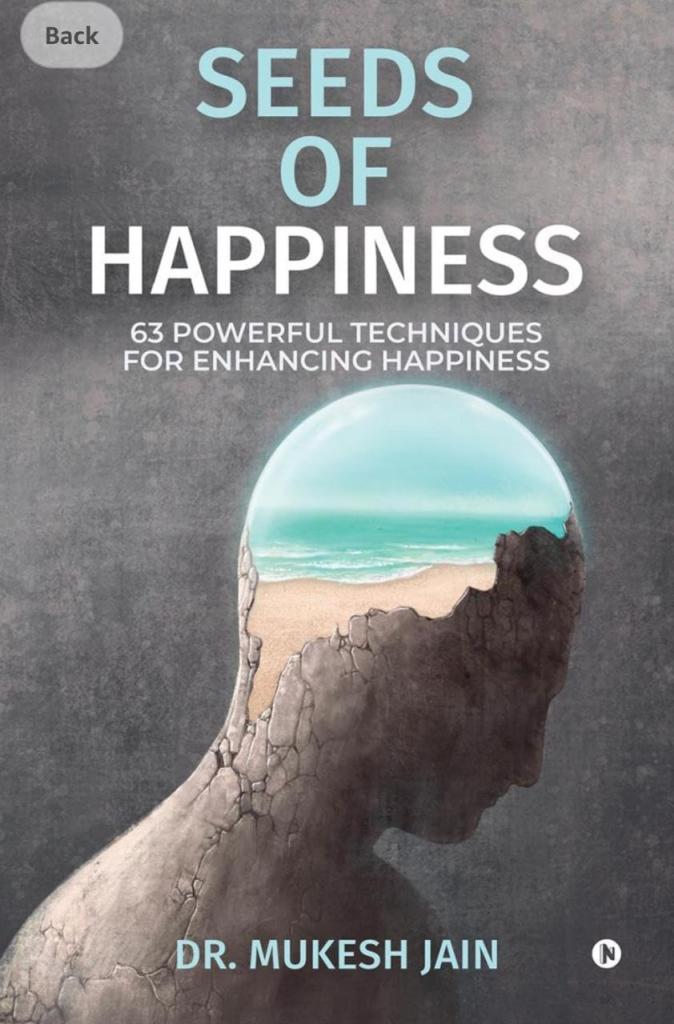
Dr. Mukesh Jain has authored many books on Public Policy and Positive Psychology. His book, ‘Excellence in Government, is a recommended reading for many public policy courses. A leading publisher published his book- “A Happier You: Strategies to achieve peak joy in work and life using science of Happiness”, which received book of the year award in 2022. His other books are : ‘Mindset for Success and Happiness’, ‘Seeds of Happiness’, and ‘What they don’t teach you at IITs and IIMs’.
He is a visiting faculty to many business schools and reputed training institutes. He is an expert trainer of “The Science of happiness”. He has conducted more than 250 workshops on the Science of Happiness at many prominent B-schools and administrative training institutes of India, including Indian School of Business Hyderabad/ Mohali, National Police Academy, IIFM, National Productivity Council etc.

 School Of Happiness by Mukesh Jain