There was a time when missing an event meant you simply didn’t know about it. A wedding happened somewhere, a party took place, a group of friends met for coffee—and unless someone told you later, it quietly passed. Today, missing out has become loud. It arrives on your phone in real time. Photos, stories, check-ins, smiling faces, perfect lighting. And with them comes a small, uncomfortable thought: Should I have been there?
This feeling has a name. FOMO—the fear of missing out. It sounds casual, almost funny, but its impact is anything but light. FOMO quietly shapes how we live, how we spend our time, and how we measure our lives. It pushes us to say yes when we mean no, to scroll when we’re tired, to stay busy even when our soul is begging for rest.
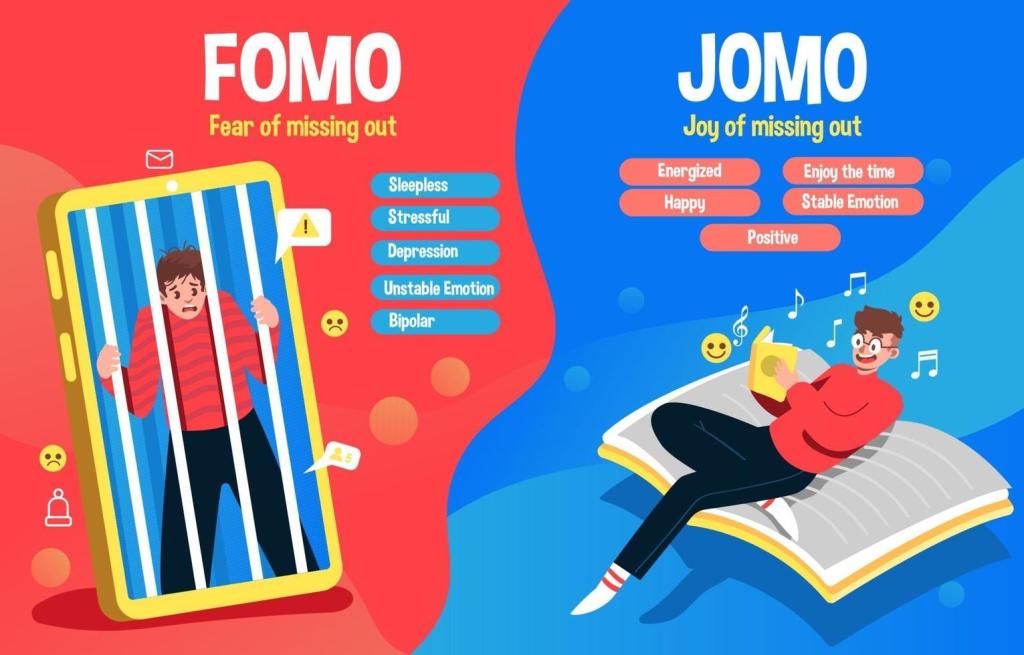
Psychologists tell us that FOMO is not really about events or parties. At its core, it is about unmet needs—belonging, meaning, and self-worth. When these needs feel shaky, we look outward. We compare. We monitor. We keep checking what others are doing, hoping it will tell us something reassuring about our own lives. Social media acts like fuel on this fire. It doesn’t show life as it is lived; it shows life as it is curated. We see highlights, not struggles. Celebrations, not boredom. Togetherness, not loneliness. And slowly, we start believing that everyone else is living better, fuller, more exciting lives than we are.
The strange thing is this: the more we try to keep up, the more exhausted we become. Research consistently shows that higher FOMO is linked to lower life satisfaction, higher anxiety, and even trouble sleeping. The mind never rests. There is always something else to check, somewhere else to be, someone else doing something more interesting. And in this endless chase, something important gets lost—our own life.
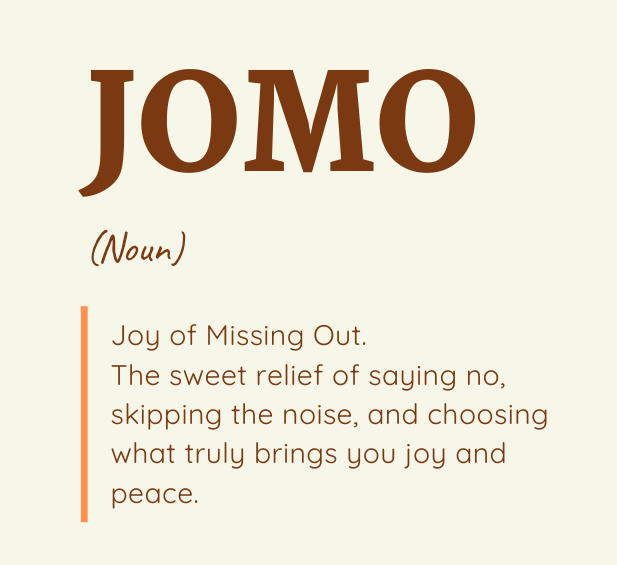
This is where a quiet but powerful idea enters: JOMO, the joy of missing out.
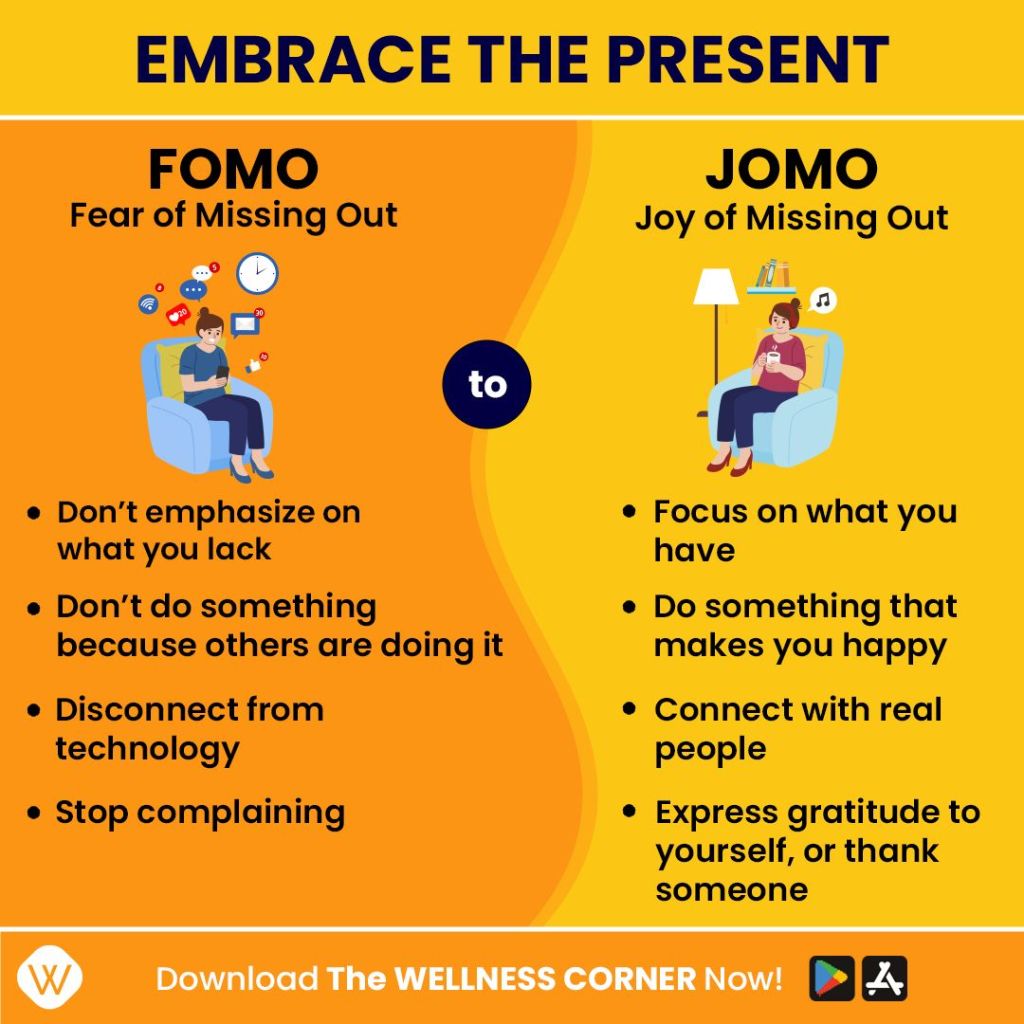
JOMO is not about giving up on life or becoming disconnected from people. It is about choosing intentionally. It is the moment you stay home and feel relief instead of regret. The moment you turn down an invitation and feel calm rather than anxious. The moment you stop asking, “What am I missing?” and start asking, “What do I actually want?”
Many thinkers and researchers across psychology, philosophy, and neuroscience are pointing toward the same insight: a good life is not built by doing more, but by choosing better. We live in a culture that worships growth, speed, and constant availability. Saying yes has become a sign of ambition. Saying no feels like failure. But in reality, every yes comes with a cost. Time, energy, attention—these are finite. Pretending otherwise is what keeps us anxious.
One author puts it bluntly: life is short, and you will miss out on most things no matter what you do. This is not depressing; it is freeing. Once you accept that you cannot attend every event, read every book, watch every show, or keep up with every conversation, the pressure lifts. You stop trying to “win” at life. You start living it.
Another powerful idea that runs through this body of work is the value of depth over breadth. FOMO thrives on variety—more experiences, more people, more stimulation. But fulfillment comes from depth: deep relationships, deep work, deep rest, deep presence. Flow research shows that the happiest moments in life are not when we are consuming endlessly, but when we are fully absorbed in one meaningful activity. That state is impossible when attention is constantly pulled elsewhere.
JOMO creates the conditions for depth. When you miss out on noise, you make space for focus. When you disconnect from constant updates, you reconnect with your inner life. Solitude, which is often confused with loneliness, becomes a source of clarity. Many psychologists emphasize that solitude is where identity forms. Without time alone with our thoughts, we become shaped entirely by external expectations.
This does not mean withdrawing from the world. It means engaging on your own terms. It means choosing relationships over networks, conversations over notifications, purpose over popularity. It means recognizing that rest is not laziness and stillness is not stagnation. In fact, some of the most creative, ethical, and grounded people in history deliberately stepped away from the crowd to think clearly.
There is also an uncomfortable truth here: constant busyness often acts as an escape. When life is full of activity, there is no time to ask difficult questions. Am I happy? Am I living according to my values? Am I spending my time on what truly matters? JOMO requires courage because it asks us to slow down and face ourselves without distraction. At first, that can feel unsettling. But over time, it becomes deeply satisfying.
Another important shift that JOMO brings is moving from comparison to meaning. FOMO is fueled by comparison—how does my life look next to theirs? Meaning dissolves comparison. When your actions align with your values, other people’s choices lose their power over you. You no longer need external validation to feel secure. Missing out stops feeling like loss and starts feeling like protection.
Interestingly, studies show that people nearing the end of life rarely regret not attending more meetings or social events. Their regrets are simpler and deeper: not spending enough time with loved ones, not being true to themselves, not pursuing what felt meaningful. JOMO is, in many ways, listening to that wisdom early.
Digital culture makes this choice harder, but also more necessary. Platforms are designed to capture attention and create urgency. Notifications, likes, and endless feeds are not accidents; they are carefully engineered. Understanding this helps remove self-blame. If you feel pulled, it is not because you are weak—it is because the system is persuasive. JOMO becomes an act of reclaiming agency in an environment designed to take it away.
So how does one practice JOMO in daily life? It begins with small, honest reflections. Notice how you spend your time. Which activities leave you energized, and which leave you drained? Which commitments are driven by genuine interest, and which by fear or habit? Writing these down often brings surprising clarity.
Disconnecting intentionally is another step. This doesn’t require deleting everything overnight. It might mean turning off notifications, creating phone-free hours, or spending one evening a week offline. The goal is not absence, but awareness.
Reconnecting is equally important—especially with people and activities that matter. JOMO is not about isolation; it is about meaningful connection. When time is limited, quality becomes precious. A quiet dinner, a long walk, focused work on a personal project—these experiences often bring more satisfaction than crowded calendars.
At its heart, JOMO is about trust. Trusting that you are enough even when you are not everywhere. Trusting that your life does not need constant proof. Trusting that meaning grows in silence as much as in action.
In a world that keeps shouting, JOMO is a gentle refusal to shout back. It is choosing a peaceful self over endless stimulation. It is realizing that you are not missing out on life—you are finally present for it.
About the author
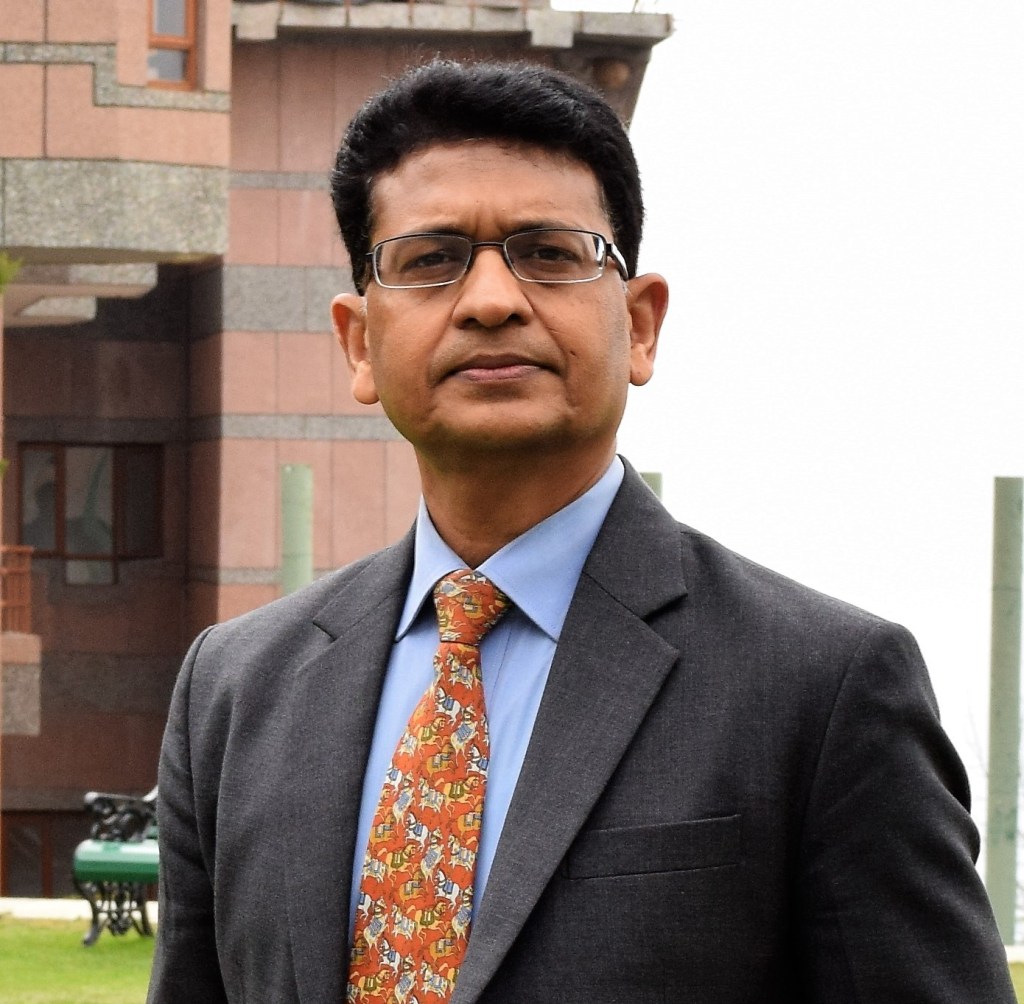
Dr. Mukesh Jain, a senior Indian Police Service( IPS) officer of Madhya Pradesh cadre is a professional with rich administrative experience and brilliant academic background. An alumnus of the Harvard University, IIM Ahmedabad and IIT Delhi, he has the unique distinction of holding various challenging assignments in Central Government & State Government and spearheading an initiative of national importance: Accessible India Campaign.
Dr. Mukesh Jain has published many academic papers in international journals and has been a prolific contributor to national journals on the subjects of governance, and happiness & Public Policy. Dr. Mukesh Jain has authored many books, which includes a book on good governance titled “Excellence in Government: A Blueprint for Reinventing the Government”. A leading publisher is publishing his upcoming book- “A Happier You: Strategies to achieve peak joy in work and life using science of Happiness”. He is a visiting faculty to many business schools and reputed training institutes like Lal Bahadur Shastri national Academy of Administration and National Police Academy. He is an expert trainer of “Lateral Thinking”, and “The Science of happiness”. He has held more than 200 workshops on these subjects across the country.
Books by Author
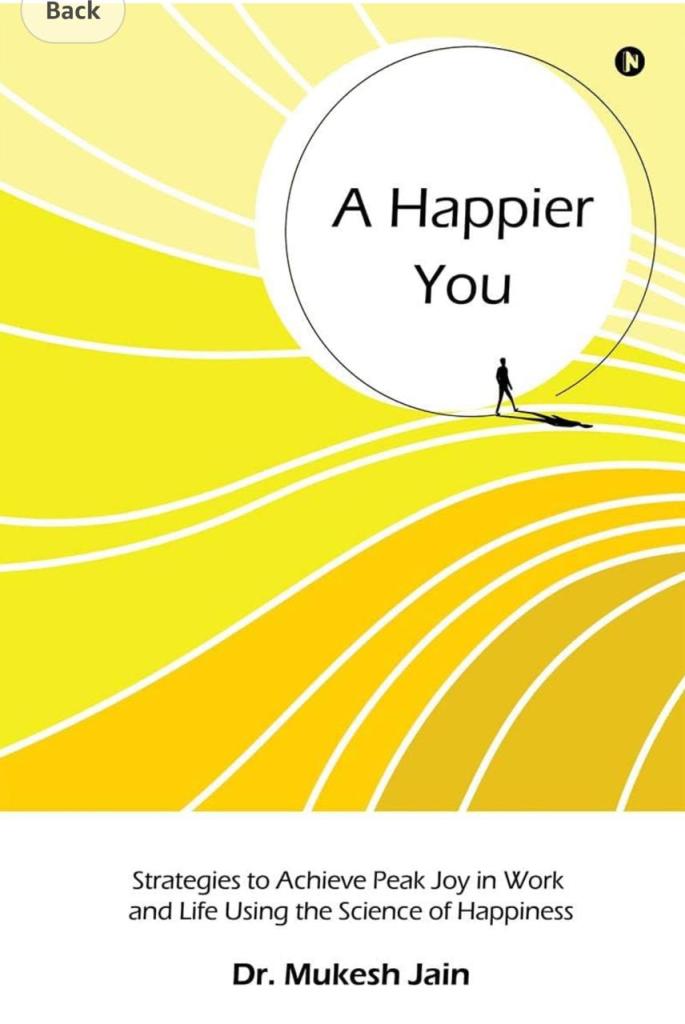
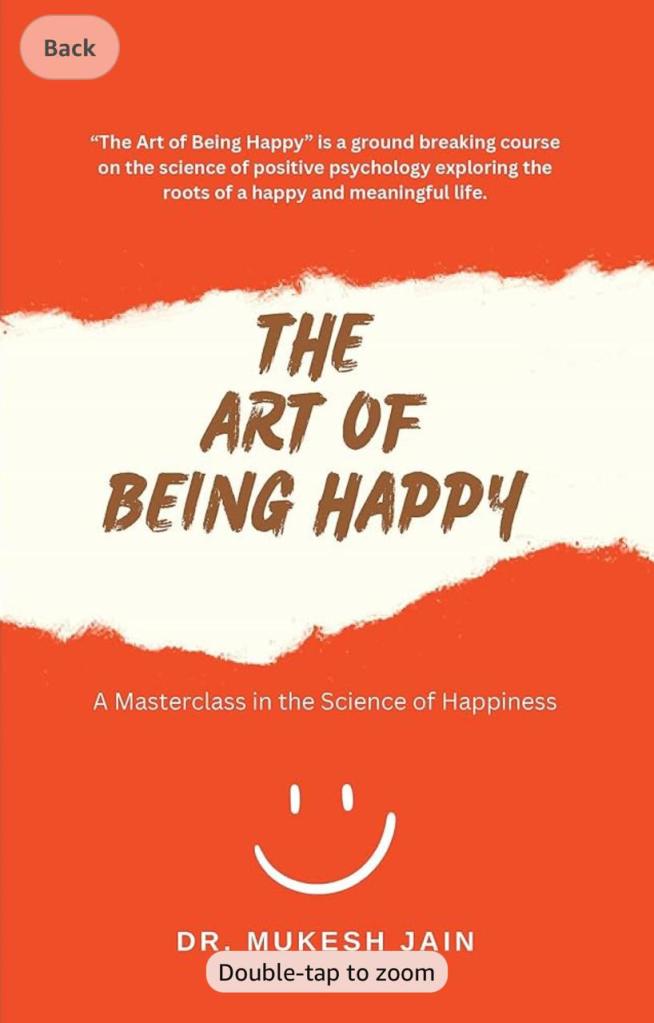
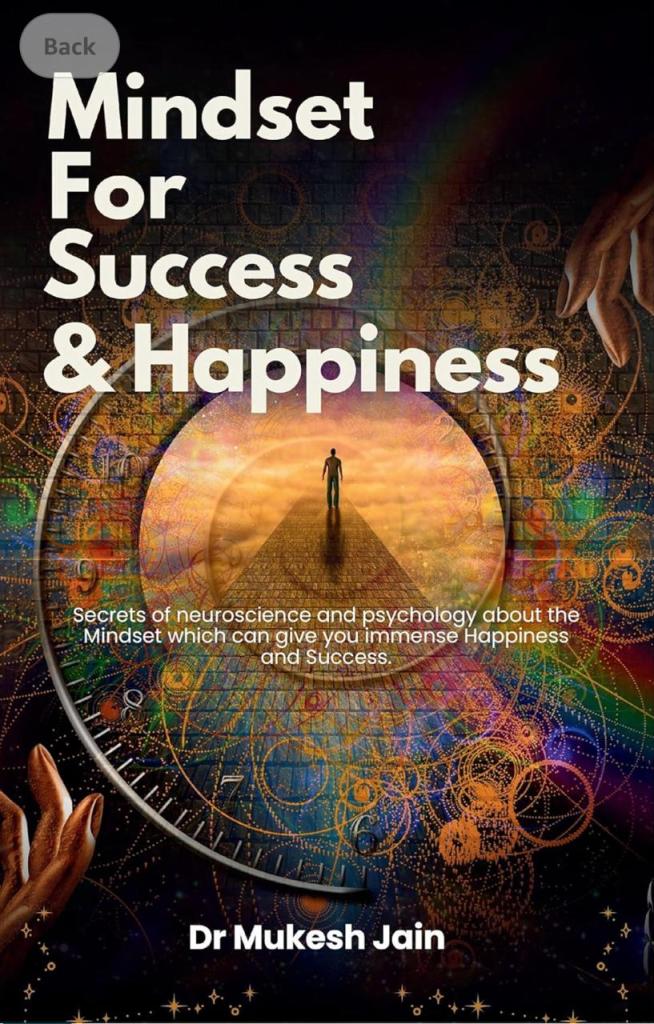
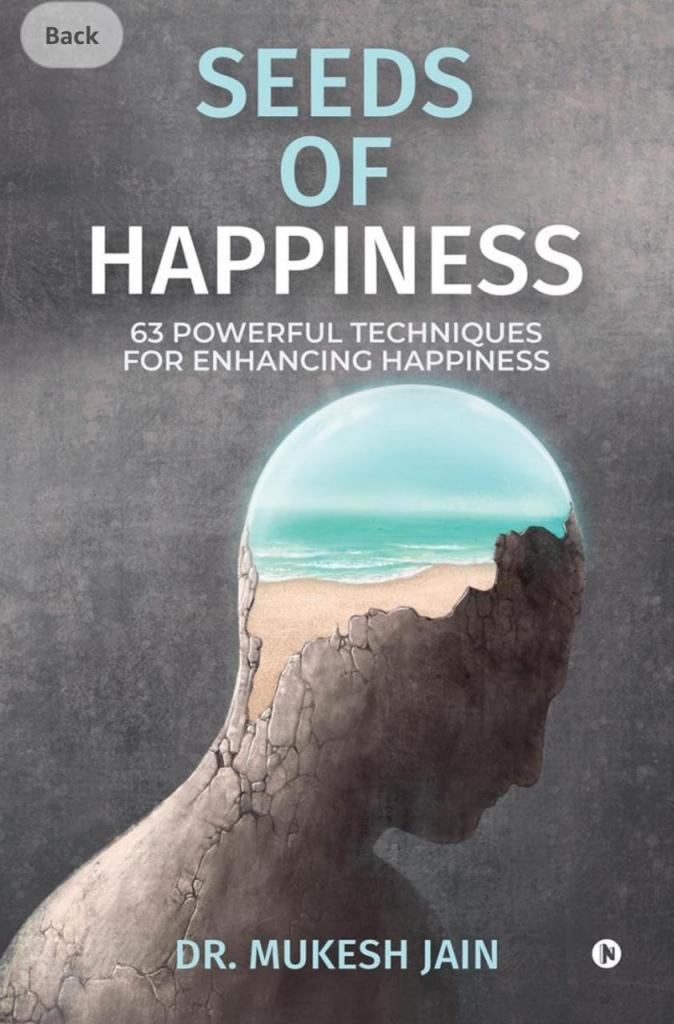
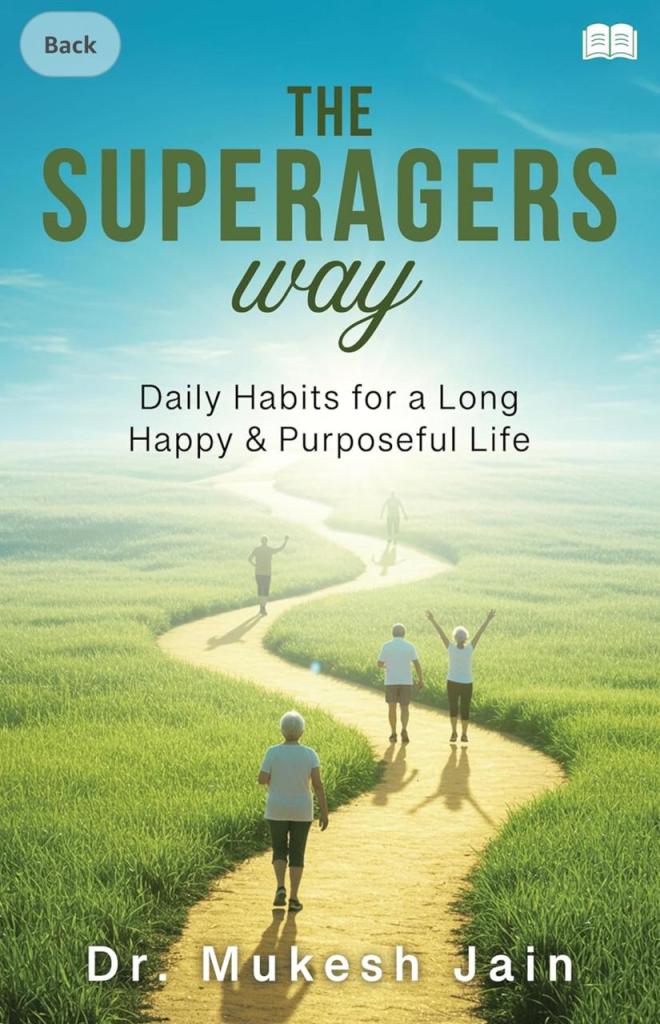
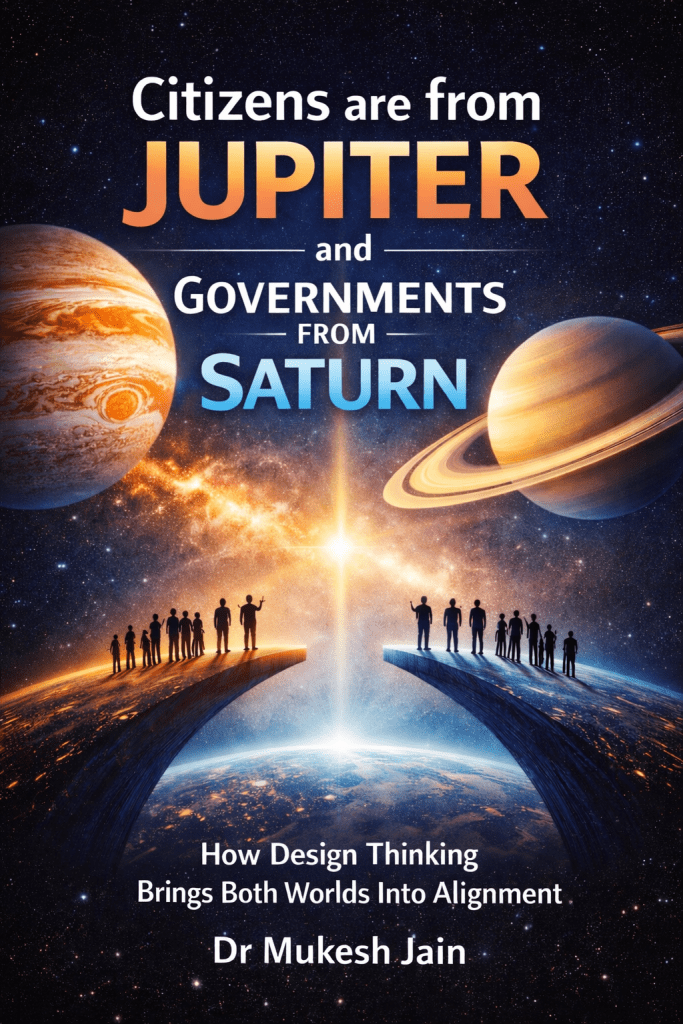
 School Of Happiness by Mukesh Jain
One response to “From FOMO to JOMO: Why Missing Out Might Be the Best Thing You Do for Your Life”
एक उत्कृष्ट सामयिक लेख.. शुभकामनाएं… Aloks20265@gmail.com.
LikeLike