
Some people seem to have a magic touch.
They bump into the right person at the airport. Their side hustle takes off. They meet the love of their life in the unlikeliest place. They get opportunities they didn’t even apply for.
And the rest of us? We try, we hustle, we plan, we manifest—and still miss the train (sometimes literally).
We watch them and wonder: “Why do they get all the luck?”
But here’s the twist—luck is not what we think it is. It’s not just astrology or alignment or being born under the right star. According to psychology, neuroscience, and good old-fashioned research, luck is often created—not by magic, but by mindset, movement, and behavior.
Let us explore this !
Luck Isn’t Random. It’s a Pattern.
Let’s begin with something surprising: psychologists have actually studied luck.
Dr. Richard Wiseman, a British psychologist and author of The Luck Factor, spent ten years studying people who consider themselves either lucky or unlucky. His findings were jaw-dropping: lucky people aren’t lucky by accident. They actually do things—subtle things—that make them more likely to experience good fortune.
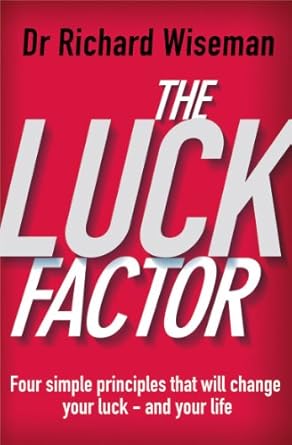
One of his famous experiments involved giving people a newspaper and asking them to count how many photos were in it. Most people took about two minutes. But on page two, in bold letters, was a message:
“Stop counting—there are 43 photos in this newspaper.”
Guess who noticed it?
The lucky ones.
They were more relaxed, open, and observant. The unlucky ones were tense, focused too narrowly on the task, and missed the obvious opportunity.
Wiseman concluded that lucky people notice more, act more, and believe more—and this changes their outcomes over time. His research identified four traits of lucky people:
- They maximize chance opportunities.
- They listen to their intuition.
- They expect good fortune.
- They turn bad luck into good.
Sounds like luck is less about stars and more about habits.
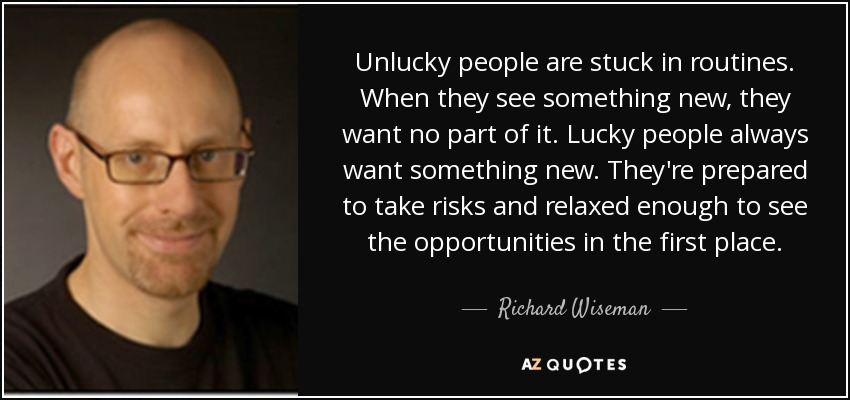
The “Luck Surface Area” Theory
Engineers and startup founders have a nerdy but brilliant concept called luck surface area. Coined by Jason Roberts, it refers to the idea that the more you create, share, and connect with people, the greater your chances of attracting unexpected success.
Think of it this way:
If you sit in the same room, with the same people, doing the same tasks, your chances of bumping into luck are very low. But if you write that blog, attend that conference, share your work, post that idea, meet that person—your luck surface expands. As bestselling author James Clear writes in Atomic Habits, “Every action you take is a vote for the type of person you want to become.” Every small action is also a vote for the type of opportunities you’ll attract.
Lucky people aren’t passive. They’re always in motion. They put more tickets in life’s lottery. And eventually, one hits.

The Science of Serendipity
Let’s add another layer. A fascinating study from the University of Edinburgh, led by psychologist Dr. Timothy Bates, explored how personality traits affect the way people experience luck. Using the Big Five personality model, researchers found that people who scored high in “openness to experience”—a trait associated with curiosity, imagination, and a willingness to try new things—were significantly more likely to report positive life events they considered “lucky.”
These individuals were not sitting back waiting for fate to knock. They were out there—trying new hobbies, starting conversations with strangers, saying yes to unexpected invitations, switching careers, or learning languages for fun. In doing so, they created more “collision points” with opportunity. In contrast, people low in openness were more risk-averse, routine-bound, and cautious. And as a result, they experienced fewer “lucky” moments—not because fortune ignored them, but because they weren’t exposing themselves to enough possibility.
Dr. Bates explained it like this: “Openness to experience increases the frequency of chance opportunities. The more cognitively flexible and exploratory you are, the more likely you are to encounter serendipity.”
This is why the same situation—a delayed flight, for example—can be experienced so differently.
One person grumbles, plugs in their headphones, and shuts out the world. Another person chats with the person next to them, shares a story, and maybe walks away with a new friend, a job lead, or a startup idea.
It’s not the event.
It’s the lens.
And openness to experience widens that lens, allowing people to see possibilities where others see inconvenience.
“Chance favors the connected mind.” — Steven Johnson, in Where Good Ideas Come From
Luck often happens at the crossroads of ideas, people, and timing. Lucky people put themselves at those crossroads more often.
The Optimism Loop: Think Lucky, Get Lucky
You know those people who always expect things to go well? They annoy us sometimes. But here’s the kicker: research says they’re more likely to get what they expect.
Martin Seligman, father of Positive Psychology, showed that optimists tend to try more, recover faster from setbacks, and persist longer—all of which increase their odds of success.
Unlucky people? They tend to give up sooner, blame themselves, and shrink their world to avoid more pain.
The result? A self-fulfilling prophecy. Optimism isn’t about being unrealistic. It’s about increasing your behavioral range—trying more, engaging more, failing more… and eventually, getting lucky more.
How Lucky People React to Bad Luck
Another thing that separates the lucky from the not-so-lucky?
How they respond to setbacks. Dr. Wiseman found that lucky people often reframe adversity in constructive ways.
Example: Two people are in a car accident.
One says, “This is the worst thing ever.”
The other says, “I’m so lucky I survived.”
Same event. Completely different story.
This isn’t toxic positivity. It’s cognitive flexibility—the ability to adapt and find meaning in chaos. And that mindset attracts opportunities where others see dead ends.
Sometimes, the very thing that seems unlucky today is the foundation of future luck—if you stay in the game long enough.

How You Can Get “Luckier” Starting Today
Here’s the good news: you don’t need to be born with luck.
You just need to start behaving like the lucky do.
Try these research-backed strategies:
Say yes more.
Try new things, meet new people, even if you feel awkward.
Be curious, not just focused. Lucky people notice what others ignore.
Talk to strangers. A single conversation can change everything.
Share your work.
Start that blog, that post, that project. Give luck a way to find you.
Reframe failures.
Every “no” is one step closer to a surprising “yes.”
Move. Literally. Emotionally. Professionally.
Luck is allergic to stagnation.
Final Thought: Don’t Wait for Luck. Walk Toward It.
Let’s kill the myth once and for all: Luck is not magic. It’s movement.
It’s not a gift. It’s a side effect of living wide awake.
Lucky people don’t wait. They try. They fail. They show up. They trust that something interesting may happen—even when they don’t know what.
You don’t need to chase luck. Just create more intersections where luck can bump into you.
Because every time you show up to life with curiosity, courage, and generosity— You quietly increase your chances of something wonderful.
So go.
Start that weird little idea. Talk to that person. Take that turn.
And soon, people will say:
“That one? Always so lucky.”
Let them say it.
You’ll know—you earned every bit of it.
_______________________________________
About The Author:
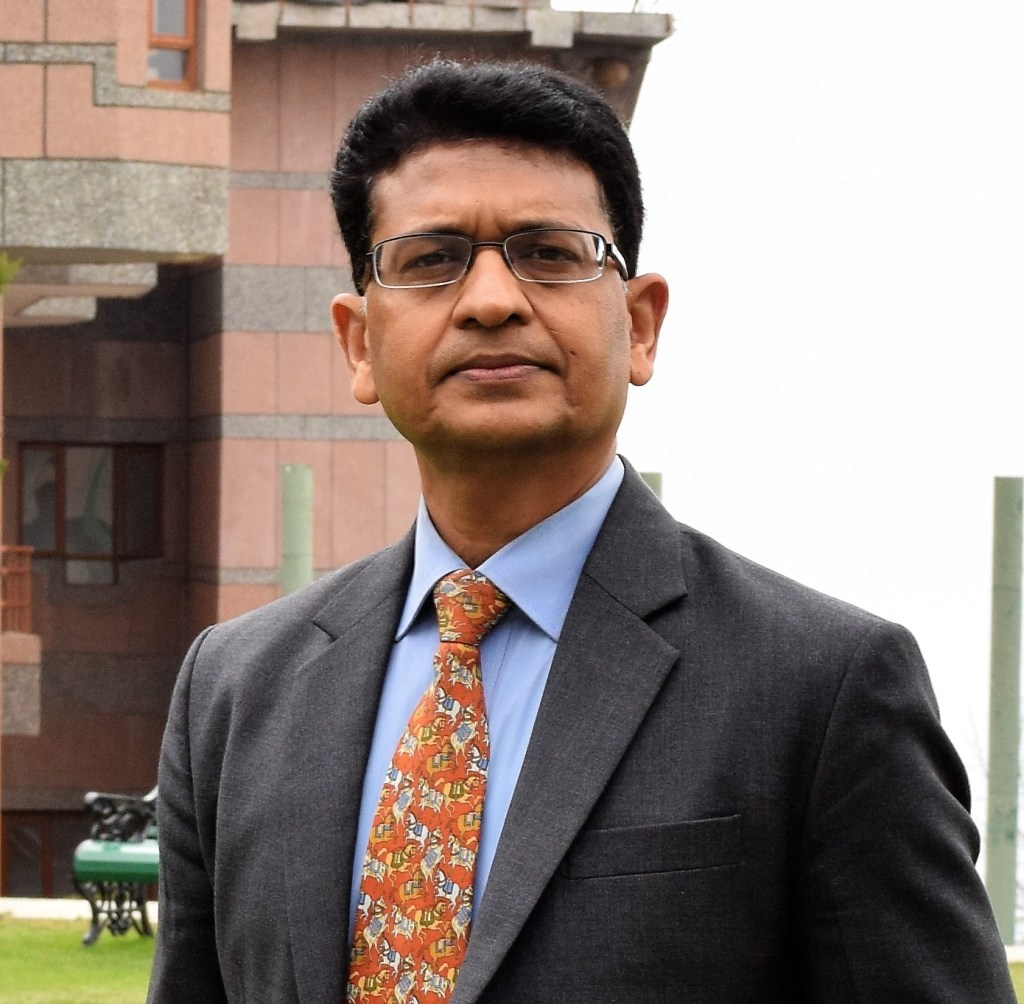
Dr Mukesh Jain is a Gold Medallist engineer in Electronics and Telecommunication Engineering from MANIT Bhopal. He obtained his MBA from the Indian Institute of Management Ahmedabad. He obtained his Master of Public Administration from the Kennedy School of Government, Harvard University along with Edward Mason Fellowship. He had the unique distinction of receiving three distinguished awards at Harvard University: The Mason Fellow award and The Lucius N. Littauer Fellow award for exemplary academic achievement, public service & potential for future leadership. He was also awarded The Raymond & Josephine Vernon award for academic distinction & significant contribution to Mason Fellowship Program. Mukesh Jain received his PhD in Strategic Management from IIT Delhi.
Mukesh Jain joined the Indian Police Service in 1989, Madhya Pradesh cadre. As an IPS officer, he held many challenging assignments including the Superintendent of Police, Raisen and Mandsaur Districts, and Inspector General of Police, Criminal Investigation Department and Additional DGP Cybercrime, Transport Commissioner Madhya Pradesh and Special DG Police.
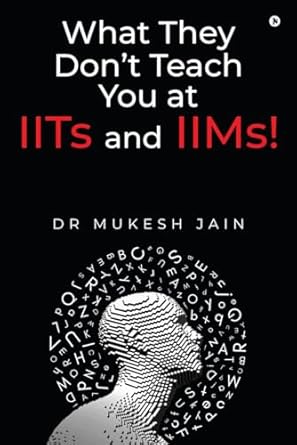
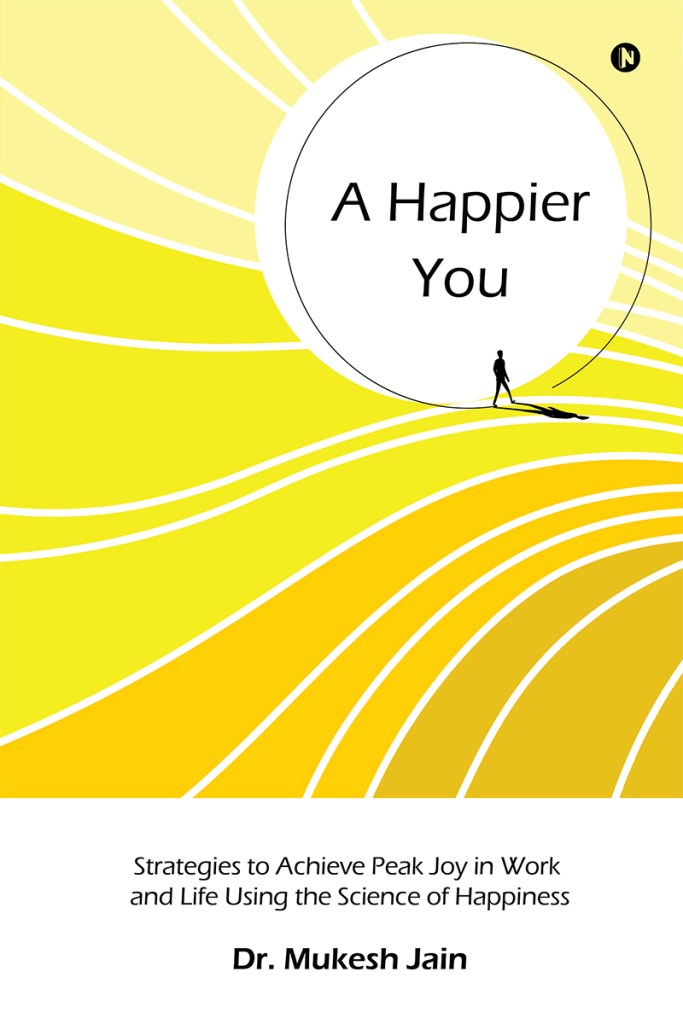
Dr. Mukesh Jain has authored many books on Public Policy and Positive Psychology. His book, ‘Excellence in Government, is a recommended reading for many public policy courses. His book- “A Happier You: Strategies to achieve peak joy in work and life using science of Happiness”, received book of the year award in 2022. After this, two more books, first, A ‘Masterclass in the Science of Happiness’ and the other, ‘Seeds of Happiness’, have also been received very well. His book, ‘Policing in the Age of Artificial Intelligence and Metaverse’ has received an extraordinary reception from the police officers. He is a visiting faculty to many business schools and reputed training institutes. He is an expert trainer of “Lateral Thinking”, and “The Science of happiness” and has conducted more than 300 workshops on these subjects.
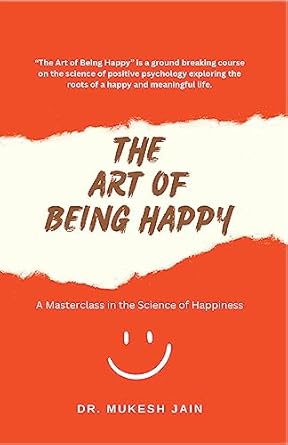
 School Of Happiness by Mukesh Jain
One response to “Why Some People Get Lucky Over and Over Again and How You can become one of Them”
Read through the blog, which certainly provides a new, fresh perspective to self evaluation and reflection. 🙏
LikeLike