We’ve all said it. We’ve all believed it.
“I’ll be happy when…”
- When I get the dream job.
- When I lose five kilos.
- When I finally buy that car.
- When the kids are settled.
- When the pressure goes away.
From childhood, we’ve been told that life works in a straight line: first work hard, then become successful, and finally—be happy. It sounds simple, logical, and almost sacred. But there’s just one problem: this equation is broken. Not just a little. It’s completely upside down.
What if happiness isn’t the end goal of success… but the very thing that leads to it?
The Formula We All Believed (And Why It Fails)
There is an equation of life that has been taught subtly or not so subtly to us by our parents, teachers, and our bosses. That is, if you work hard, you will become successful and once you become successful, you will be happy. We have been brought up to believe since our childhood that hard work is a necessary precursor to success, which in turn, is a prerequisite to happiness in life.
Belief in this happiness equation has conditioned all aspects of our lives and what motivates us in life. In our day-to-day life, we tend to aspire for good grades, admission to a prestigious educational institute, getting a dream job, or losing five kilograms of weight, etc., which will presumably make us happy.
Success first, happiness second—that is our happiness equation or happiness formula.
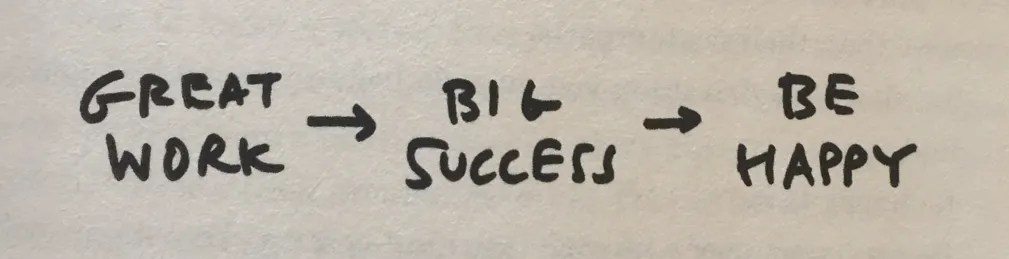
It’s what teachers, parents, and corporate mentors tell us. If you work hard, you’ll succeed. And if you succeed, you’ll be happy. That’s the carrot we keep chasing. And yet, for so many of us, both success and happiness feel like they’re always just around the corner.
The only problem is that this formula is broken. Ask anyone or yourself whether the success equation you have believed in for the whole of your life really works!
The reply is a clear no!
The equation is broken at two places. First, many people will say that hard work does not always result in success. There are many things other than hard work which contribute to your success. Second, and more important, success does not always lead to happiness. We have experienced that the equation of success we believe in is broken. Still, we keep believing in it and keep working for the next admission, salary raise, promotion, or dream house, which may give us illusory happiness. If success causes happiness, then every student getting admission to Harvard, the IIMs, every worker getting a promotion, or everyone who has ever accomplished a goal of any kind should be happy. But we do not really see many successful students, workers, and achievers feeling really happy after their accomplishments. With each victory, their goalposts of success keep getting pushed further and further out, so that happiness gets pushed over the horizon.
Second, even when success comes, it doesn’t always lead to happiness. Yes, we feel a temporary high. But it fades. That’s what psychologists call hedonic adaptation—our ability to quickly return to a baseline level of happiness after something good (or bad) happens. You get used to the promotion. The new house. The applause. And then? You start looking for the next fix.
More ironic and insightful is the fact that the formula is broken because it is backward. More than a decade of groundbreaking research in the fields of positive psychology and neuroscience has proven that the relationship between success and happiness works the other way around. With millions of research studies conducted all over the world, we may now assert with certainty that happiness is the precursor to success, not merely the result.
This may be the single most important revolution in our worldview like the Copernican revolution—a paradigm shift in our thinking!
Now, decades of research by positive psychology researchers tell us conclusively that the opposite is the case. Not only was our paradigm or worldview about the success-happiness relationship wrong, but it was exactly the opposite—almost like what Copernicus proved. Earth is not the center, but the Sun is!
Success or hard work is not the center around which happiness moves. Happiness is the center around which success moves.
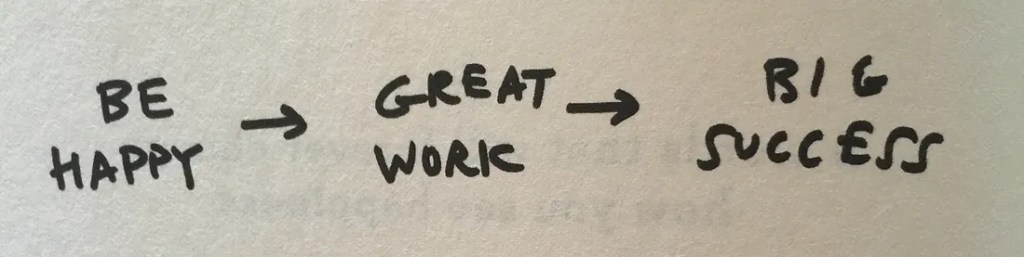
Happiness is the starting point, not the result! When we are happy, in a positive and grateful mindset, or in a frame of mind that feels kindness or mindfulness, we are more efficient, productive, and creative. In total, we are much smarter and thus, more successful. The new paradigm is happiness is at the center and success revolves around it. With this new paradigm, everything changes. Our perceptions, emotions, and behaviors change completely. Now, we will start with happiness so that we can feel great. We will connect more, be able to make high-quality connections, and be better at problem-solving. We will thus end up doing better work. What does better work lead to? Big success.
The new happiness equation suggested by Positive psychology is this:
A groundbreaking body of research from Sonja Lyubomirsky, Julia Boehm, and Lisa Walsh offers a different story—one that changes everything. Their studies, published in top psychology journals, show that happiness doesn’t follow success. It precedes it. In other words, happy people aren’t just happier—they’re more likely to succeed.
In one study by Shawn Achor, sales agents with a more positive outlook sold 37% more life insurance policies than their less cheerful coworkers. In another, college students who were happier received more job interviews and higher salaries years later. Across over 170 studies—cross-sectional, longitudinal, and experimental—the evidence is overwhelming: people who experience more positive emotions tend to do better in their work, their relationships, and their lives.
It’s not just that they smile more. They think clearer, solve problems more creatively, persist longer through challenges, and build stronger social networks. In lab experiments, people who were put into positive moods—through music, humor, or acts of kindness—set higher goals and performed better on tasks than those in neutral or negative moods.
The Real Equation: Happiness First, Then Success
This isn’t fluffy thinking. It’s brain science. When we’re in a good mood, our brains release dopamine and serotonin, which enhance cognitive functioning. That means we’re more focused, more motivated, and more resilient. This leads to better results—at work, in studies, in relationships.

And this happiness isn’t just about being cheerful all the time. As Sonja Lyubomirsky explains in ‘The How of Happiness’, it’s about regularly experiencing positive emotions like gratitude, contentment, purpose, and joy. Even simple activities like writing a thank-you note, helping a colleague, going for a walk, or enjoying a cup of chai mindfully—these can all contribute to higher well-being.
Lisa Walsh and her team also warn against forcing happiness. Companies that tried to mandate cheerfulness—like some retail chains—ended up making employees more stressed. The key is authentic emotional well-being, not artificial positivity.
Philosopher Bertrand Russell once wrote, “The good life is a happy life. I do not mean that if you are good you will be happy; I mean that if you are happy, you will be good.” That wisdom now has scientific backing. Happier people are more collaborative, more motivated, and more successful—not because they’re lucky, but because their mindset shapes how they show up.
Even ancient poets understood this. Rumi asked, “Why do you stay in prison, when the door is so wide open?” That prison is the belief that happiness lies somewhere in the future, locked behind success. The open door is realizing that joy is available now—through small shifts in perspective and daily practice.
So instead of chasing happiness someday, we start with it today. We flip the script. We make happiness the foundation, not the destination.
So, How Do We Begin?
Let’s keep it simple. Happiness is not a grand prize. It’s a habit. And just like fitness, it gets stronger the more you work at it.
Here are five simple, science-backed ways to start building it into your life:
- Gratitude – Write down three things you’re thankful for each day. They can be tiny—a good conversation, a warm meal, clean bedsheets. Gratitude shifts your focus from what’s missing to what’s already good.
- Kindness – Do something nice for someone. Compliment a friend. Help a stranger. Research shows that helping others boosts your own mood more than theirs.
- Mindfulness – Take a few minutes to pause. Breathe. Notice where you are. Mindfulness reduces stress and increases clarity.
- Savoring – Don’t rush your joys. Take time to enjoy your tea, your music, your evening walk. The more you savor, the more you feel.
- Connection – Talk to someone you care about. Really talk. Put away your phone. Be present. Deep relationships are one of the biggest predictors of happiness.
All of these don’t cost money. They don’t require travel. They don’t need anyone else’s approval. You can start today, exactly where you are.
And no, this doesn’t mean sadness has no place. Researchers remind us that feeling bad sometimes is normal and even healthy. Life includes grief, frustration, failure. But when your general mindset is positive, you recover faster. You adapt better. You carry your strength into hard times.
So let’s not wait to feel joy after the big job, the big break, or the big win. Let’s not wait for the chaos to end. Because life will always be a mix of chaos and calm.
Let’s choose to feel joy now. Let’s practice happiness the way we train our bodies or grow a garden—little by little, with patience and care.
We began with a familiar story: “I’ll be happy when…”
But here’s a better one:
“I’ll be happy now—and let that happiness lead me to the life I want.”
Because happiness isn’t the icing on the cake. It’s the flour in the batter.
It’s not the finish line. It’s how you run the race.
So don’t wait for someday.
Don’t tie your joy to a job title or a bank balance.
Choose joy now—not because everything is perfect, but because you are perfectly alive.
And when you do, you’ll see something beautiful:
Success stops being a chase. It becomes a companion.
Let happiness lead. The rest will follow.
_________________________________________
About the Author:

Dr Mukesh Jain is a Gold Medallist engineer in Electronics and Telecommunication Engineering from MANIT Bhopal. He obtained his MBA from the Indian Institute of Management Ahmedabad. He obtained his Master of Public Administration from the Kennedy School of Government, Harvard University along with Edward Mason Fellowship. He had the unique distinction of receiving three distinguished awards at Harvard University: The Mason Fellow award and The Lucius N. Littauer Fellow award for exemplary academic achievement, public service & potential for future leadership. He was also awarded The Raymond & Josephine Vernon award for academic distinction & significant contribution to Mason Fellowship Program. Mukesh Jain received his PhD in Strategic Management from IIT Delhi.
Mukesh Jain joined the Indian Police Service in 1989, Madhya Pradesh cadre. As an IPS officer, he held many challenging assignments including the Superintendent of Police, Raisen and Mandsaur Districts, and Inspector General of Police, Criminal Investigation Department and Additional DGP Cybercrime, Transport Commissioner Madhya Pradesh and Special DG Police.
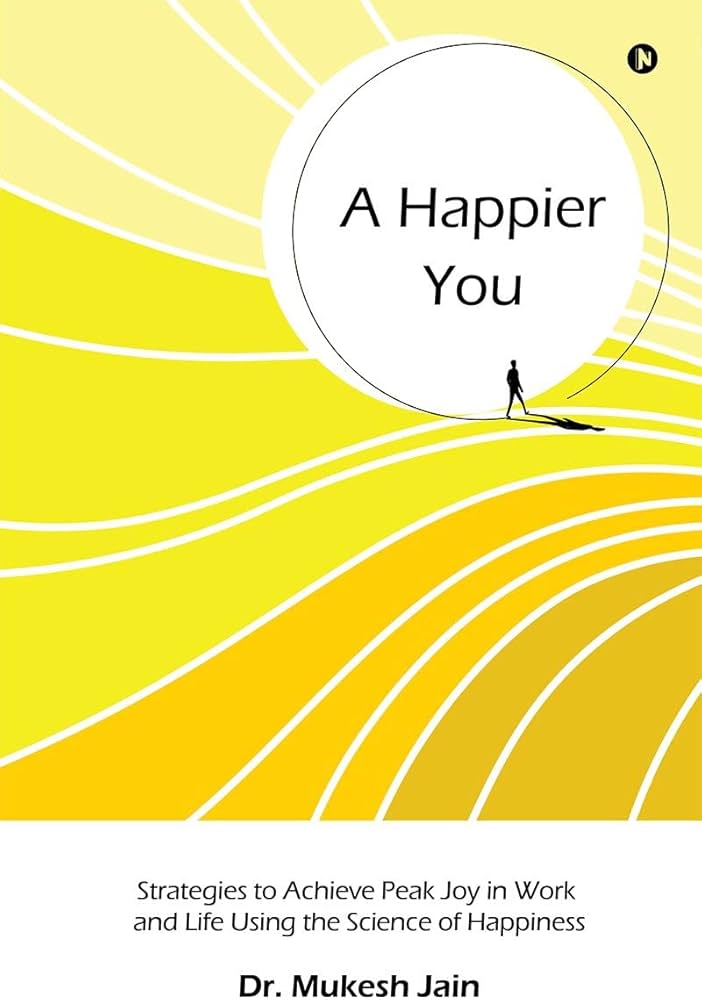
Dr. Mukesh Jain has authored many books on Public Policy and Positive Psychology. His book, ‘Excellence in Government, is a recommended reading for many public policy courses. His book- “A Happier You: Strategies to achieve peak joy in work and life using science of Happiness”, received book of the year award in 2022. After this, two more books, first, A ‘Masterclass in the Science of Happiness’ and the other, ‘Seeds of Happiness’, have also been received very well. His book, ‘Policing in the Age of Artificial Intelligence and Metaverse’ has received an extraordinary reception from the police officers. He is a visiting faculty to many business schools and reputed training institutes. He is an expert trainer of “Lateral Thinking”, and “The Science of happiness” and has conducted more than 300 workshops on these subjects.

 School Of Happiness by Mukesh Jain