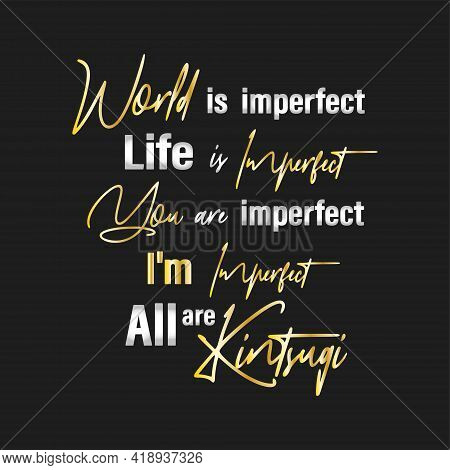
Ever dropped your favorite cup?
Not just any cup—but the cup. The one with the chipped handle and the fading print. The one that sat beside you during those long nights—comforting you through exam pressure, heartbreaks, empty bank accounts, and big dreams. The one you cradled during early morning thoughts and rainy afternoon silences.
Then one day, maybe out of nowhere, it slips from your hand.
Crash. Silence. And you just stand there.
There’s a strange stillness in that moment—like time freezes, just for a second. You stare at the shards. You know it’s just a cup. But it still hurts. Not because of the money. But because of the memories. Because of what it stood for.
And then, without thinking much, you do what we’ve been conditioned to do. You sigh. You mutter something under your breath. You reach for the broom. You sweep it up and throw it away. Because that’s what we’re taught, right? If it’s broken, it’s useless. If it’s cracked, it’s garbage. If it doesn’t look perfect anymore, it doesn’t belong.
But what if we were wrong?
What if we didn’t need to throw the broken things away? What if we didn’t have to pretend the damage never happened?
What if there was another way?
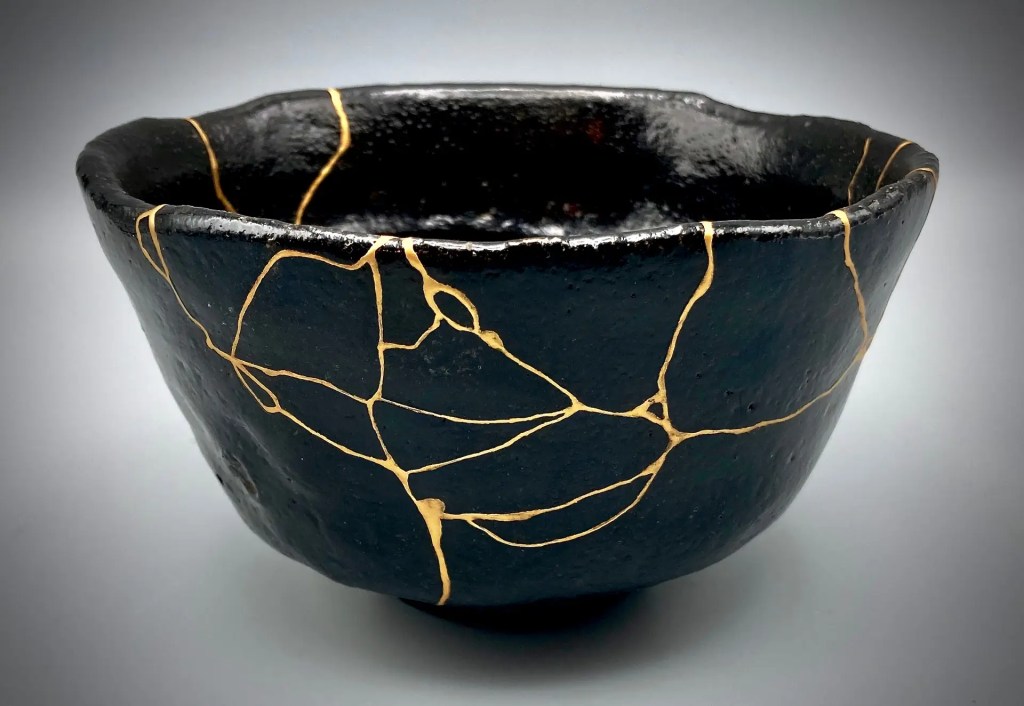
Imagine this: instead of hiding the cracks, we highlight them. We take the broken pieces, carefully, lovingly, and glue them back together—not with invisible fixes, but with shimmering lines of gold. We don’t try to erase the accident. We honor it. We celebrate it. We let the gold tell the story of the fall—and the rise.
Sounds like a metaphor, doesn’t it? Well, it is. And it’s also real.
It’s called Kintsugi.
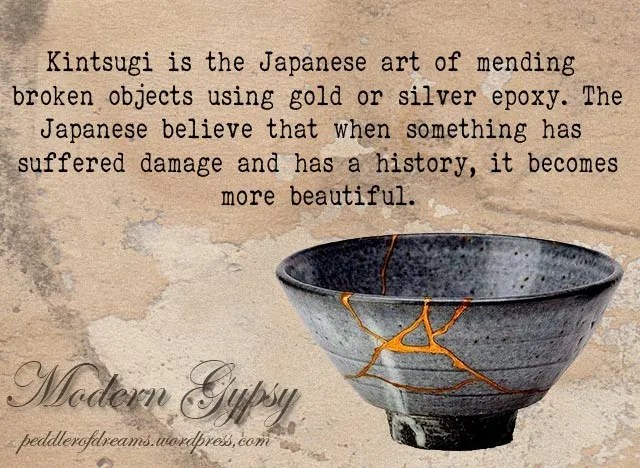
An ancient Japanese art form that’s as philosophical as it is practical. When pottery breaks, instead of tossing it out, the artist repairs it with golden lacquer. The cracks remain visible—bold, bright, unapologetic. The object isn’t “fixed” to hide the past. It’s transformed to reflect a new beginning. It’s not just as good as new—it’s better. More unique. More beautiful. More precious because of what it has been through.
Now pause for a second. What if we did that with our lives?
What if we stopped hiding our scars and started showing them? What if we didn’t throw away relationships, dreams, or parts of ourselves just because they broke? What if we embraced the mess—and then filled it with meaning?
We live in a world that tells us: be perfect, be polished, be untouchable. But here comes Kintsugi—this quiet, graceful philosophy—and whispers something else.
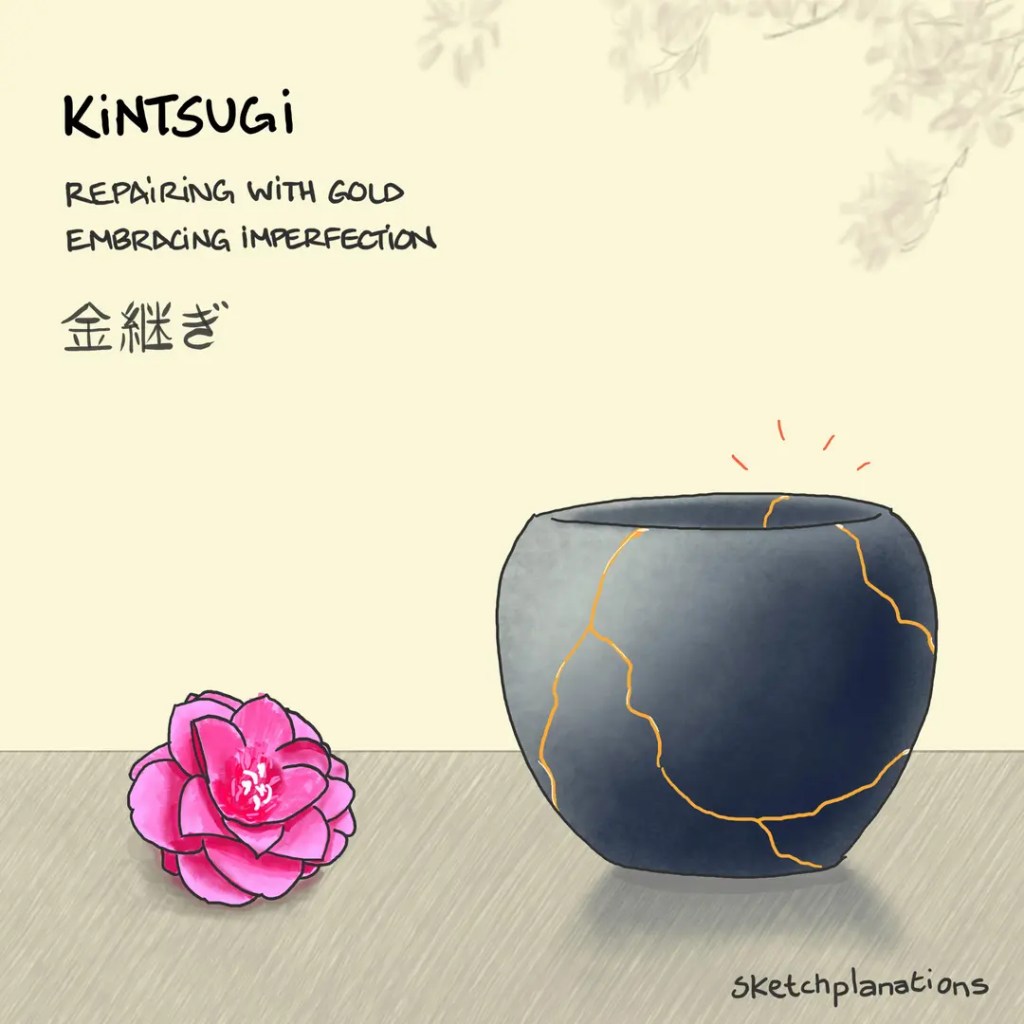
It says: You are not ruined because you broke. You are richer because you survived.
Think about that for a moment. How many parts of your life have cracked? A friendship that ended painfully. A job that didn’t work out. A moment when you failed and felt like the ground had disappeared beneath your feet. We all have those moments. But what if, instead of erasing them, we could turn them into golden seams?
What if your story became more powerful, more inspiring, because you didn’t hide the damage—but chose to shine through it?
Kintsugi isn’t just an art technique. It’s a mindset. A way of looking at brokenness—not with fear or shame, but with reverence.
It tells us that healing doesn’t mean pretending it never happened. It means owning every crack, every fall, every rise—and saying: “This is part of me. And I am more whole because of it.”
We’re all carrying something cracked. All of us. And maybe, just maybe, we’ve been waiting for permission to stop covering it up. To stop pretending. To start filling those spaces with something stronger, something brighter.
Something like gold.
And that’s why Kintsugi is more than a technique. It’s an invitation. To live with honesty. To break and still believe. To rebuild, not in shame—but in strength.
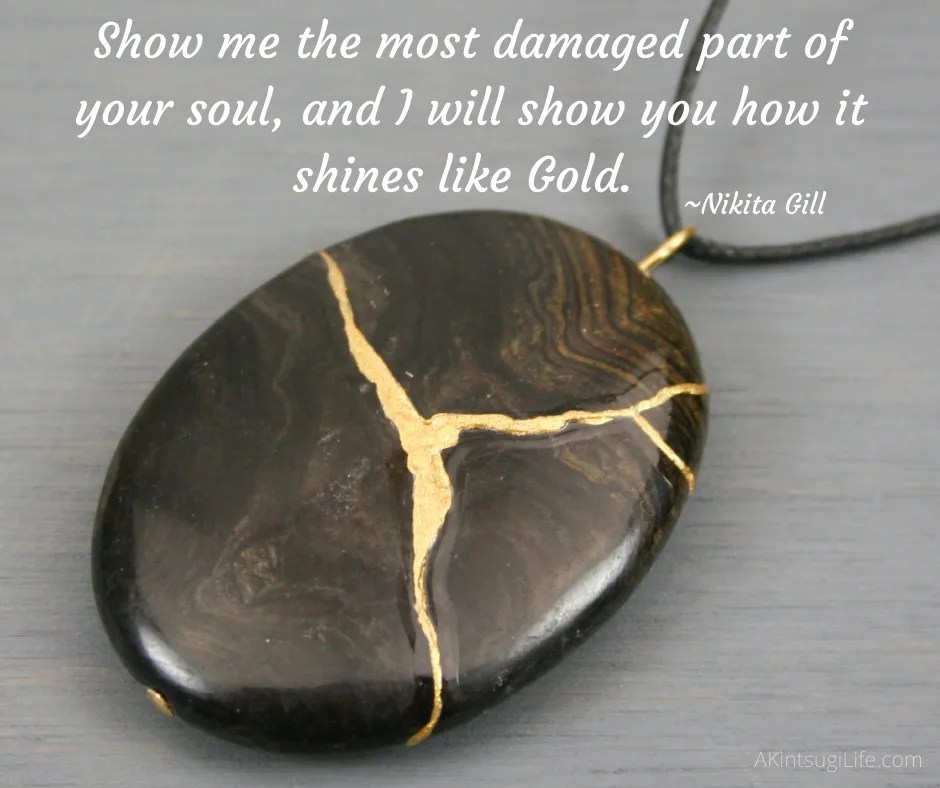
So the next time something breaks—your plans, your confidence, your heart—pause before sweeping it away. Look closer. Maybe it’s the beginning of something even more beautiful. Maybe, just maybe, it’s time for some gold.
Because once you truly understand Kintsugi, once you start seeing beauty in the broken, you’ll never look at your life—or your setbacks—the same way again.
What is Kintsugi and Why Does It Matter?
Kintsugi, which means “golden joinery” in Japanese, is the practice of repairing broken pottery with a special lacquer mixed with powdered gold. Instead of pretending the item was never broken, Kintsugi embraces the break. The cracks don’t disappear—they shine. They become part of the story.
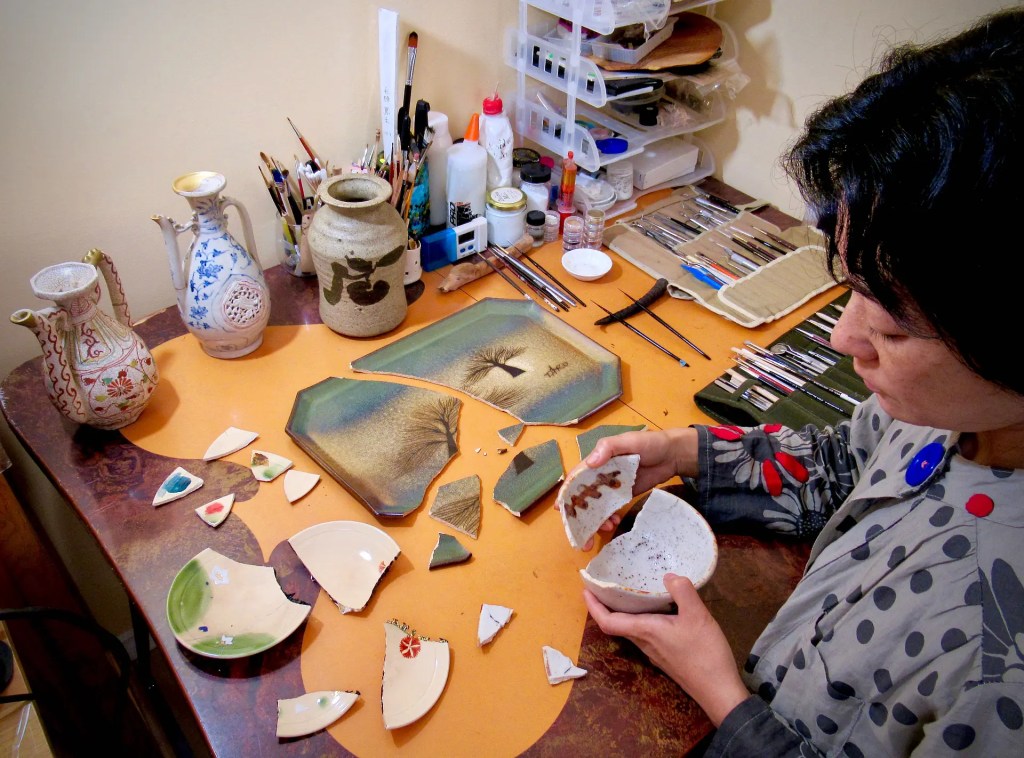
It’s not about fixing to hide the damage. It’s about fixing with pride.
And what makes this idea so powerful is that it goes far beyond bowls and vases. Kintsugi is a way of thinking. A way of healing. A philosophy that says: your cracks aren’t shameful—they’re proof that you survived.
A Bowl, A Shogun, and the Birth of Beauty
The story begins centuries ago, with a Japanese shogun who broke his favorite tea bowl. When he sent it to China to be repaired, it came back held together with metal staples—functional, but ugly.
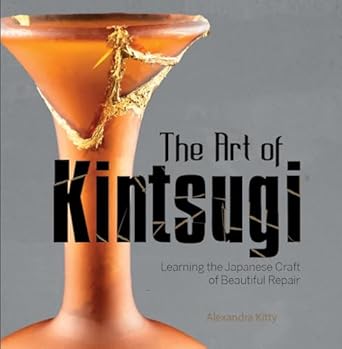
Disappointed, he asked Japanese artisans to try a different approach. They restored the bowl with golden resin. The result wasn’t just beautiful—it was unforgettable. The once-broken bowl now glowed with golden seams, each crack a shining line of history.
And so, Kintsugi was born—not just as an art form, but as a philosophy. The idea that brokenness can be made beautiful. That damage can turn into design. That we don’t always need to erase the past to move forward.
Cracks Happen. And That’s Okay.
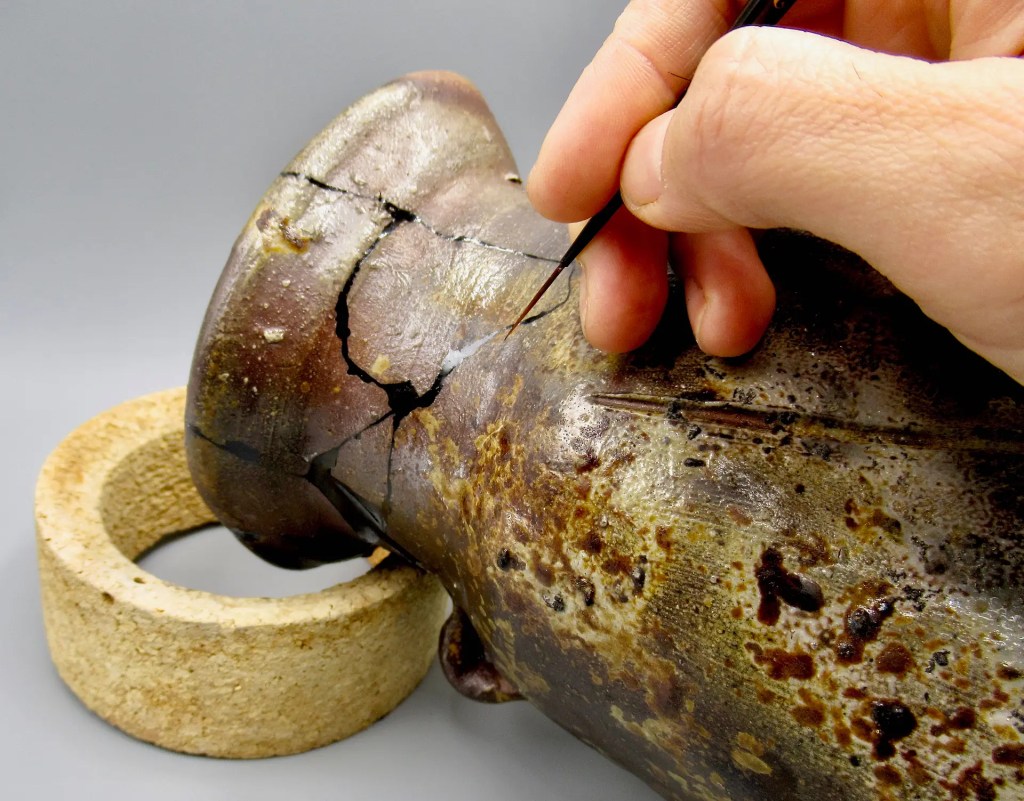
Life doesn’t always break you with a loud crash. Sometimes it’s more subtle. It’s the job you didn’t get after months of trying. The dream that looked so possible but slowly slipped away. It’s the heartbreak that left you quiet for weeks. The mistake that keeps replaying in your mind while the world keeps moving. You don’t hear it fall apart like porcelain smashing on the floor, but it happens—silently, deeply, sometimes in slow motion.
And while all this is happening inside you, outside, the world seems fine. Everyone looks perfect. Scroll through Instagram and you’ll find people laughing, vacationing, winning awards, ticking boxes. Everyone’s glowing. No one seems broken. No one shows their cracks. So you begin to wonder: is it just me? Am I the only one who’s falling behind, falling apart?

But here’s something we all need to remember—everyone is cracked somewhere. Everyone. We’re all carrying invisible scars. We’re all walking around with parts of ourselves that once broke and quietly got stitched back together. Some people hide those parts. Some pretend they were never hurt. But others? Others do something more powerful. They own their story. They let the cracks show.
And sometimes, those cracks make you shine.
Even the biggest success stories—companies, brands, public figures—have their own hidden fractures. Airbnb, for instance, is a global name now, but in the early days, no one took them seriously. Investors rejected them. The founders could barely pay rent. But they didn’t quit. They learned from every no. They kept showing up, cracks and all. They didn’t hide their story—they built from it.
Microsoft, too, had its cracks. When Satya Nadella became CEO, the company was losing relevance. Internally, it had become rigid. Outdated. But Nadella didn’t pretend everything was fine. He leaned into honesty. He spoke about empathy. He changed the culture from inside out. And slowly, Microsoft rebuilt—stronger, wiser, more human. Their Kintsugi wasn’t decorative—it was transformative.
And this idea of transformation? It’s not just for tech giants or CEOs. It’s deeply human.
The Gold That Comes After the Storm
Psychologists have a name for it: post-traumatic growth. It means that sometimes, people come out of pain with a deeper sense of life. They become softer in all the right ways, stronger where it counts. They don’t just heal. They grow. The pain doesn’t disappear—it just becomes part of who they are. Not a weakness, but a thread of wisdom woven into their soul.
We’ve all met someone like that. Someone who’s been through something heavy, and yet carries themselves with kindness. Not fake cheerfulness, but a quiet light. A kind of peace that says, “I’ve been through the fire. And I’m still here.”
Maybe you’re that person already. Or maybe you’re becoming one. Maybe you’re somewhere in the middle—picking up your pieces, wondering if you’ll ever feel whole again. And the truth is, you will. But not by going back to who you were. By becoming someone even more real, more grounded, more golden.
So what can you do with your cracks?
Start by not hiding them. You don’t have to turn every pain into a performance. But you also don’t have to pretend it never happened. Sit with your story. Ask yourself—what did this break teach me? What grew from that moment of loss? What gold is already forming in those lines I used to hate?
Your cracks are not signs that you’re weak. They are signs that you were brave enough to try, vulnerable enough to care, and strong enough to survive. You loved. You risked. You failed. You rose. And you’re still here.
And that’s where the gold begins.
Because the world doesn’t need more perfect people. It needs more honest ones. People who can say, “Yes, I’ve been broken. And here’s what I’ve learned.” People who show up not flawless, but full of light. Kintsugi reminds us that your pain isn’t your disqualification. It’s part of your power. You’re not less because of what you’ve been through. You’re more.
So if you feel cracked right now—if something in your life feels broken, unfinished, or too heavy to carry—please don’t think you’re at the end of your story. You’re at the turning point. The part where the light begins to enter. The part where the gold starts to appear. You may not see it yet, but it’s there. Quietly waiting.
And someday—not too far from now—you will look back at this moment and realize: this was not your breaking point. This was your becoming.
You don’t need to be flawless to be beautiful. You just need to be honest. And you need to keep going.
Because one day, someone will see your story—not despite the cracks, but because of them—and say, “That’s beautiful.”
And the most important part?
That someone… will be you.
———————————————————–
About the Author
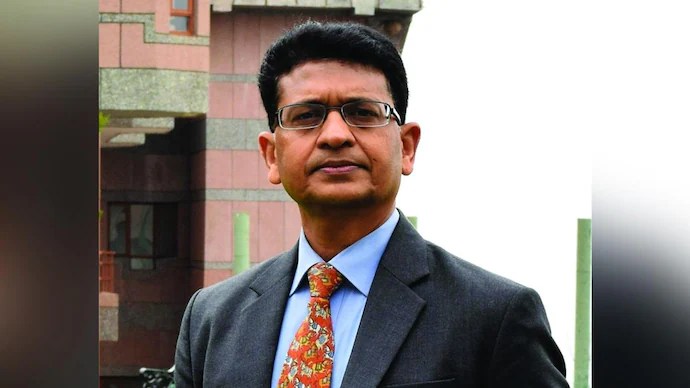
Dr Mukesh Jain is a Gold Medallist engineer in Electronics and Telecommunication Engineering from MANIT Bhopal. He obtained his MBA from the Indian Institute of Management Ahmedabad. He obtained his Master of Public Administration from the Kennedy School of Government, Harvard University along with Edward Mason Fellowship. He had the unique distinction of receiving three distinguished awards at Harvard University: The Mason Fellow award and The Lucius N. Littauer Fellow award for exemplary academic achievement, public service & potential for future leadership. He was also awarded The Raymond & Josephine Vernon award for academic distinction & significant contribution to Mason Fellowship Program. Mukesh Jain received his PhD in Strategic Management from IIT Delhi.

Mukesh Jain joined the Indian Police Service in 1989, Madhya Pradesh cadre. As an IPS officer, he held many challenging assignments including the Superintendent of Police, Raisen and Mandsaur Districts, and Inspector General of Police, Criminal Investigation Department and Additional DGP Cybercrime, Transport Commissioner Madhya Pradesh and Special DG Police.
Dr. Mukesh Jain has authored many books on Public Policy and Positive Psychology. His book, ‘Excellence in Government, is a recommended reading for many public policy courses. His book- “A Happier You: Strategies to achieve peak joy in work and life using science of Happiness”, received book of the year award in 2022. After this, two more books, first, A ‘Masterclass in the Science of Happiness’ and the other, ‘Seeds of Happiness’, have also been received very well. His book, ‘Policing in the Age of Artificial Intelligence and Metaverse’ has received an extraordinary reception from the police officers. He is a visiting faculty to many business schools and reputed training institutes. He is an expert trainer of “Lateral Thinking”, and “The Science of happiness” and has conducted more than 300 workshops on these subjects.
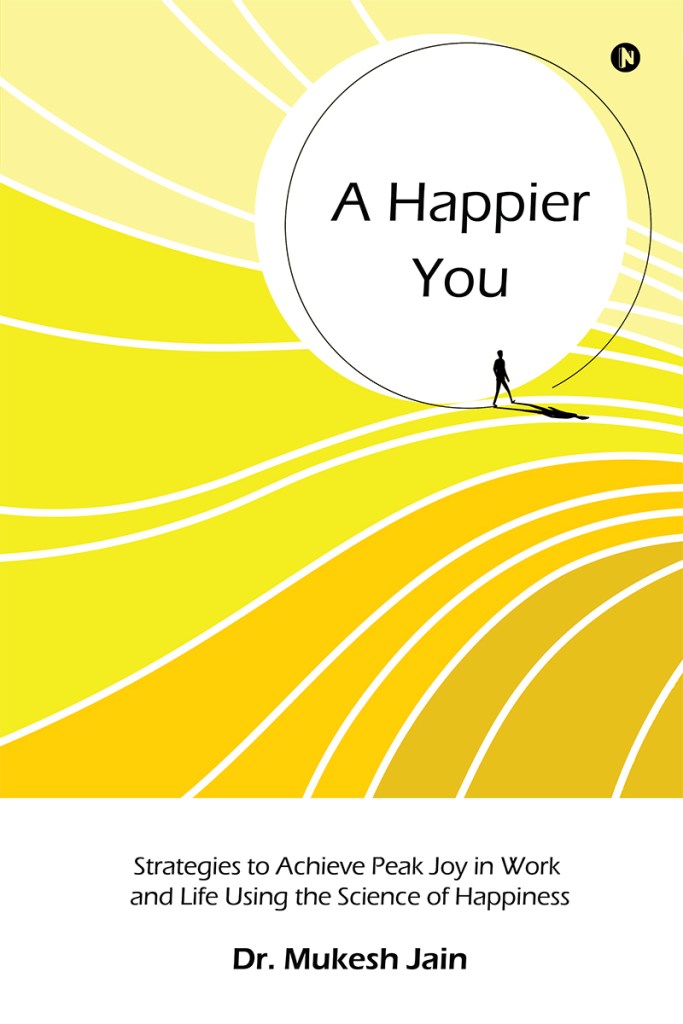
 School Of Happiness by Mukesh Jain