
What makes a team not just good—but great?
Is it raw intelligence? Years of experience? Star performers? That’s what most of us tend to believe. If you could assemble a dream team—a Rhodes Scholar, a top engineer, a few extroverts with charisma, and a PhD or two—surely, that team would be unstoppable, right?
Well, Google thought so too. And they were dead wrong.
In 2012, Google launched Project Aristotle, an ambitious multi-year research initiative named after the Greek philosopher who once said, “The whole is greater than the sum of its parts.” The goal? To uncover the secret sauce behind effective teams. After studying over 180 teams and analyzing decades of research on organizational behavior and psychology, they landed on a finding that turned conventional wisdom upside down.

It wasn’t who was on the team that mattered most—it was how the team worked together.
Let that sink in. Talent, resumes, education levels, technical brilliance—all of that was secondary. The real differentiator was invisible. It was something softer, subtler, yet incredibly powerful: team norms—the unwritten rules that govern how people treat each other, take risks, speak up, and collaborate.
The Five Dynamics of Magical Teams
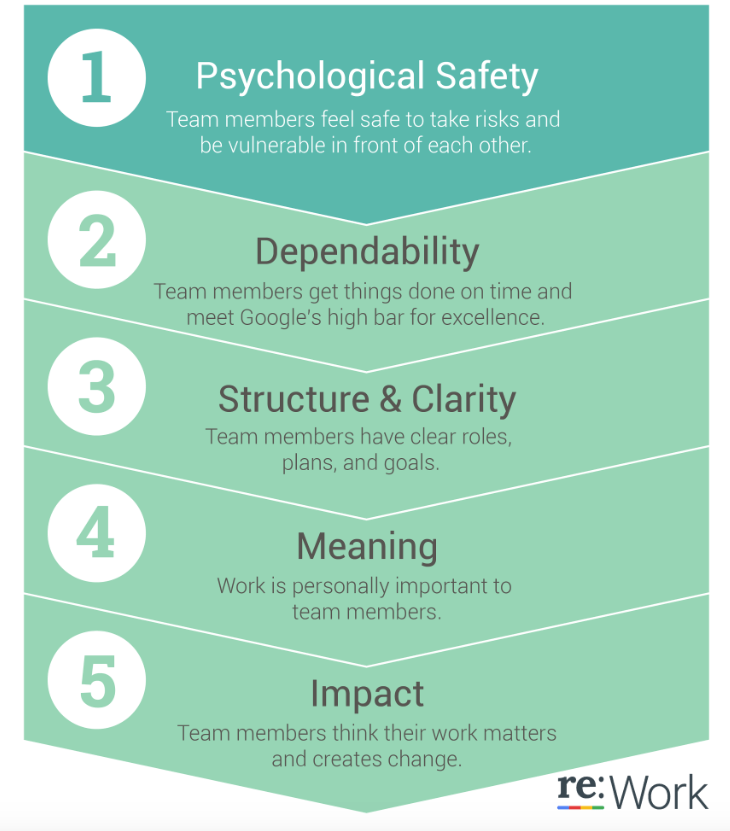
After months of going down data rabbit holes, Google researchers were baffled. No consistent pattern emerged based on team composition. But once they shifted their lens to focus on interpersonal dynamics, everything changed. They uncovered five key elements that high-performing teams shared:

- Psychological Safety
The bedrock of a great team. This means team members feel safe to take risks, voice ideas, and admit mistakes without fear of embarrassment or retribution. In teams with high psychological safety, people don’t walk on eggshells—they speak freely, challenge ideas, and grow faster.
- Dependability
Trust isn’t built on big speeches; it’s built on quiet consistency. In high-performing teams, people do what they say they will. Deadlines are sacred. Reliability is a team norm—not a management demand.
- Structure and Clarity

Great teams don’t leave things vague. Goals are clear, roles are defined, and everyone knows what success looks like. This clarity doesn’t limit creativity—it unlocks it by reducing confusion and wasted effort.
- Meaning of Work
People give their best when they feel their work matters. The strongest teams were those where individuals saw personal value and purpose in what they were doing.
- Impact of Work

When team members believed that their work made a real difference, their motivation soared. Seeing the results of your efforts—especially how they help others—is a powerful performance booster.
Among these, psychological safety was the superpower. Without it, the others couldn’t fully come alive.
What Psychological Safety Really Means (And What It Doesn’t)
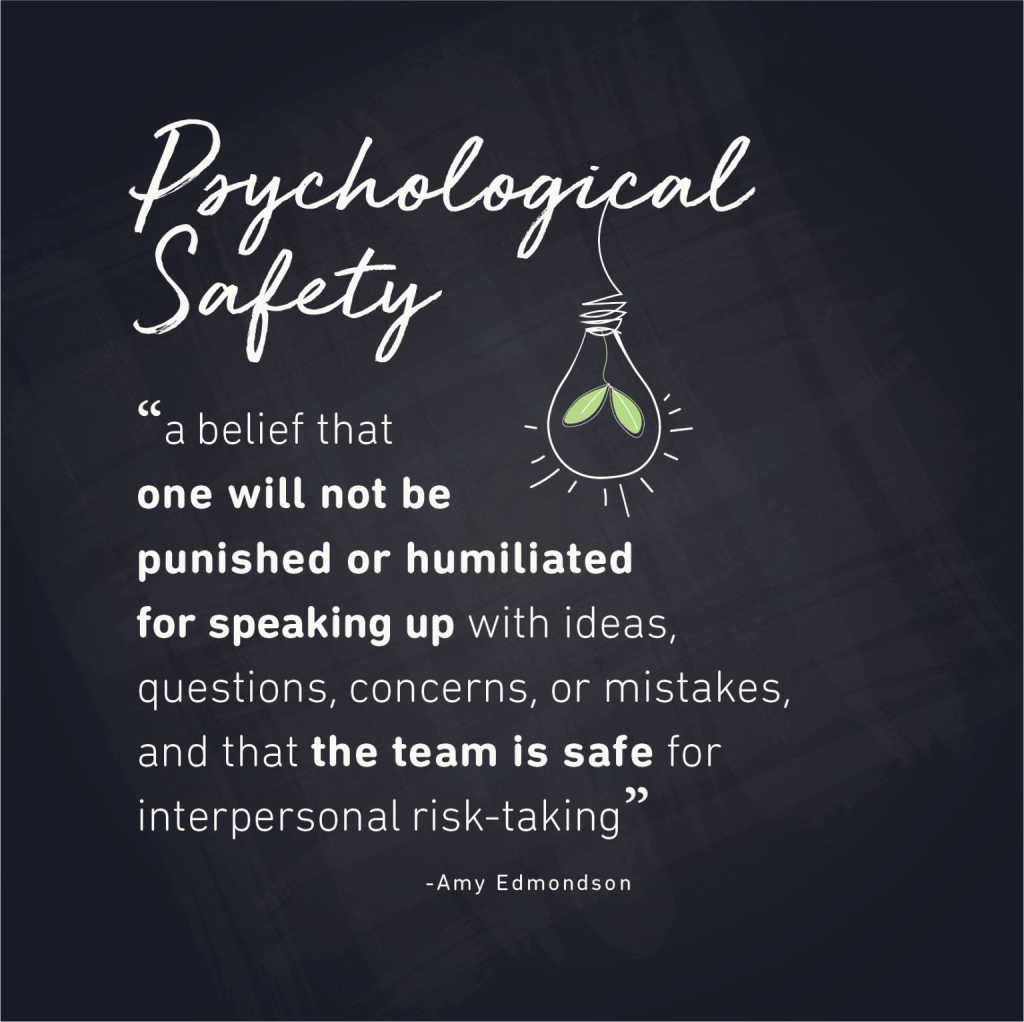
Let’s clear up a common misconception: psychological safety is not about comfort. It’s not about “anything goes” or lowering performance standards.
As Harvard’s Amy Edmondson explains, it’s about creating a space for productive discomfort—where tough conversations, candid feedback, and honest mistakes are embraced as fuel for learning. High-performing teams don’t avoid conflict. They manage it skillfully. They challenge each other with respect, debate passionately, and emerge stronger.
It’s about feeling safe to be uncomfortable—to ask that “dumb” question, to propose a wild idea, or to say, “I messed up.” When that becomes the norm, people stop hiding, start growing, and real performance ignites.
Why This Was So Revolutionary for Google (and the World)
Before Project Aristotle, Google—like many organizations—focused heavily on hiring the “best” individuals. But this research shattered the myth of the all-star team. It wasn’t about brilliant minds alone—it was about how those minds interacted.
This insight changed everything—from how Google trained its managers to how teams were structured and evaluated. They even developed self-assessment tools so teams could track how well they were living these five key dynamics.
The implications went beyond Google. The 2019 DORA State of DevOps report confirmed that psychological safety predicted not just team performance—but also organizational success and innovation across industries.
But Here’s the Twist: Knowing Isn’t the Same as Doing
Even with these powerful findings, implementation has proven hard.
Why?
Because changing team dynamics isn’t about a one-time workshop or a motivational poster. It’s about reshaping daily behaviors, mindsets, and leadership models. And that’s where most organizations struggle.
Let’s unpack the most common challenges:
- Comfort vs. Courage: Many leaders mistake psychological safety for comfort. But safety doesn’t mean no tension—it means creating a space where healthy conflict can happen without fear.
- The Myth of Star Talent: Organizations still overvalue resumes and technical brilliance, while undervaluing emotional intelligence, listening skills, and vulnerability.
- Avoiding Conflict: Leaders often think harmony equals health. But real innovation comes from constructive disagreement. Safe teams aren’t always quiet—they’re brave.
- The Infallibility Trap: Leaders feel pressure to have all the answers. But Edmondson’s research shows that admitting fallibility—“I don’t know, let’s figure it out together”—builds more credibility, not less.
- Accountability vs. Safety – The False Dilemma: Many think it’s either high standards or psychological safety. But the best teams hold each other accountable because they feel safe. Dependability thrives when people know they won’t be punished for being human.
So How Do You Build a Legendary Team?
Forget the myth of the perfect resume mix. Focus instead on shaping your team’s culture. Here’s how:
- Model vulnerability as a leader. Say “I don’t know” and ask for feedback. When you do it, others will follow.
- Encourage equal participation. Don’t let loud voices dominate. Invite quieter ones in.
- Celebrate mistakes as learning moments. Use them as springboards, not stains.
- Reinforce structure and purpose. Make sure everyone knows their role, the goal, and why it matters.
- Create feedback loops. Don’t wait for annual reviews—talk regularly about what’s working and what’s not.
Because in the end, the magic of a great team isn’t talent—it’s trust. It’s the invisible web of psychological safety, shared meaning, and mutual dependability that makes ordinary people do extraordinary things.
The Real Takeaway from Project Aristotle
The most important lesson isn’t hidden in the data. It’s this:
“Great teams aren’t a collection of brilliant individuals. They’re a community of people who make each other better.”
It’s not the mind, but the heart of a team that drives success.
So if you’re building a team—whether in a startup, a classroom, a government department, or a kitchen—don’t just stack it with talent. Shape its soul. Craft the norms. Build the trust. Create the safety. Connect it to meaning.

Because when you do that, you don’t just get a team.
You create a force.
____________________________________________
About the author:
Dr Mukesh Jain is a Gold Medallist engineer in Electronics and Telecommunication Engineering from MANIT Bhopal. He obtained his MBA from the Indian Institute of Management Ahmedabad. He obtained his Master of Public Administration from the Kennedy School of Government, Harvard University along with Edward Mason Fellowship. He had the unique distinction of receiving three distinguished awards at Harvard University: The Mason Fellow award and The Lucius N. Littauer Fellow award for exemplary academic achievement, public service & potential for future leadership. He was also awarded The Raymond & Josephine Vernon award for academic distinction & significant contribution to Mason Fellowship Program. Mukesh Jain received his PhD in Strategic Management from IIT Delhi.

Mukesh Jain joined the Indian Police Service in 1989, Madhya Pradesh cadre. As an IPS officer, he held many challenging assignments including the Superintendent of Police, Raisen and Mandsaur Districts, and Inspector General of Police, Criminal Investigation Department and Additional DGP Cybercrime, Transport Commissioner Madhya Pradesh and Special DG Police.

Dr. Mukesh Jain has authored many books on Public Policy and Positive Psychology. His book, ‘Excellence in Government, is a recommended reading for many public policy courses. His book- “A Happier You: Strategies to achieve peak joy in work and life using science of Happiness”, received book of the year award in 2022. After this, two more books, first, A ‘Master class in the Science of Happiness’ and the other, ‘Seeds of Happiness’, have also been received very well. His book, ‘Policing in the Age of Artificial Intelligence and Metaverse’ has received an extraordinary reception from the police officers. He is a visiting faculty to many business schools and reputed training institutes. He is an expert trainer of “Lateral Thinking”, and “The Science of happiness” and has conducted more than 300 workshops on these subjects.


 School Of Happiness by Mukesh Jain