A New Way to Think About Success
From the time we’re kids, we’re told that success comes from setting goals and working toward them, step by step. Whether it’s getting good grades, excelling in sports, or climbing the career ladder, the formula always seems the same: Decide what you want, break it down into small steps, and go after it with determination. This idea is reinforced everywhere—by teachers, mentors, self-help books, and motivational speakers. Productivity experts have even created structured goal-setting systems like:

- S.M.A.R.T. goals (Specific, Measurable, Achievable, Relevant, Time-bound)
- F.A.S.T. goals (Frequent, Ambitious, Specific, Transparent)
- OKRs (Objectives and Key Results)
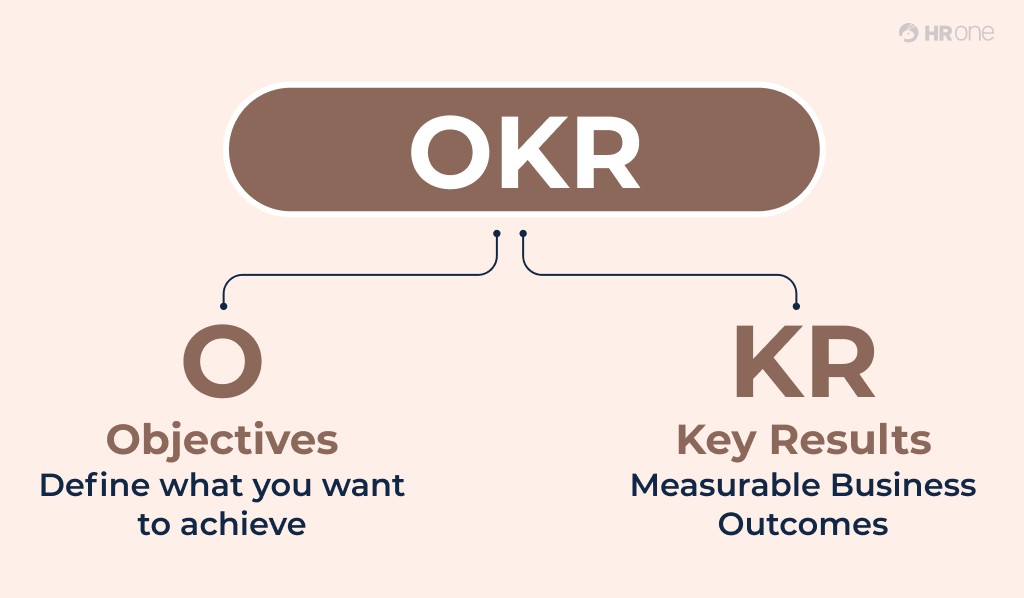
The logic behind these methods is simple: If you want to achieve something, you need to focus on it and work towards it. And while this approach works for many people, it isn’t the only way to think about success. In fact, there’s a completely different, yet equally powerful, approach—one that doesn’t require constantly chasing after new goals. Instead of asking, What do I need to do to succeed?, this method flips the question:
- What do I need to eliminate to avoid failure and live my best life?
This shift in thinking can be life-changing. Instead of always adding more tasks, responsibilities, or ambitions to your plate, imagine improving your life by removing the things that cause stress, frustration, or unhappiness. Instead of trying to build the perfect routine, imagine cutting out the habits, distractions, and commitments that drain your energy.
This approach is called anti-goals. And it might just be the secret to a simpler, more fulfilling life.
The Power of Anti-Goals: Success by Avoiding Failure

The idea of anti-goals became widely known thanks to Andrew Wilkinson, the founder of Tiny, a successful investment firm. Wilkinson realized that rather than always chasing an ideal version of success, he should focus on identifying the things that made his life miserable—then work on eliminating them. For example, he found that long, unstructured meetings drained his energy and led to inefficiency. So, he set an anti-goal: Avoid unnecessary meetings as much as possible. He also noticed that working with difficult clients made him frustrated and stressed. His solution? Only take on projects with clients he truly enjoyed working with. By defining what he didn’t want in his life, Wilkinson was able to design a work environment that was enjoyable, productive, and aligned with his values. Instead of chasing success in the traditional way, he crafted his own version of success by eliminating the things that made his life worse.
This idea isn’t new. In fact, it has roots in ancient philosophy of Stoicism.
Lessons from Stoicism: The Art of Via Negativa

Most of us grow up believing that improvement comes from adding things—more goals, more achievements, more productivity hacks, more skills. We chase happiness by seeking more—more money, more success, more experiences. But what if the real key to a better life isn’t about adding more but about removing what doesn’t serve us? This is the essence of via negativa, a concept from Stoic philosophy that teaches us to focus on subtraction rather than addition. The Stoics believed that instead of searching for new ways to improve life, we should identify and eliminate the things that make life unnecessarily difficult. Instead of asking, “What should I do to be happy?”, ask “What should I stop doing that makes me unhappy?” It’s a simple but powerful shift in perspective.
Why Removing the Negative is More Effective Than Adding the Positive?
The problem with constantly adding is that it can create overload, distraction, and stress. Think about it:
- If your schedule is already packed, adding another productivity hack won’t make you more productive—it will just make you more exhausted.
- If you’re surrounded by negative people, adding new friendships won’t make you happier—but removing toxic ones will.
- If you’re constantly checking social media, adding a meditation practice won’t make you calmer—but cutting down on screen time might.
This is why via negativa is so powerful. Instead of complicating life with more, it makes life better by taking things away. We live in a world that constantly tells us that more is better—more success, more possessions, more achievements. But the truth is, a good life isn’t built by adding more—it’s built by removing what holds you back. So instead of asking: “What can I do to improve my life?”, Try asking: “What can I remove that’s making my life worse?”

The Psychology and Neurology Behind Anti-Goals
Why Our Brains Are Hardwired for Avoidance, Not Achievement

For most of human history, survival—not goal-setting—was the brain’s top priority. Our ancestors weren’t sitting around thinking, “I want to grow my food supply by 10% this year!” Instead, their daily thoughts were focused on one thing: staying alive. Their biggest concerns were: Avoid being eaten by a predator; Avoid eating spoiled food that could make them sick; Avoid dangerous areas where rival tribes might attack. This avoidance-based thinking kept humans alive for thousands of years. Instead of planning for long-term progress, their brains evolved to identify and eliminate risks first. Even though we don’t have to worry about wild animals or rival tribes today, our brains still work the same way. We constantly scan our surroundings for threats, discomfort, and risks—even when they’re not life-threatening.
For example, in modern life, we experience: Avoiding missing deadlines (fear of failure); Avoiding awkward conversations (fear of rejection); Avoiding financial insecurity (fear of scarcity). This instinct to focus on avoiding bad things is called the negativity bias—and it’s a deep part of how our brains work. Scientific research has proven that our brains respond more strongly to negative experiences than to positive ones. Neuroscientists John Cacioppo and Richard Davidson found that the brain processes bad news with greater intensity than good news. The amygdala, the part of our brain responsible for fear, activates more quickly and more strongly when it detects a threat than when we experience a reward. This is why:
- One piece of bad news can ruin an entire day.
- If 10 people praise you but one person criticizes you, you fixate on the negative.
- Fear of loss often feels much stronger than the excitement of gain.
This is why we often struggle to stay focused on big goals. Instead of naturally thinking, “How can I achieve something great?”, our brains are wired to think, “How can I avoid failure, discomfort, or danger?” Because our brains are naturally risk-averse, traditional goal-setting doesn’t always feel natural. But anti-goals—focusing on what we want to avoid—match exactly how our minds already work. Instead of forcing ourselves to only focus on long-term goals, anti-goals help us:
✔ Identify the things that stress us out
✔Remove distractions and frustrations
✔Naturally create a smoother path to success
This is why anti-goals work so well. They don’t fight against our natural instincts—they work with them. By focusing on what we don’t want in life, we can clear the way for what truly matters.
How Anti-Goals Help Your Brain Make Better Decisions
Your brain loves clarity. When overloaded with choices, it struggles—leading to stress, hesitation, and decision fatigue. Anti-goals fix this by acting as mental guardrails, simplifying choices and freeing up mental energy. Instead of constantly deciding what to do, you define what not to do, making decision-making effortless.
- Less Cognitive Overload – Your brain processes thousands of decisions daily, draining willpower. Anti-goals remove unnecessary choices, making life smoother. For example: If you decide “No social media before noon,” you skip the daily debate and reclaim focus.
- Better Impulse Control – The prefrontal cortex, responsible for self-regulation, thrives with clear boundaries. Anti-goals set automatic filters, reducing distractions. Example: An entrepreneur with “No meetings without a clear agenda” instantly eliminates time-wasters.
- Faster, Confident Decisions – When you know what to avoid, choices become clear and stress-free. Example: A person with “No work on weekends” doesn’t second-guess—weekends are for family, period.
By eliminating what drains you, anti-goals rewire your brain for efficiency, focus, and peace. The less you have to decide, the more energy you have for what truly matters.
Practical Strategies to Implement Anti-Goals in Life
If the concept of anti-goals resonates with you, here are some actionable ways to integrate it into your daily life. These strategies help eliminate stressors, distractions, and negative patterns, allowing you to focus on what truly matters.
1. Conduct a Personal “Failure Audit”:
One of the best ways to define anti-goals is to look at your past failures and identify the reasons behind them. This is known as a failure audit—analyzing what went wrong in different areas of life and figuring out how to avoid those mistakes in the future. If a previous job caused extreme burnout, ask yourself why that happened. Was it because of long working hours? A toxic boss? Too many pointless meetings? By identifying these patterns, you can create anti-goals to avoid similar situations. A study found that people who reflect on past failures and actively learn from them are 40% more likely to make better decisions in the future. So, Write down 3-5 major failures or unpleasant experiences from your past. Identify common patterns that led to these outcomes and convert them into anti-goals.
For example:
- Anti-Goal: “I do not want a job that requires me to work weekends.”
- Anti-Goal: “I do not want to spend time with people who constantly complain.”
2. Write Down Your Anti-Goals: Once you’ve conducted a failure audit, the next step is to clearly write down your anti-goals. These should be specific behaviors, habits, or circumstances you want to avoid at all costs.
Examples:
“I do not want to work with people who drain my energy.”
“I do not want to be stuck in unproductive meetings.”
“I do not want to check my email first thing in the morning.”
A study in the Journal of Behavioral Decision Making found that when people clearly define what they want to avoid, their ability to make smarter decisions improves by 30%. Take 10 minutes to write down 5 anti-goals for your career, personal life, and habits. Keep this list visible—either in a notebook, on your phone, or in your workspace.
3. Use Anti-Goals for Decision Making: Every day, we are faced with decisions—big and small. The key to making better decisions is to use anti-goals as a filter. Before saying yes to anything, ask yourself:
- Does this align with my anti-goals?
If something violates your anti-goals, the answer should be an immediate no. If one of your anti-goals is “I will not work with micromanaging bosses,” then if you get a job offer where the company culture includes excessive oversight, you should turn it down—no matter how high the salary is. Behavioral economists Daniel Kahneman and Amos Tversky’s research shows that people who eliminate bad options first (instead of looking for the “best” option) make better long-term decisions. Before making a decision, ask: “Does this move me closer to or further away from my anti-goals?” If it conflicts with an anti-goal, reject it immediately.
4. Create a “Not-to-Do” List: Most people have a to-do list—but very few people have a not-to-do list. This is a powerful tool that helps eliminate distractions, time-wasters, and bad habits. Examples of Not-to-Do List Items:
- “I will not check my phone first thing in the morning.”
- “I will not accept meetings without a clear agenda.”
- “I will not engage in gossip or negative conversations.”
The Harvard Business Review found that eliminating low-value activities increases productivity by 20% and improves job satisfaction by 30%. Michael Hammer, a former professor at the Massachusetts Institute of Technology, discussed in his 1990 HBR article, “Reengineering Work: Don’t Automate, Obliterate,” how eliminating non-value-adding activities can lead to significant improvements in organizational performance. He emphasized that instead of automating existing processes, companies should fundamentally rethink and remove unnecessary work to achieve better efficiency and effectiveness.
The Power of Removing What Doesn’t Matter
We live in a world obsessed with doing more—more goals, more hustle, more achievements. But what if the real key to success isn’t about adding, but subtracting? Imagine stripping away everything that drains you—stress, toxic relationships, meaningless obligations, and time-wasting habits. Instead of forcing yourself to chase big goals, you naturally create space for clarity, fulfillment, and effortless progress.
Our brains are wired to avoid pain before seeking pleasure, which is why it’s often easier to define what we don’t want rather than what we do. By identifying and eliminating what frustrates, exhausts, or distracts you, you reclaim your time, energy, and mental peace.
This isn’t about avoiding challenges—it’s about making smarter choices. When you remove what derails you, what truly matters rises to the surface. So, ask yourself: What should I stop doing to live my best life? The answer could unlock a future that’s not just more productive, but happier, lighter, and deeply fulfilling—not by doing more, but by letting go of what doesn’t matter.
About the Author

Dr Mukesh Jain is a Gold Medallist engineer in Electronics and Telecommunication Engineering from MANIT Bhopal. He obtained his MBA from the Indian Institute of Management Ahmedabad. He obtained his Master of Public Administration from the Kennedy School of Government, Harvard University along with Edward Mason Fellowship. He had the unique distinction of receiving three distinguished awards at Harvard University: The Mason Fellow award and The Lucius N. Littauer Fellow award for exemplary academic achievement, public service & potential for future leadership. He was also awarded The Raymond & Josephine Vernon award for academic distinction & significant contribution to Mason Fellowship Program. Mukesh Jain received his PhD in Strategic Management from IIT Delhi.

Mukesh Jain joined the Indian Police Service in 1989, Madhya Pradesh cadre. As an IPS officer, he held many challenging assignments including the Superintendent of Police, Raisen and Mandsaur Districts, and Inspector General of Police, Criminal Investigation Department and Additional DGP Cybercrime, Transport Commissioner Madhya Pradesh and Special DG Police.
Dr. Mukesh Jain has authored many books on Public Policy and Positive Psychology. His book, ‘Excellence in Government, is a recommended reading for many public policy courses. His book- “A Happier You: Strategies to achieve peak joy in work and life using science of Happiness”, received book of the year award in 2022. After this, two more books, first, A ‘Masterclass in the Science of Happiness’ and the other, ‘Seeds of Happiness’, have also been received very well. His book, ‘Policing in the Age of Artificial Intelligence and Metaverse’ has received an extraordinary reception from the police officers. He is a visiting faculty to many business schools and reputed training institutes. He is an expert trainer of “Lateral Thinking”, and “The Science of happiness” and has conducted more than 300 workshops on these subjects.
 School Of Happiness by Mukesh Jain