
What Alia Crum, a Stanford University Psychologist, has taught us about Mindset?
Imagine walking into a room filled with the most successful individuals in the world—entrepreneurs, athletes, scientists, and artists. What is the one thing they all have in common? Intelligence? Talent? Luck? No. It’s their mindset—the lens through which they view the world, their abilities, and their potential.
Alia Crum, a pioneering psychologist at Stanford University, has revolutionized the way we think about mindset, showing us that the way we perceive reality shapes not only our behavior but also our biology. Her groundbreaking research has unraveled the deep, often hidden, mechanisms through which our beliefs influence our bodies, our stress levels, and even our physical health.
Who is Alia Crum?
Dr. Alia Crum is a leading researcher in psychology and the principal investigator at the Stanford Mind & Body Lab. Her work focuses on how our beliefs and mindsets shape our physiological and behavioral responses. Trained at Harvard, Yale, and Stanford, she has contributed groundbreaking research to the fields of health psychology, stress management, and behavioral science.
Unlike traditional psychology, which often emphasizes external interventions, Crum’s research explores the internal shifts that can create real, measurable changes in our lives. She has demonstrated that what we believe—about our health, stress, and abilities—has profound effects on our well-being.
Mind Over Milkshakes Study

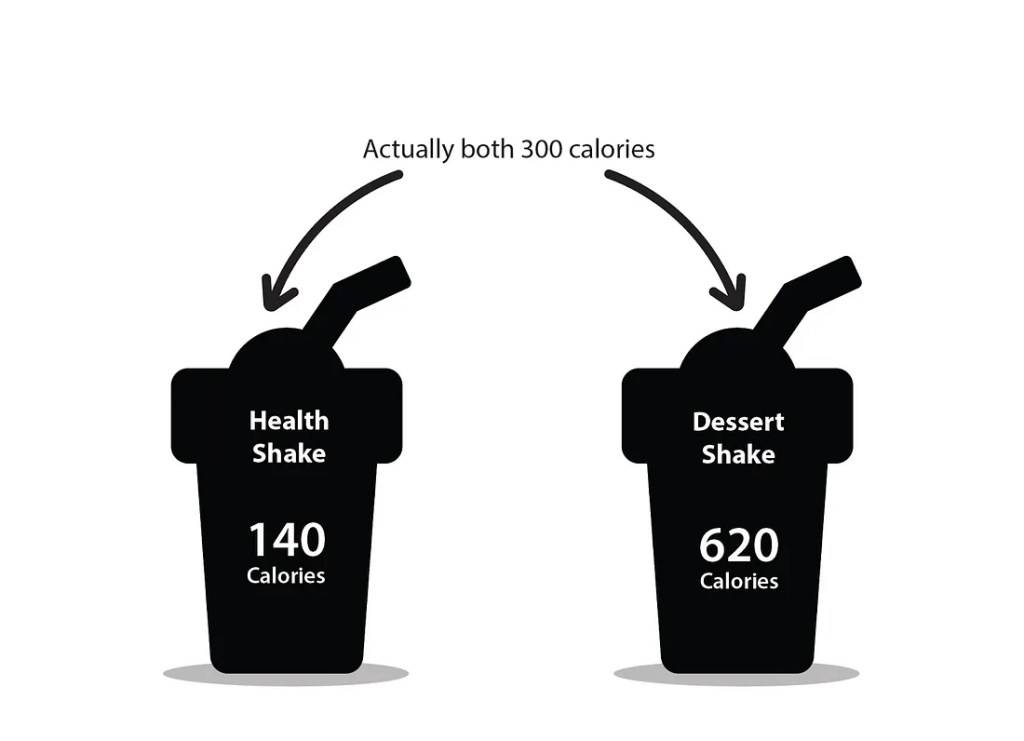
Crum and her team at Stanford University recruited participants to drink two different milkshakes on separate occasions. The first was labeled as a “high-fat, indulgent treat,” suggesting it was loaded with sugar and calories. The second was presented as a “low-calorie, healthy option,” implying it was light, diet-friendly, and designed for weight-conscious individuals.
What the participants didn’t know, however, was that both milkshakes contained the exact same number of calories—380 to be precise. The only difference was the label and the mindset it triggered.
This setup allowed Crum to explore a groundbreaking question: Does our body’s physiological response to food depend on the actual nutrients we consume, or does it depend on our beliefs about what we’re consuming?
To measure the participants’ physiological responses, Crum’s team tracked their levels of ghrelin, often referred to as the “hunger hormone.” Ghrelin plays a critical role in regulating appetite—when ghrelin levels are high, we feel hungry; when they drop, we feel satisfied and full.
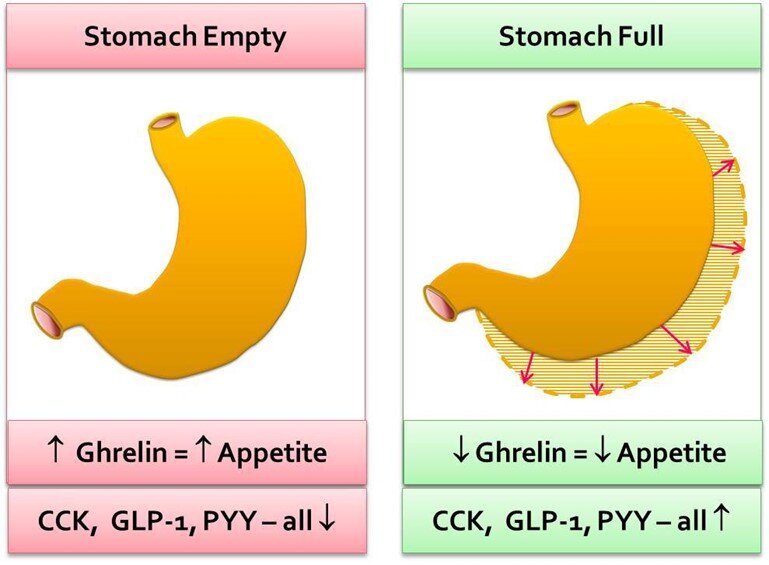
The results were astonishing. When participants believed they were drinking the high-calorie indulgent shake, their ghrelin levels dropped sharply, signaling satiety. Their bodies registered the shake as a satisfying, rich meal, and their hunger reduced accordingly.
When participants believed they were drinking the low-calorie diet shake, their ghrelin levels remained high, meaning they still felt hungry—even though they had consumed the exact same amount of calories.
In simple terms, their bodies reacted not to the actual milkshake, but to what they believed they were drinking. Crum’s study provided compelling evidence that mindset isn’t just a psychological construct—it directly impacts our biology. The way we perceive food influences how our body processes it. If you believe a meal is rich and indulgent, your body responds accordingly, making you feel full and reducing hunger signals. But if you approach eating with a mindset of restriction and deprivation, constantly labeling foods as “diet” or “low-calorie,” your body will fight back—keeping hunger hormones high, making you feel unsatisfied, and often leading to overeating later.
This completely shifts the traditional understanding of dieting. Many people meticulously count calories, assume that eating less equals losing weight, and think that self-control is the key to success. But what if the problem isn’t just what we eat, but how we think about what we eat?
Stress as a Performance Enhancer: A Mindset Shift
For decades, stress has been demonized. We are constantly warned about its dangers—how it raises blood pressure, weakens the immune system, and increases the risk of burnout. We hear advice like “reduce stress,” “manage stress,” or “eliminate stress.” But what if we’ve been looking at stress all wrong? What if stress isn’t the enemy we’ve made it out to be? This is exactly what Dr. Alia Crum and her colleagues set out to investigate. Can stress, when viewed differently, actually become a tool for growth rather than a source of harm?
Their research led to a surprising and counterintuitive conclusion: Stress itself is not the problem—our perception of stress determines whether it strengthens or weakens us. Crum and her team conducted a fascinating study where they recruited participants and divided them into two groups. Each group was shown a different kind of video about stress.

The first group watched a video that framed stress as harmful, reinforcing the traditional narrative that stress damages health, drains energy, and should be avoided.
The second group watched a video that presented stress as beneficial, highlighting how stress can boost performance, increase focus, and enhance resilience.
After watching these videos, participants were subjected to a stressful task—something that would typically induce anxiety and pressure.
What happened next was astonishing. The group that was primed to see stress as harmful exhibited the expected negative outcomes—higher anxiety, decreased focus, and lower confidence. Their bodies reacted with a spike in cortisol, the hormone associated with chronic stress, which is linked to fatigue and long-term health issues. But the participants who were taught to view stress as beneficial experienced an entirely different reaction:
They showed lower anxiety levels. Rather than feeling overwhelmed, they felt energized and motivated. Their productivity and focus improved. Instead of freezing under pressure, they performed better in the stressful task. Their bodies produced more DHEA, a neurosteroid that plays a crucial role in brain development, learning, and resilience. DHEA (dehydroepiandrosterone) is often referred to as the “resilience hormone” because it helps individuals adapt to challenges, recover from adversity, and thrive under pressure. Higher DHEA levels are associated with stronger cognitive function, emotional stability, and even enhanced problem-solving abilities.
Crum’s study challenges one of the biggest myths in modern psychology—the belief that stress is inherently toxic. Instead, it reveals that stress can be a tool for personal growth and peak performance if we learn to embrace it rather than fear it.
This is not just an academic insight; it is deeply practical.
Elite athletes reframe stress as fuel for performance. Before a big game, they don’t tell themselves to “calm down.” Instead, they say things like “I am excited. This is my moment.” They channel stress into focus and energy.
Top executives use stress as motivation. Rather than crumbling under pressure, they see deadlines as opportunities to sharpen their skills, push their limits, and create meaningful results.
Public speakers turn stress into engagement. Instead of fighting nervousness before a speech, they tell themselves, “This means I care. This means I’m alive.” And their presence becomes more dynamic and powerful.
In all these cases, stress is not reduced—it is transformed.
The Hotel Housekeepers Study: Exercise without Exercising
Dr. Crum and her colleagues conducted their study in a place most of us wouldn’t associate with scientific breakthroughs: hotels.
They recruited a group of hotel housekeepers—hardworking individuals who spent hours every day engaged in physically demanding tasks like vacuuming, scrubbing floors, changing linens, and lifting heavy objects. Despite this, when surveyed, most housekeepers did not perceive themselves as exercising. Many believed they weren’t getting enough physical activity to meet recommended health guidelines.
This belief—that their work didn’t “count” as exercise—was crucial. It set the stage for a powerful test:
Crum divided the housekeepers into two groups.
One group was informed that their daily work met the criteria for physical exercise, similar to going to the gym or engaging in structured workouts. They were told that their vacuuming, scrubbing, lifting, and walking were all forms of exercise that contributed to their health.

The other group was given no such information and continued their work as usual.
Both groups continued doing the same work, with no actual change in their physical activity levels.
But what happened next was nothing short of astonishing.
Four weeks later, despite no difference in their workload or movements, the housekeepers who believed their work was exercise showed significant improvements in their physical health. They lost weight. Their blood pressure dropped. Their body fat percentage decreased. Remember, they hadn’t changed what they did—they only changed how they thought about what they did.
Meanwhile, the group that did not receive this information showed no significant changes in their health markers.
This study offers a profound insight into the mind-body connection. It reveals that how we perceive an activity can determine its physiological impact on us. This research challenges conventional wisdom about health and fitness. Traditionally, we assume that only the physical act of exercising—running, lifting weights, cycling—affects our health. But Crum’s study suggests that our mindset about exercise matters just as much as the actual movement itself.
Implications of Alia’s Research Studies
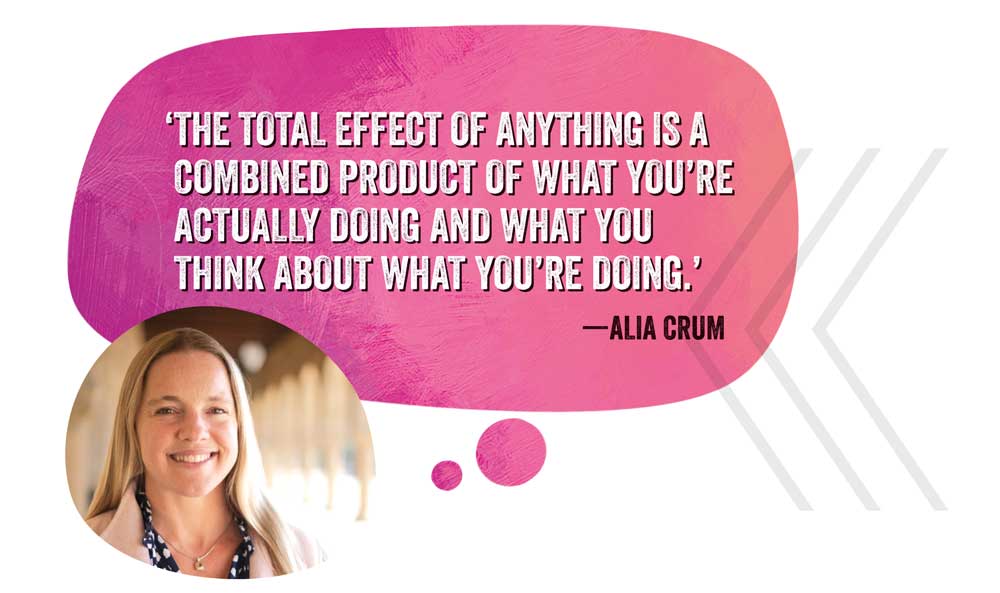
Alia Crum’s groundbreaking research across three major studies—the Milkshake Experiment, the Stress Mindset Study, and the Hotel Housekeepers Study—demonstrates a profound truth: our mindset shapes our reality, influencing not just our psychology but also our biology. In the Milkshake Experiment, participants’ metabolism responded not to the actual calorie content of a drink but to their belief about whether it was indulgent or healthy, proving that our perception of food affects our body’s hormonal response and hunger regulation. Similarly, in the Stress Mindset Study, those who viewed stress as a performance enhancer rather than a threat experienced lower anxiety, improved productivity, and a hormonal shift favoring resilience, revealing that stress itself is not harmful—our belief about stress determines its impact. Finally, in the Hotel Housekeepers Study, employees who were informed that their daily work was a form of exercise experienced significant improvements in weight, blood pressure, and overall health—even though their actual physical activity remained unchanged. This demonstrated that our belief in an action’s benefits amplifies its physiological effects, much like the placebo effect. Together, these studies prove that our mindset is not just a passive filter but an active force that shapes our body’s responses, whether in digestion, stress adaptation, or physical fitness. This insight has transformative implications: if we perceive food as nourishing, stress as empowering, and movement as exercise, our body will align with that belief, optimizing our well-being. The key takeaway? Our thoughts are not just reflections of reality; they actively construct it. By consciously shifting our beliefs, we can unlock hidden reserves of health, resilience, and performance—without changing anything externally. Change your mindset, and you change your life.
__________________________________________________________
About the Author:

Dr Mukesh Jain is a Gold Medallist engineer in Electronics and Telecommunication Engineering from MANIT Bhopal. He obtained his MBA from the Indian Institute of Management Ahmedabad. He obtained his Master of Public Administration from the Kennedy School of Government, Harvard University along with Edward Mason Fellowship. He had the unique distinction of receiving three distinguished awards at Harvard University: The Mason Fellow award and The Lucius N. Littauer Fellow award for exemplary academic achievement, public service & potential for future leadership. He was also awarded The Raymond & Josephine Vernon award for academic distinction & significant contribution to Mason Fellowship Program. Mukesh Jain received his PhD in Strategic Management from IIT Delhi.
Mukesh Jain joined the Indian Police Service in 1989, Madhya Pradesh cadre. As an IPS officer, he held many challenging assignments including the Superintendent of Police, Raisen and Mandsaur Districts, and Inspector General of Police, Criminal Investigation Department and Additional DGP Cybercrime, Transport Commissioner Madhya Pradesh and Special DG Police.
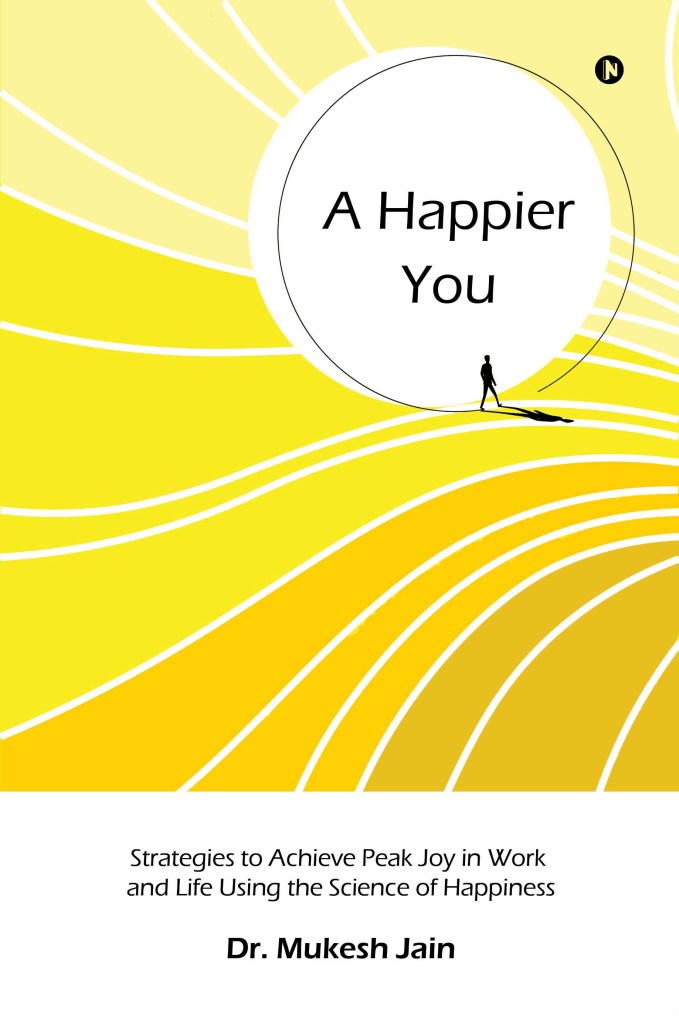
Dr. Mukesh Jain has authored many books on Public Policy and Positive Psychology. His book, ‘Excellence in Government, is a recommended reading for many public policy courses. His book- “A Happier You: Strategies to achieve peak joy in work and life using science of Happiness”, received book of the year award in 2022. After this, two more books, first, A ‘Master class in the Science of Happiness’ and the other, ‘Seeds of Happiness’, have also been received very well. His book, ‘Policing in the Age of Artificial Intelligence and Metaverse’ has received an extraordinary reception from the police officers. He is a visiting faculty to many business schools and reputed training institutes. He is an expert trainer of “Lateral Thinking”, and “The Science of happiness” and has conducted more than 300 workshops on these subjects.


 School Of Happiness by Mukesh Jain
Leave a comment