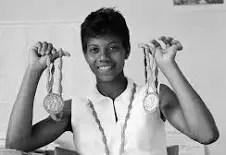
Sometimes, the most extraordinary victories are born from the deepest struggles. The story of Wilma Rudolph is not just about running fast; it’s about breaking barriers—physical, societal, and mental. It is about the power of determination, belief, and an unshakable spirit.
Imagine a little girl, born prematurely, weighing just 2 kg, struggling for survival in a family of 22 siblings. Now imagine that same girl being told she would never walk again—let alone run. And then picture her years later, standing at the 1960 Olympics, earning the title The Fastest Woman in the World.

This is the Wilma Rudolph Effect—the transformation of adversity into triumph, the refusal to accept limits, and the ability to rise beyond all odds.
A Childhood Marked by Struggles
Wilma Rudolph was born on June 23, 1940, in Saint Bethlehem, Tennessee, to a poor African-American family. Her father worked as a railway porter, and her mother was a domestic worker. Life was already difficult due to racial segregation in the United States, but Wilma faced an even greater challenge—she was born with polio, a disease that left her left leg weak and twisted.
As a child, she suffered from double pneumonia, scarlet fever, and polio, all before she turned five. The doctors told her mother that Wilma might never walk again. But Wilma had something even stronger than medicine—her mother’s belief in her and her own refusal to give up.
Her mother would take her on long journeys, 80 kilometers round trip, twice a week, to a hospital that treated Black patients. There, she received physical therapy, but it was not enough. Her mother and siblings massaged her leg at home daily, following the doctor’s instructions, even when it seemed hopeless. For years, Wilma moved around with a leg brace, unable to run or play like other children. Yet, instead of accepting this as her fate, she made a bold decision—one that would change her life.
Defying the Impossible
One Sunday, when Wilma was nine years old, she did something unthinkable. She took off her leg brace and walked into church, shocking her family and the entire congregation. It was the first sign that the impossible was possible.
From then on, she kept pushing herself. She started walking properly, then began running with her siblings. It was difficult. She often fell, her leg would hurt, but she refused to stop. Slowly, step by step, she trained herself to run.

By the time she was 11, she had fully recovered. But she didn’t stop at walking—she wanted to fly. At high school, Wilma discovered her passion for track and field. She joined the school’s basketball team, where she met coach Ed Temple. Temple was the head track coach at Tennessee State University and immediately saw her potential. He encouraged her to focus on running, and under his guidance, she trained tirelessly.
The Making of a Champion
At 16, Wilma was already making waves. In 1956, she qualified for the Melbourne Olympics as part of the U.S. relay team and won a bronze medal in the 4x100m relay. It was just the beginning. Determined to improve, she trained harder than ever before. Every morning, every evening, she ran. She had one goal—to become the fastest woman in the world.
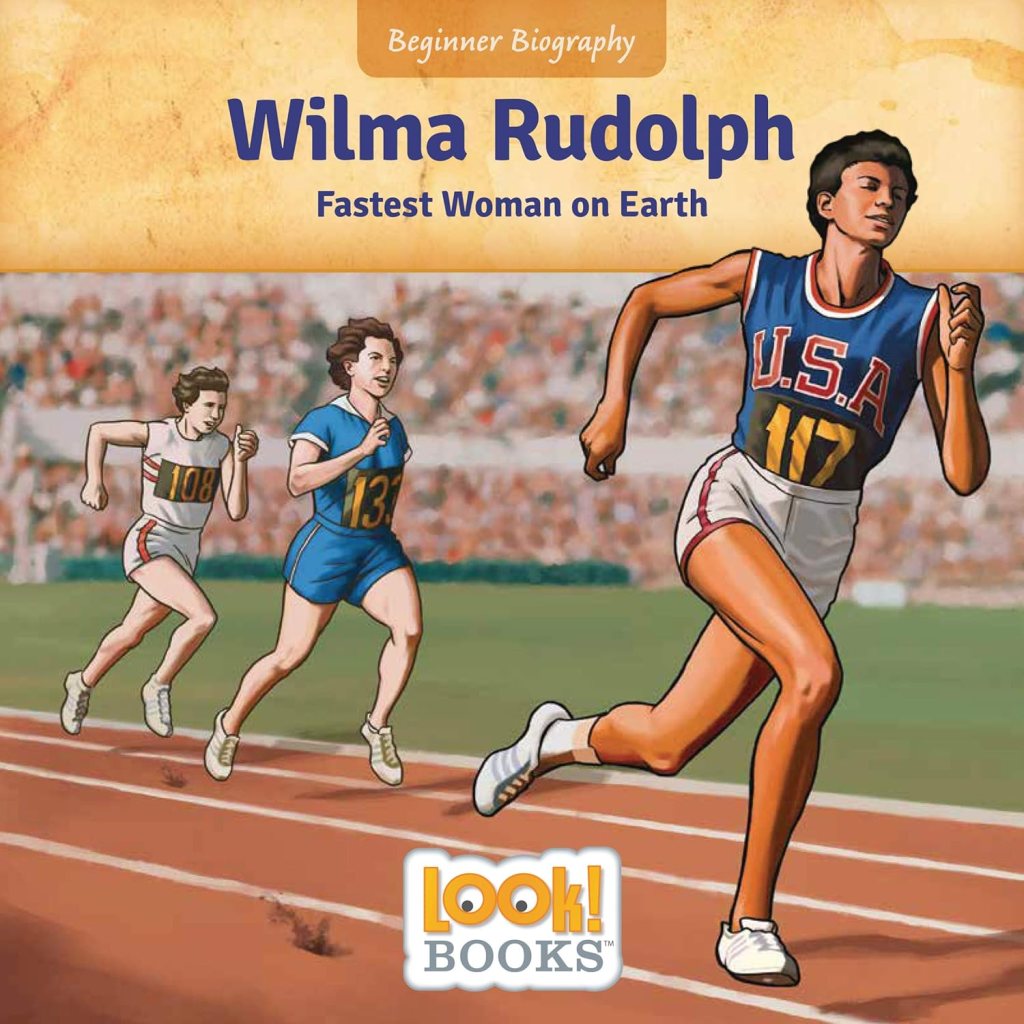
Her moment came in 1960 at the Rome Olympics. The entire world watched as a young African-American woman, who was once told she would never walk, lined up against the best sprinters on the planet.
- She won the 100m race.
- She won the 200m race.
- She won the 4x100m relay.
Three gold medals in one Olympics. Wilma Rudolph had done what no American woman had ever done before. She became a global sensation. She had not only beaten her competitors but also defeated polio, racism, poverty, and every limitation life had placed on her. The world now called her The Fastest Woman on Earth. Rudolph was one of the most popular athletes of the 1960 Rome Olympics and emerged from the Olympic Games as “The Tornado, the fastest woman on earth.” The Italians nicknamed her “La Gazzella Nera” (“The Black Gazelle”). The French called her “La Perle Noire” (“The Black Pearl”), as well as “La Chattanooga Choo-Choo.
More Than Just a Runner
After the Olympics, Wilma refused to participate in a segregated victory parade in her hometown. She made sure it was the first racially integrated event in the history of Clarksville, Tennessee. She became a teacher, a coach, and a mentor. She inspired thousands of young girls to believe that their dreams mattered. She also broke barriers for African-American athletes, proving that race and gender were not limitations but strengths.
Lessons from the Wilma Rudolph Effect
Wilma’s story is not just about athletics—it is about life. Her journey teaches us valuable lessons that can inspire anyone facing difficulties. Your circumstances do not define you. Wilma was born into poverty, faced discrimination, and battled polio. Yet, she rose above everything because she refused to let her past decide her future. The power of belief is stronger than any obstacle. If Wilma had believed the doctors who said she would never walk, she would have never become a champion. Instead, she believed in herself and proved everyone wrong.
Hard work beats all excuses. Wilma trained relentlessly. She knew talent alone wouldn’t take her to the top. It was her commitment and discipline that made her the fastest woman in the world.
A strong support system matters. Wilma’s mother and family never gave up on her. Her coaches guided her. Surrounding yourself with people who lift you up can change your life.
Break barriers for others. Wilma did not just win medals; she fought for equality and justice. She used her success to bring people together and inspire future generations.
The Wilma Rudolph Effect in Your Life
Wilma’s story is a reminder that no challenge is too great, no dream is too big, and no limitation is permanent.
Whenever you feel like giving up, remember the little girl who once had polio but became the fastest woman in the world.
Whenever someone tells you that something is impossible, remember that Wilma walked when she was told she never would.
Whenever life feels unfair, remember that your power lies in how you respond.
You may not be training for the Olympics, but you have your own race to run. The Wilma Rudolph Effect is about turning pain into power, struggles into success, and limitations into greatness. So, what’s stopping you? Keep running. Keep believing. Your gold medal moment is waiting.
About the author
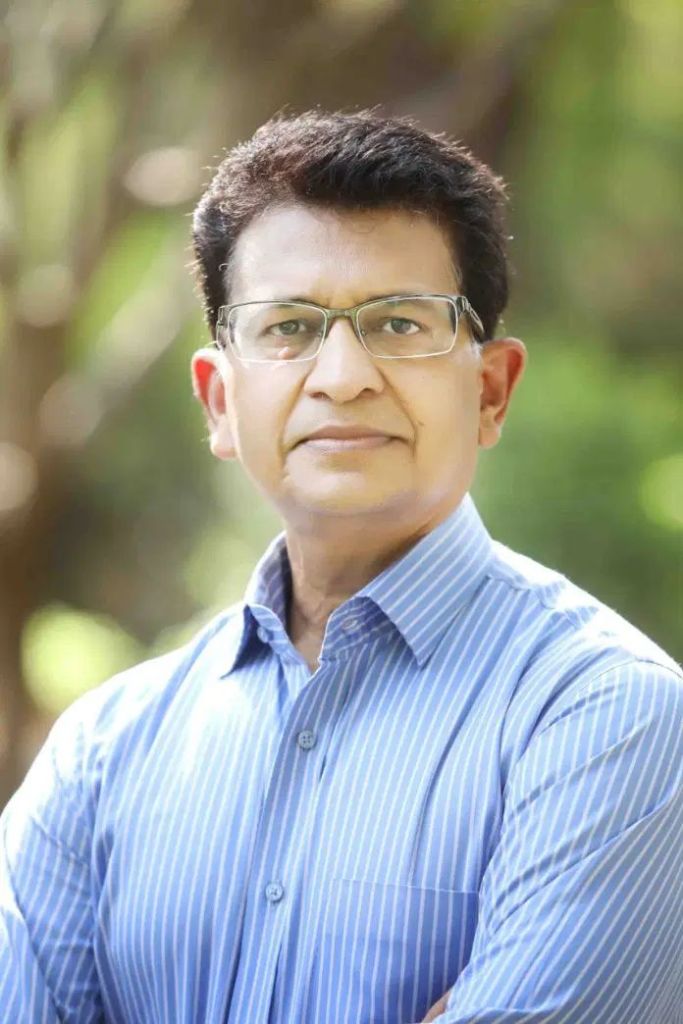
Dr Mukesh Jain is a Gold Medallist engineer in Electronics and Telecommunication Engineering from MANIT Bhopal. He obtained his MBA from the Indian Institute of Management Ahmedabad. He obtained his Master of Public Administration from the Kennedy School of Government, Harvard University along with Edward Mason Fellowship. He had the unique distinction of receiving three distinguished awards at Harvard University: The Mason Fellow award and The Lucius N. Littauer Fellow award for exemplary academic achievement, public service & potential for future leadership. He was also awarded The Raymond & Josephine Vernon award for academic distinction & significant contribution to Mason Fellowship Program. Mukesh Jain received his PhD in Strategic Management from IIT Delhi.
Mukesh Jain joined the Indian Police Service in 1989, Madhya Pradesh cadre. As an IPS officer, he held many challenging assignments including the Superintendent of Police, Raisen and Mandsaur Districts, and Inspector General of Police, Criminal Investigation Department and Additional DGP Cybercrime, Transport Commissioner Madhya Pradesh and Special DG Police.
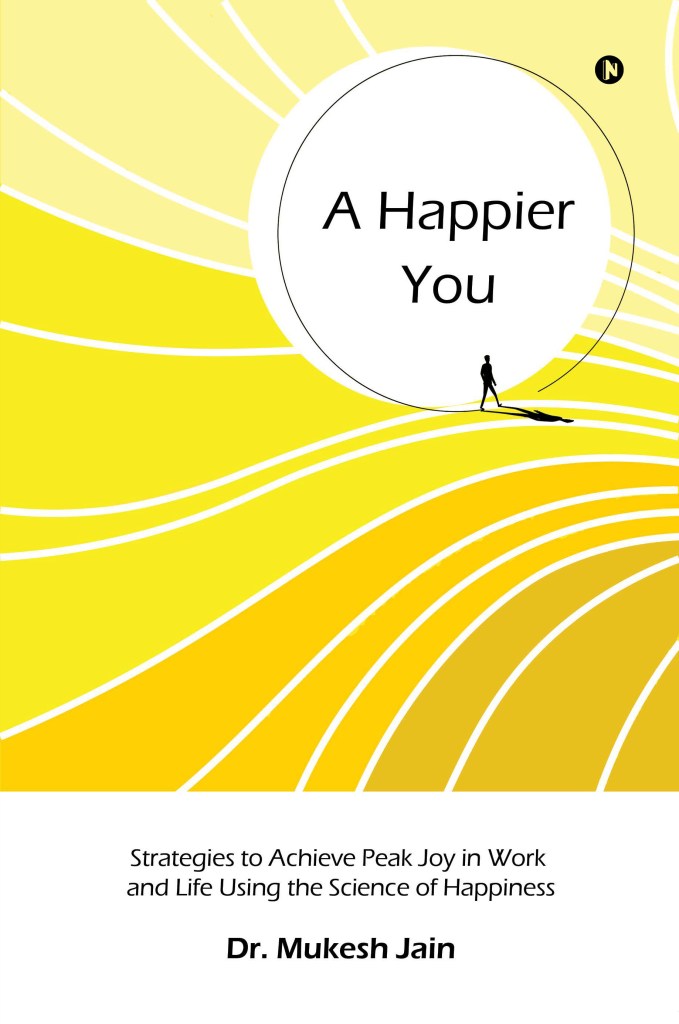
Dr. Mukesh Jain has authored many books on Public Policy and Positive Psychology. His book, ‘Excellence in Government, is a recommended reading for many public policy courses. His book- “A Happier You: Strategies to achieve peak joy in work and life using science of Happiness”, received book of the year award in 2022. After this, two more books, first, A ‘Masterclass in the Science of Happiness’ and the other, ‘Seeds of Happiness’, have also been received very well. His book, ‘Policing in the Age of Artificial Intelligence and Metaverse’ has received an extraordinary reception from the police officers. He is a visiting faculty to many business schools and reputed training institutes. He is an expert trainer of “Lateral Thinking”, and “The Science of happiness” and has conducted more than 300 workshops on these subjects.
 School Of Happiness by Mukesh Jain