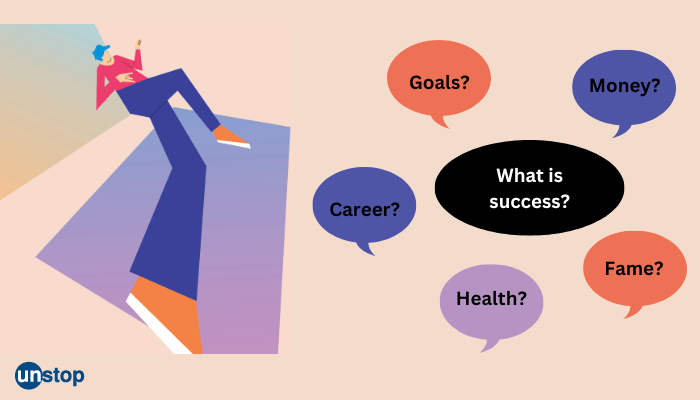
Success and happiness—these two words are at the heart of everything we do. We chase them in different ways, hoping to build a life that feels meaningful and fulfilling. But what do they really mean? People have been trying to answer this question for centuries. Aristotle believed that a good life was one of wisdom, virtue, and personal growth. The Dalai Lama teaches that true happiness comes from within—it is a state of mind shaped by kindness, self-awareness, and peace. Modern psychologists like Martin Seligman and Mihaly Csikszentmihalyi say that happiness is not about wealth or achievements but about purpose, meaning, and being fully engaged in life.

Yet, despite all this wisdom, many people spend their lives chasing things they think will bring them success and happiness—money, status, fame, or approval from others. They work hard, follow society’s expectations, and achieve big goals, only to realize that something still feels missing. The truth is, real success and happiness are not about doing more, having more, or achieving more. Instead, they are about asking yourself the right questions.
The poet Rainer Maria Rilke once said, “Try to love the questions themselves… Live the questions now.” The questions we ask ourselves shape our lives. The problem is, most people never stop to ask these deeper questions. They follow a standard script: study hard, get a job, earn money, buy a house, and settle down. But at some point, they wonder—Is this it? Why don’t I feel as happy as I thought I would? Success, at its core, is not about how others see us; it’s about how we see ourselves. Happiness is not about avoiding struggles but about choosing struggles that give us meaning.

So, what if you could rethink your path by asking five important questions? These questions are not just about career or money—they go deeper. They help you align your goals with what truly matters to you. They help you overcome doubts, break free from limiting beliefs, and make sure you don’t reach the end of your life with regrets. More than anything, they are not just ideas—they are tools to change the way you live. When you ask the right questions, you open the door to a life that is not just successful in the eyes of the world, but deeply joyful, meaningful, and true to who you are.
1. What does success mean to me?
Success—one of the most overused yet misunderstood words in the modern world. From a young age, we are conditioned to believe that success means accumulating wealth, achieving status, and earning recognition. Society creates a blueprint: study hard, get into a prestigious college, land a high-paying job, buy a house, and settle into a life of material stability. But does that truly define success? If so, why do some of the wealthiest and most famous individuals struggle with depression, dissatisfaction, and a sense of meaninglessness? Jim Carrey once said, “I think everybody should get rich and famous and do everything they ever dreamed of so they can see that it’s not the answer.” This profound realization suggests that success, if defined by external markers alone, can feel hollow.
Philosophers, psychologists, and thought leaders have all explored the question: What does success truly mean? Aristotle believed that true success lies in eudaimonia—a life of virtue, purpose, and fulfillment. Modern psychology echoes this idea. Harvard’s Grant Study, one of the longest-running studies on happiness and success, found that the key predictor of a successful and fulfilling life is not wealth or career achievements, but the quality of one’s relationships. The study, spanning over 80 years, concluded that people who prioritized deep, meaningful connections reported higher levels of satisfaction and well-being, whereas those who chased money and status often ended up lonely and unfulfilled.

Psychologist Mihaly Csikszentmihalyi’s research on flow—the state of deep engagement where people feel most alive and fulfilled found that people experience the greatest sense of accomplishment not when they reach a goal, but when they are fully immersed in meaningful activities that challenge and engage them.
This raises the crucial question: Is success about financial stability, or is it about impact? For some, success means creating art, writing books, or building businesses that make a difference in people’s lives. For others, it might mean deep personal growth, strong relationships, or inner peace. Richard Branson, the billionaire entrepreneur, once said, “Too many people measure how successful they are by how much money they make or the people they associate with. In reality, true success should be measured by how happy you are.” His words remind us that success without happiness is failure in disguise.
It is essential to ask: If I had everything—money, fame, achievements—what would still matter to me? Many people spend their entire lives climbing a ladder only to realize it was leaning against the wrong wall. Studies show that people on their deathbeds rarely regret not working more or earning more; instead, they regret not spending enough time with loved ones, not pursuing their passions, and not living authentically. Clarity on your version of success ensures that life is meaningful, fulfilling, and truly worth living.
2. What truly makes me happy?
Happiness—perhaps the most universally sought-after yet widely misunderstood pursuit of human life. We often believe it lies just beyond our reach, waiting for us in the next milestone—a better job, a bigger house, a promotion, or a dream vacation. But as the philosopher Alan Watts wisely put it, “We thought of life by analogy with a journey… with a serious purpose at the end. But we missed the point the whole way along. It was a musical thing, and we were supposed to sing or dance while the music was being played.” This insight challenges the common notion that happiness is a destination, rather than a way of being.

It’s worth reflecting: When was the last time I felt genuinely happy? Was it in an exotic vacation, a prestigious award, or in a simple moment—laughing with a close friend, sharing a meal with family, or losing myself in a book or music? Research by Sonja Lyubomirsky, a leading psychologist in happiness studies, shows that only 10% of our happiness is determined by external circumstances like money, status, or possessions, while 40% depends on our intentional activities—our habits, mindsets, and daily choices. This explains why billionaires can feel miserable while people with modest lives can radiate joy.
Another crucial question to ask is: Is my happiness driven by external factors (validation, status) or internal ones (gratitude, purpose)? Many of us fall into the trap of conditional happiness, believing “I’ll be happy when I get promoted,” “I’ll be happy when I lose weight,” or “I’ll be happy when I buy a bigger house.” But psychologist Tal Ben-Shahar, in his bestselling book Happier, calls this the “arrival fallacy”—the illusion that reaching a goal will bring lasting happiness. In reality, happiness is not something we achieve once and for all; it is a daily practice, cultivated through gratitude, purpose, and meaningful experiences.
This brings us to a powerful question: Am I sacrificing my happiness today for an uncertain tomorrow? Many people postpone joy, assuming that happiness will come after years of struggle. But studies on hedonic adaptation show that humans quickly adjust to new achievements and material gains, making them temporary sources of happiness. The real key to happiness, according to psychologist Martin Seligman, lies in engagement (flow), meaning, and relationships rather than external rewards. The truth is, happiness is not about chasing bigger milestones; it’s about finding joy in the present moment. It is about savoring small pleasures, nurturing relationships, and aligning daily life with deeper values. As the poet Mary Oliver beautifully asked: “Tell me, what is it you plan to do with your one wild and precious life?” The answer lies not in waiting for happiness but in choosing it, every single day.
3. What are my biggest limiting beliefs?
Our beliefs are the invisible architects of our lives. They shape how we perceive ourselves, the world, and our potential. Some beliefs empower us, pushing us to grow, evolve, and take bold action. Others, however, act as invisible chains, keeping us stuck in self-doubt and fear. The question is: Are your beliefs working for you or against you?

Take, for instance, Roger Bannister. Before 1954, running a mile in under four minutes was considered impossible, even by medical experts. But Bannister refused to accept this belief. He trained relentlessly, reprogrammed his mindset, and finally broke the four-minute barrier. What happened next? Within a year, several other runners did the same. The only thing that had changed was the belief that it was possible. This story proves what Henry Ford famously said: “Whether you think you can, or you think you can’t, you’re right.”
But what about everyday limiting beliefs? Ask yourself: What’s stopping me from going after what I want? Is it the fear of failure? Fear of judgment? The belief that you’re not “good enough”? Many people tell themselves, “I’ll never be able to start my own business,” or “I’m too young to be taken seriously,” or “It’s too late for me to change careers.” These are just mental barriers, not reality. Neuroscience research on self-fulfilling prophecies shows that when we believe something strongly enough, our brains filter information in a way that reinforces that belief. If you believe you’re bad at public speaking, your mind will focus only on past failures and ignore moments when you spoke confidently.
Breaking these beliefs starts with awareness. Psychologists suggest cognitive reframing—challenging old narratives and replacing them with empowering ones. Instead of “I’m not good enough,” say “I am learning and improving every day.” Instead of “Success is only for lucky people,” say “I create my own opportunities.”
Your beliefs shape your destiny. The moment you stop believing in limits, your possibilities become endless.
4. How am I investing in myself?
If there is one investment that guarantees lifelong returns, it is the investment in yourself. Your mind, body, and skills are your greatest assets—far more valuable than money or material possessions. Yet, many people spend their lives accumulating wealth while neglecting the very things that determine their long-term success and happiness: learning, health, mental well-being, and personal growth. As Warren Buffett once said, “The best investment you can make is in yourself. The more you learn, the more you earn.”
This raises a fundamental question: Am I learning and evolving every day? Lifelong learning is no longer optional—it is the key to staying relevant in an ever-changing world. Research by Carol Dweck on growth mindset shows that people who continuously seek knowledge and new experiences are more likely to succeed than those who believe their abilities are fixed. In contrast, stagnation leads to mediocrity. The world’s most successful people—from Elon Musk to Bill Gates—are known for their commitment to continuous learning. Gates famously follows the five-hour rule, dedicating at least five hours a week to reading and self-education. If a billionaire like Gates finds time for learning, what excuse do the rest of us have?

Beyond intellectual growth, a critical aspect of investing in oneself is health and mental well-being. Ask yourself: Do I prioritize my physical and mental health? Studies consistently show that high achievers prioritize fitness, nutrition, and mental wellness. Harvard research confirms that regular exercise doesn’t just improve physical health—it boosts cognitive function, creativity, and resilience. Likewise, mindfulness practices like meditation have been scientifically proven to reduce stress, enhance focus, and improve overall well-being. The question is: Do you treat your body like a high-performance vehicle or a neglected machine?
But investing in oneself goes beyond learning and health—it extends to emotional and social well-being. If I continue on my current path, will I be proud of myself in 10 years? Many people get trapped in careers or lifestyles that don’t align with their true aspirations. The Japanese concept of Ikigai—finding purpose by aligning what you love, what you are good at, what the world needs, and what you can be paid for—offers a powerful framework for self-investment. If your current path doesn’t excite you, it may be time to pivot, upskill, or explore new opportunities. Success doesn’t come from working harder but from working smarter—by investing in learning, self-care, and relationships. The question is not whether you have time, but whether you prioritize yourself. As Jim Rohn wisely put it, “Your life does not get better by chance, it gets better by change.” So, how are you investing in yourself today?
5. If I keep living this way, will I have regrets?
Regret is one of life’s heaviest burdens, yet many people unknowingly set themselves up for it. We chase success, stability, and societal approval, often at the cost of our own dreams and values. But as Steve Jobs famously said, “Your time is limited, so don’t waste it living someone else’s life.” The question is: Am I truly living, or am I just existing?
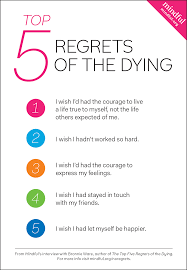
Bronnie Ware, an Australian palliative nurse who spent years caring for the terminally ill, documented the most common regrets of the dying in her book The Top Five Regrets of the Dying. The number one regret? “I wish I had the courage to live a life true to myself, not what others expected of me.” People on their deathbeds rarely regret failing at work, earning less money, or not impressing others. Instead, they regret the bold dreams they never pursued, the love they never expressed, and the joy they postponed for “someday” that never arrived.

So, ask yourself: Am I living my life according to my values, or am I just going with the flow? Many people follow a script written by others—parents, society, tradition—without questioning whether it aligns with their true desires. This phenomenon, called conformity bias, leads people to make safe choices rather than authentic ones. Research in psychology confirms that people who align their lives with their core values experience greater long-term happiness and fulfillment than those who chase external validation.
A powerful exercise is to ask: If today were my last day, would I be satisfied with how I spent my time? This question forces us to evaluate our priorities. Are you spending your days on things that truly matter—love, passion, contribution, personal growth? Or are you lost in trivial distractions, mindless work, and obligations that drain your soul? Author Annie Dillard put it best: “How we spend our days is, of course, how we spend our lives.” If your daily routine doesn’t excite or fulfill you, it’s a sign that change is overdue.
Which brings us to the final and most urgent question: What’s one bold decision I need to make today to avoid future regret? Often, we know deep down what needs to change—a career shift, an honest conversation, a long-overdue risk—but fear holds us back. Research on anticipated regret shows that people are more likely to regret inaction than action in the long run. A study published in Psychological Science found that while short-term regrets tend to revolve around mistakes we made, long-term regrets are overwhelmingly about opportunities we never took.
The truth is, regret is avoidable—if we live with intention. Instead of waiting for the “perfect time,” we must take courageous steps toward the life we truly desire. As Mark Twain wisely said, “Twenty years from now, you will be more disappointed by the things you didn’t do than by the ones you did do.” Your time is finite—make sure you’re spending it on what truly matters.
The Power of Asking the Right Questions
At the end of the day, life is not just about running after success, making money, or pleasing others. It’s about truly living—feeling a sense of purpose, joy, and fulfillment every single day. And the best way to ensure that we are on the right path is to ask ourselves the right questions.
The five questions we explored—What does success mean to me? What truly makes me happy? What are my biggest limiting beliefs? How am I investing in myself? If I keep living this way, will I have regrets?—are not just casual reflections. They are powerful tools that can reshape your future. These questions help you break free from the life that society tells you to live and guide you toward the life you truly want.
Too often, we get caught up in routines. We wake up, go to work, do what is expected, and think, “Someday, I’ll be happy.” But the truth is, there is no magical “someday”. Happiness and success are not things you find at the end of a long journey—they are things you create in the present by living intentionally. If you are constantly waiting for the right moment, you will wake up years later with regret, wondering where all that time went. As Robin Sharma says, “Don’t live the same year 75 times and call it a life.”
That’s why it’s so important to define success for yourself—not according to society’s definition, but based on what truly matters to you. It’s crucial to realize that happiness is not in the future; it’s in the small, everyday moments. It’s in the way you spend your time, the relationships you nurture, and the joy you allow yourself to experience.
And then there are limiting beliefs—those silent voices in your head that say, “You’re not good enough,” “You’re too old,” or “You don’t have what it takes.” These thoughts are not facts—they are just stories we tell ourselves. The moment you stop believing in them, you become free to create the life you want. Think about every successful person—Oprah, Elon Musk, J.K. Rowling—each of them had doubts, rejections, and failures. But the only difference was that they refused to let those doubts stop them. And you can do the same.
But success is not just about breaking beliefs—it’s about investing in yourself. Your mind, your body, your skills—these are the greatest assets you have. Learning every day, taking care of your health, building strong relationships—these are the things that will make you truly wealthy. Because real success is not just about money; it’s about becoming the best version of yourself.
And finally, the most important question: If I keep living this way, will I have regrets? This is the hardest but most important question of all. Because one day, when you look back on your life, you don’t want to feel like you wasted time. You don’t want to wish you had taken more risks, loved more deeply, or followed your true passion.
So here’s the truth: You have one life. Make it count. Ask yourself these questions, be honest with your answers, and have the courage to make changes where needed. Your future self will thank you.
About the Author
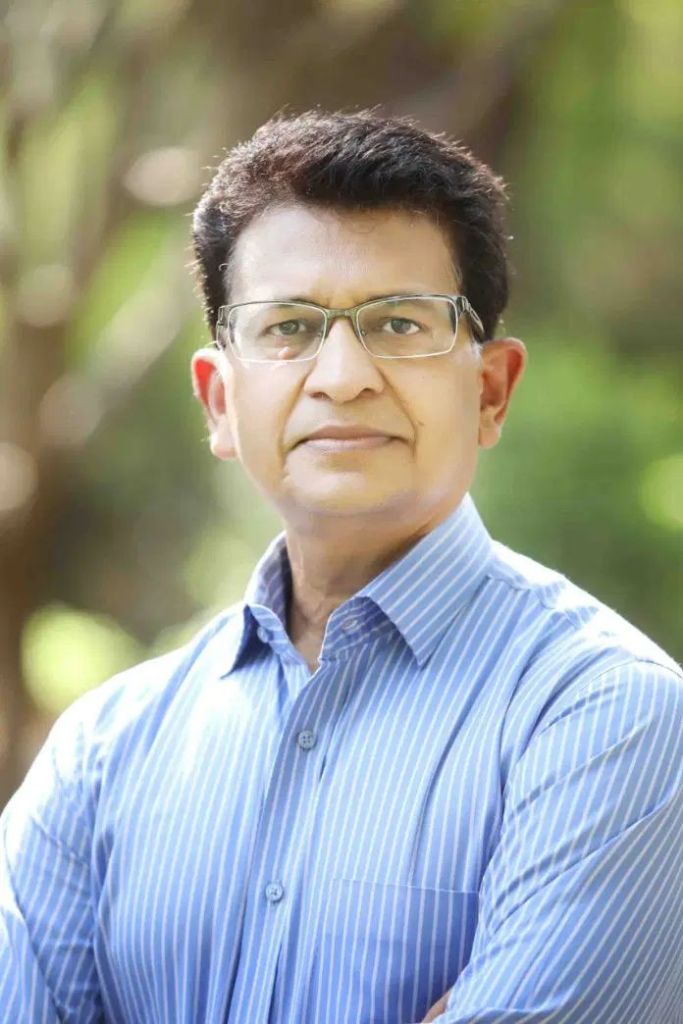
Dr Mukesh Jain is a Gold Medallist engineer in Electronics and Telecommunication Engineering from MANIT Bhopal. He obtained his MBA from the Indian Institute of Management Ahmedabad. He obtained his Master of Public Administration from the Kennedy School of Government, Harvard University along with Edward Mason Fellowship. He had the unique distinction of receiving three distinguished awards at Harvard University: The Mason Fellow award and The Lucius N. Littauer Fellow award for exemplary academic achievement, public service & potential for future leadership. He was also awarded The Raymond & Josephine Vernon award for academic distinction & significant contribution to Mason Fellowship Program. Mukesh Jain received his PhD in Strategic Management from IIT Delhi.
Mukesh Jain joined the Indian Police Service in 1989, Madhya Pradesh cadre. As an IPS officer, he held many challenging assignments including the Superintendent of Police, Raisen and Mandsaur Districts, and Inspector General of Police, Criminal Investigation Department and Additional DGP Cybercrime, Transport Commissioner Madhya Pradesh and Special DG Police.
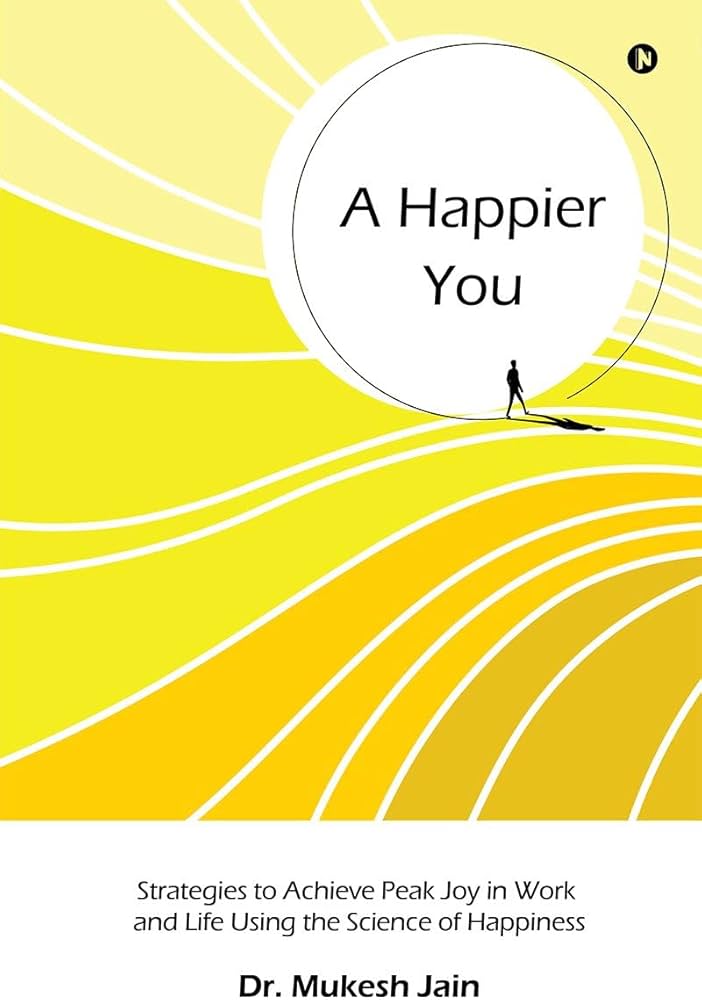
Dr. Mukesh Jain has authored many books on Public Policy and Positive Psychology. His book, ‘Excellence in Government, is a recommended reading for many public policy courses. His book- “A Happier You: Strategies to achieve peak joy in work and life using science of Happiness”, received book of the year award in 2022. After this, two more books, first, A ‘Masterclass in the Science of Happiness’ and the other, ‘Seeds of Happiness’, have also been received very well. His book, ‘Policing in the Age of Artificial Intelligence and Metaverse’ has received an extraordinary reception from the police officers. He is a visiting faculty to many business schools and reputed training institutes. He is an expert trainer of “Lateral Thinking”, and “The Science of happiness” and has conducted more than 300 workshops on these subjects.
 School Of Happiness by Mukesh Jain