Have you ever been so immersed in something that you forgot about the world around you? Maybe you were playing your favorite musical instrument, painting a canvas, solving a complex problem at work, or deeply engaged in an intense conversation with someone. As you became more and more focused, all distractions seemed to fade into the background. Your mind and body were in perfect harmony, and everything felt effortless. When you finally glanced at the clock, you were surprised—what felt like only a few minutes had actually been hours. This experience, where you become completely absorbed in an activity and lose your sense of time and self-consciousness, is what psychologists call Flow.
Flow is a state of optimal experience, where we feel deeply engaged, energized, and at our peak level of performance. It is a mental state in which action and awareness merge seamlessly, and we become fully present in the moment. Athletes often describe it as being “in the zone,” where their movements feel automatic and instinctual. Writers and artists refer to it as moments when creativity pours out of them effortlessly. Even in everyday activities—such as gardening, coding, cooking, or playing chess—people can experience Flow when they are fully absorbed in what they are doing. It is not about working harder or forcing yourself to focus; rather, it is about finding the perfect balance between challenge and skill, where the task at hand is engaging enough to keep you interested but not so overwhelming that it causes stress.
The concept of Flow was extensively studied by Mihály Csíkszentmihályi, a Hungarian-American psychologist who dedicated his career to understanding what makes life truly meaningful. Through decades of research, he discovered that one of the most fulfilling human experiences occurs when we are completely absorbed in an activity that challenges us at the right level. He coined the term Flow to describe this heightened state of focus, creativity, and effortless performance. His studies revealed that people in Flow experience a unique combination of joy, deep concentration, and a profound sense of purpose—a state where the mind and body work in perfect harmony, and everything seems to come together naturally.
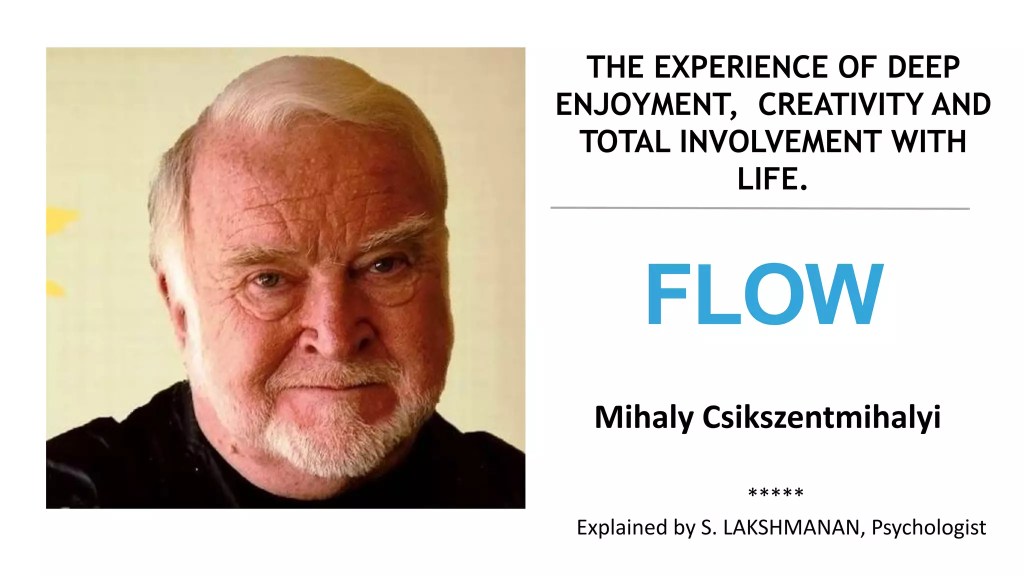
Mihály Csíkszentmihályi: The Man Who Discovered Flow
Born in Hungary in 1934, Csíkszentmihályi grew up during one of the most turbulent times in European history. The devastation of World War II left millions displaced, traumatized, and searching for meaning. As a child, he witnessed immense suffering and destruction, which led him to wonder: Why do some people remain resilient, creative, and happy despite adversity, while others feel lost and broken? After the war, he noticed that many people who had lost their homes, jobs, and security were unable to regain happiness. He wanted to understand what makes life worth living, even in the face of hardship.
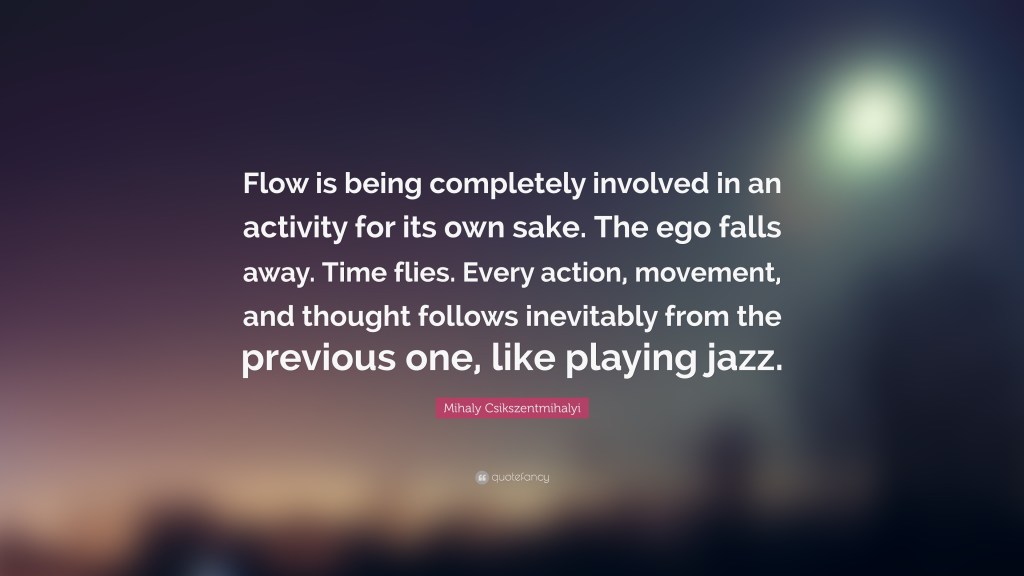
In his search for answers, Csíkszentmihályi explored art, philosophy, and religion. He wanted to find out what makes people truly fulfilled. One of the turning points in his life came when he attended a lecture by Carl Jung while visiting a ski resort in Switzerland. Jung spoke about the psychological trauma that Europeans were experiencing after the war. This deeply resonated with Csíkszentmihályi, who realized that psychology might hold the answers he was looking for. Inspired, he moved to the United States and pursued a degree in psychology, becoming fascinated by the science of happiness. While most psychologists at the time focused on mental illness and dysfunction, Csíkszentmihályi was interested in what makes people thrive and perform at their best. Here’s how Mihaly Csikszentmihalyi described the state of flow: “being completely involved in an activity for its own sake. The ego falls away. Every action, movement, and thought follows inevitably from the previous one, like playing jazz. Your whole being is involved, and you’re using your skills to the utmost.”
Csikszentmihalyi did a 12-year study with people all over the world. He discovered that, regardless of age, nationality, or conditions of life, almost everyone described optimal experience in a very similar way. For decades, Csíkszentmihályi conducted thousands of interviews and psychological studies. He interviewed:
- Elite athletes, musicians, and artists to understand when they felt most creative and in control.
- Surgeons and scientists to examine how they enter states of deep concentration.
- Chess players and extreme sports athletes to analyze their mental focus during high-pressure situations.

Through his research, he discovered a common thread among high achievers—they all described moments where they felt:
- Completely absorbed in their work.
- Free from stress and self-doubt.
- Highly productive, creative, and joyful.
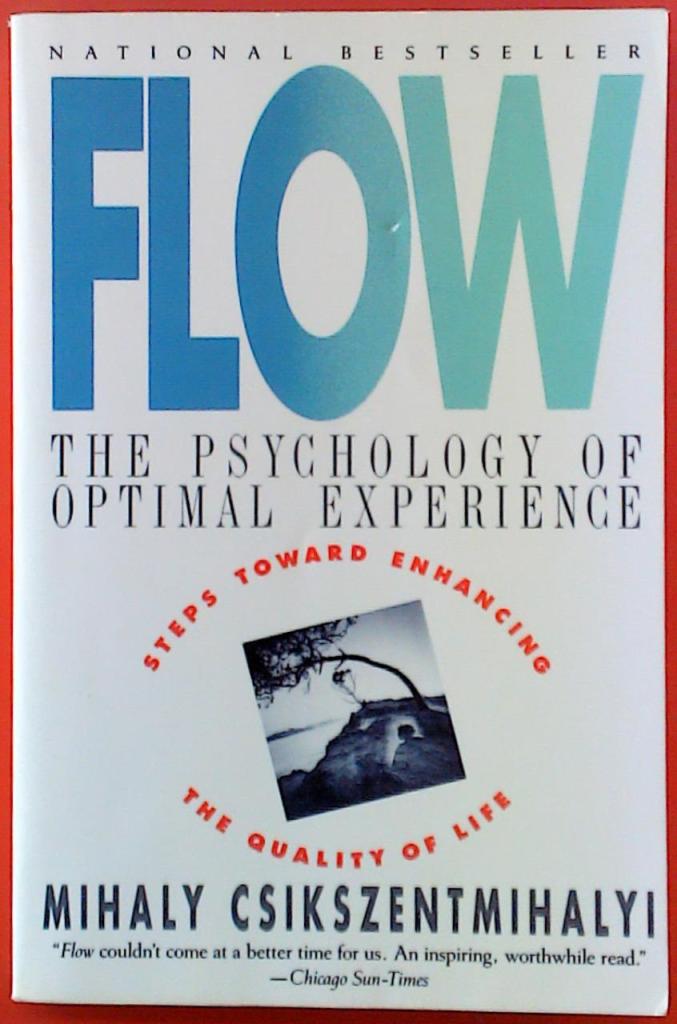
This led him to coin the term “Flow” to describe this mental state. He formalized the characteristics of Flow and developed a framework explaining how anyone can experience it, regardless of profession or skill level. In 1990, he published his seminal book, ‘Flow: The Psychology of Optimal Experience’, which became one of the most influential works in psychology.
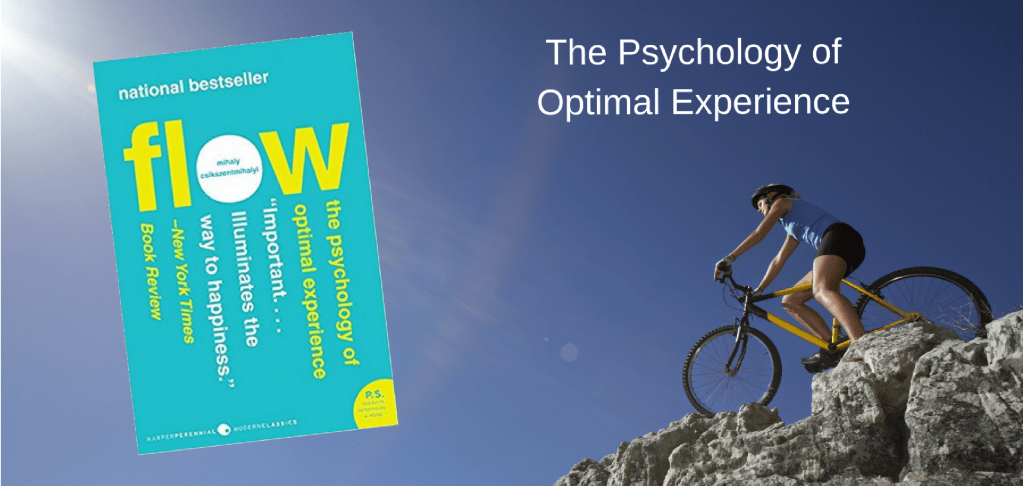
Many of us assume that happiness is about comfort and relaxation. We dream of lying on a beach, binge-watching our favorite shows, or finally having enough money to retire and do nothing. Society tells us that achieving financial security, landing the perfect job, or finding an ideal relationship will lead to lasting happiness. However, research in psychology has shown that happiness is not simply the absence of difficulty but the presence of engagement and meaningful challenges. People report feeling happiest not when they are passive, but when they are actively involved in something that fully engages their mind and body. His research revealed that individuals who engage in challenging but enjoyable activities—whether it’s an artist lost in painting, a scientist working on a discovery, or a rock climber conquering a new peak—tend to report greater life satisfaction than those who spend their free time passively consuming entertainment.
This counterintuitive insight challenges the idea that happiness is about minimizing effort. Instead, true fulfillment often comes from activities that require focus, effort, and skill. When we engage deeply in something that pushes us just beyond our comfort zone, we enter Flow. We lose our sense of time, feel fully alive, and experience an intrinsic sense of joy that does not depend on external rewards. Flow teaches us that happiness is not about doing nothing—it’s about doing something deeply and meaningfully.
Imagine a basketball player executing the perfect shot—their movements are precise, their focus unwavering, and their instincts guiding them effortlessly. Or think of a writer crafting a novel, their words flowing onto the page as if they are being dictated by an unseen force. A scientist working on a breakthrough discovery may become so deeply engrossed in their research that they forget to eat or sleep, driven by the excitement of solving a problem. These are all examples of Flow, a state that connects high achievers across every field, whether in sports, the arts, business, or academia.
But Flow is not just reserved for world-class athletes, bestselling authors, or top-performing professionals. The beauty of Flow is that it is accessible to everyone, regardless of expertise or profession. It is not limited to grand achievements or extraordinary moments—it can be found in everyday activities that engage us deeply. A home cook perfecting a new recipe, a gardener tending to their plants, a jogger lost in the rhythm of their stride, or even someone meticulously organizing their workspace can all experience Flow. The key is not what you do, but how you engage with it. Flow occurs when an activity is neither too easy nor too difficult, but at that perfect sweet spot where it pushes us to focus and improve without overwhelming us. When the task is too easy, we become bored; when it’s too difficult, we become frustrated. But when we find something that challenges and engages us at just the right level, Flow emerges naturally. This is why Flow can happen anywhere—whether you’re painting, coding, playing chess, or even solving a tricky puzzle.
The Characteristics of Flow: What Makes It So Powerful?
Flow is not just about deep concentration—it is a highly structured mental state that has clear psychological and physiological markers. It is the state where people feel most alive, creative, and productive, and research has identified specific characteristics that define the Flow experience. These characteristics help explain why Flow is so deeply satisfying and enhances performance in various fields, from sports to music, business, and the arts.
1. Intense Concentration

One of the most defining features of Flow is complete and undivided focus. When in Flow: Your attention is fully absorbed in the task at hand. The brain eliminates distractions, allowing for razor-sharp focus. You do not feel the urge to check your phone, look around, or engage in unrelated thoughts. Imagine a surgeon performing a delicate operation, a professional gamer locked into a high-stakes match, or an artist painting with deep focus—their entire attention is directed toward the task, leaving no room for distractions.
2. Loss of Self-Consciousness
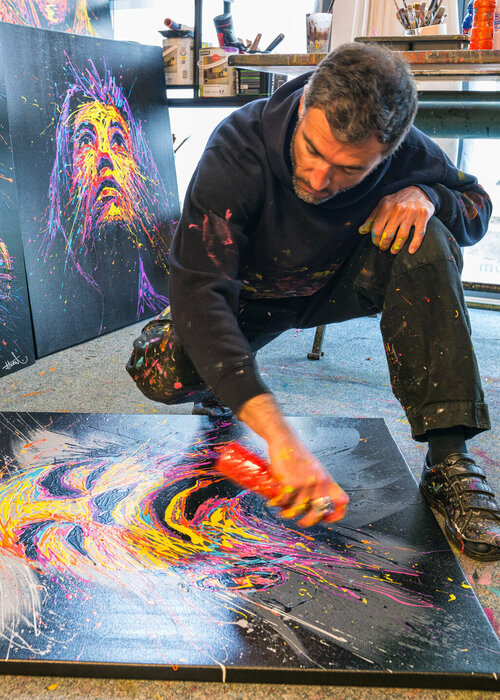
In Flow, you stop worrying about how you look, how others perceive you, or whether you are doing something “right.” Your inner critic disappears, freeing you from self-doubt and hesitation. This leads to greater confidence and creativity, as you are no longer overanalyzing every move. Actors often experience this on stage, fully inhabiting their character without fear or self-awareness. Musicians describe it as feeling like they become one with their instrument.
3. Distorted Sense of Time
Time perception changes dramatically in Flow. You may feel as though: Hours pass by in what seems like minutes, especially when you are completely engaged. Time slows down, particularly in high-performance situations like sports, where athletes describe seeing everything in slow motion, allowing them to react instinctively. This happens because the brain’s prefrontal cortex (which keeps track of time) becomes less active, making you lose awareness of time.
4. Effortlessness and Automatic Action
The activity feels natural and automatic, as though you are being carried along by momentum. Instead of feeling forced or exhausting, your actions flow smoothly from one to the next. A chess grandmaster thinking multiple moves ahead or a dancer moving in perfect sync with the music doesn’t have to force their actions—they just happen effortlessly.
5. The Balance between Challenge and Skill
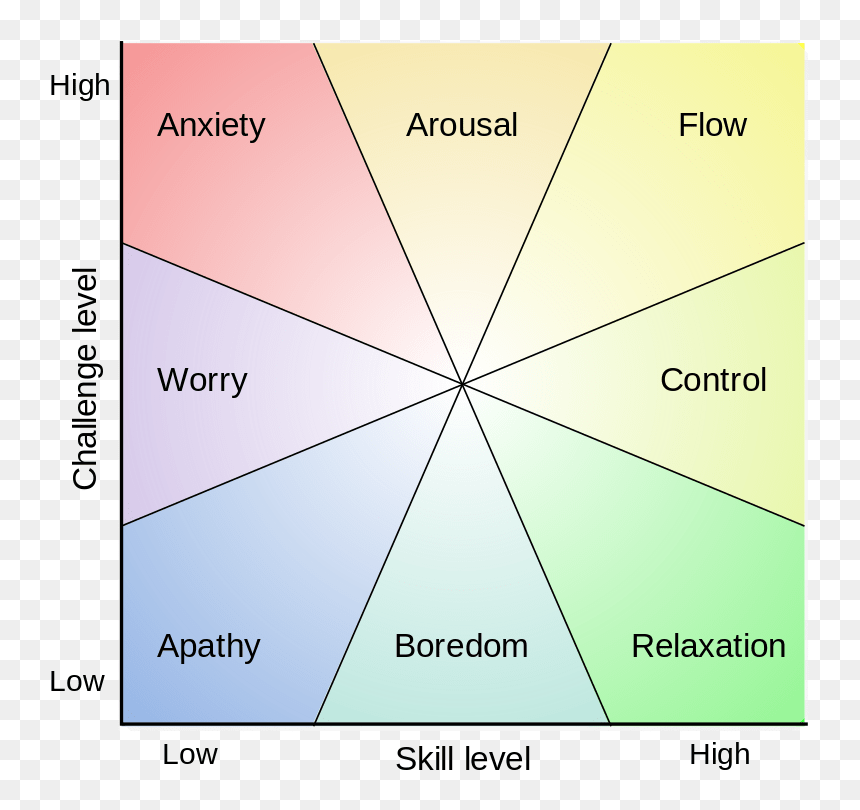
Flow happens when there is a perfect match between the difficulty of the task and your abilities: If the task is too easy, you will get bored and disengaged. If the task is too difficult, you will feel frustrated or anxious. But when the challenge is just right—pushing you slightly beyond your comfort zone—Flow emerges naturally. A tennis player will not experience Flow when practicing easy shots, nor when they face an opponent far beyond their level. But when they play someone just slightly better than them, their skills are fully engaged, creating Flow.
6. Intrinsic Motivation: The Activity Becomes the Reward
Flow activities are often enjoyable for their own sake, rather than for external rewards like money or recognition. You engage in the task because it feels deeply fulfilling, not because you “have to.” A passionate writer doesn’t write just for publication—they write because they love the process. A surfer doesn’t ride waves just to win competitions—they do it for the pure joy of the experience.
7. A Sense of Control
Even when performing complex or high-risk tasks, people in Flow feel a deep sense of control. Despite challenges, they remain calm, confident, and fully in charge of their actions. This is why Flow is common in emergency responders, surgeons, extreme sports athletes, and competitive gamers—their ability to enter Flow allows them to stay composed and make split-second decisions under pressure.
These characteristics explain why Flow is one of the most fulfilling human experiences—it helps people feel engaged, confident, and deeply immersed in what they are doing. It is the state where we feel and perform our best.
The Research behind Flow: Why It Works
Flow is not just an abstract psychological concept—it is a scientifically measurable state that has been studied extensively across disciplines, including neuroscience, psychology, and business. Researchers have discovered that Flow significantly enhances brain function, creativity, productivity, and overall well-being. Flow is not simply about feeling good; it represents an optimized state of human performance. Scientific studies have revealed specific neurological changes that occur during Flow, helping explain why it makes people more engaged, focused, and efficient. Let’s explore some of the key findings from the research on Flow.
1. Brain Activity in Flow: The Role of Transient Hypofrontality
One of the most fascinating discoveries about Flow comes from neuroscientist Arne Dietrich, who found that Flow involves a process called transient hypofrontality. This means that the prefrontal cortex—the part of the brain responsible for self-doubt, worry, and time awareness—temporarily shuts down. The prefrontal cortex is responsible for:
- Self-reflection (e.g., “Am I good enough?” “What if I fail?”)
- Decision-making and logical thinking
- Sense of time and awareness of surroundings
In everyday life, this part of the brain is highly active, processing complex thoughts and analyzing potential risks. However, during Flow, the prefrontal cortex quiets down, allowing us to stop overthinking and act instinctively. This explains why:
- Self-doubt disappears—You stop worrying about failure and immerse yourself in the activity.
- Time distortion occurs—Hours may feel like minutes because the brain is no longer tracking time normally.
- Creativity and intuition increase—Without the interference of the inner critic, ideas flow more freely.
This temporary shift in brain function allows people to enter a state of pure, effortless engagement, where their skills and actions merge seamlessly.
2. The Dopamine System: The Brain’s Built-in Motivation Boost
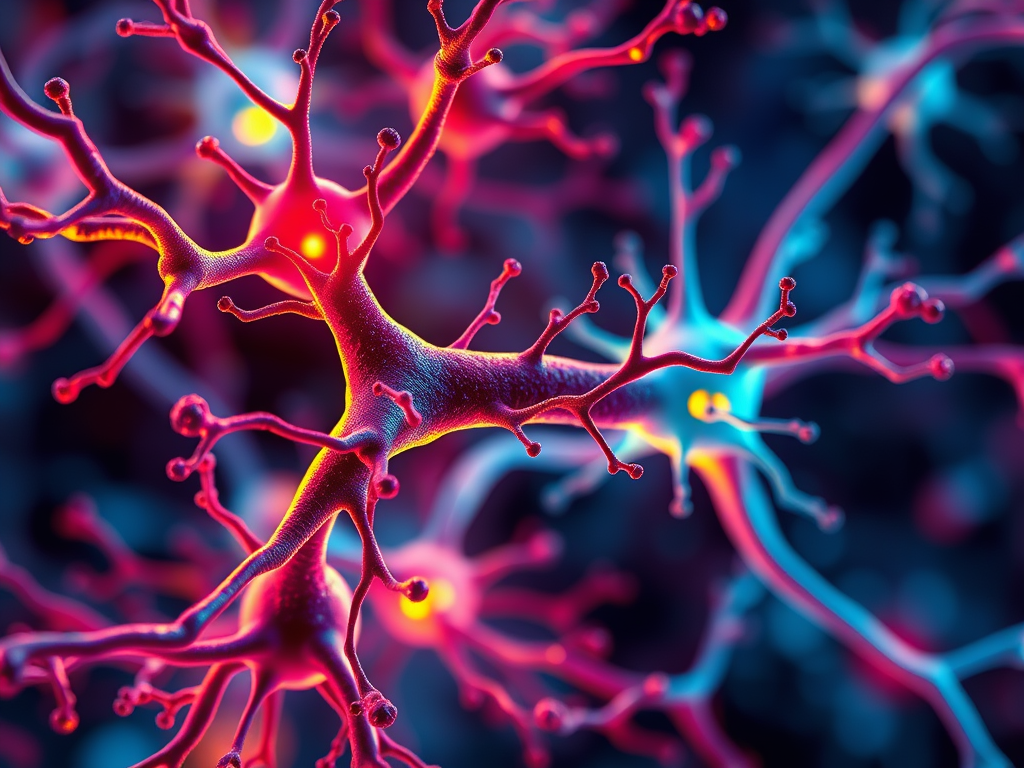
Another key reason Flow feels so good is its connection to the dopamine reward system. Research by Gruber, Gelman, & Ranganath found that Flow activates the brain’s dopamine pathways, leading to increased:
- Motivation – You feel energized and eager to continue.
- Creativity – Dopamine enhances problem-solving and innovation.
- Enjoyment – Flow feels inherently pleasurable, encouraging you to seek it out again.
Dopamine is a neurotransmitter associated with pleasure and learning. It is released when we experience something rewarding, such as achieving a goal, solving a problem, or enjoying a favorite activity. During Flow, dopamine floods the brain, reinforcing the experience and making people feel excited and fully engaged. This is why: Athletes in Flow push their limits without feeling exhaustion. Musicians lose themselves in their music for hours. Writers and artists experience bursts of creativity that seem effortless.
Because dopamine is also associated with habit formation, Flow can become self-reinforcing—the more we experience it, the more we seek it out, leading to a virtuous cycle of engagement and mastery.
3. Flow and Productivity: The 500% Performance Boost
Beyond just feeling good, Flow has been shown to radically improve performance and efficiency. A groundbreaking study by McKinsey & Company found that executives who regularly experience Flow are up to 500% more productive than their peers. Imagine completing five days’ worth of work in a single day, simply because you are so immersed and efficient. That is the power of Flow. Companies like Google, Tesla, and Pixar actively design their work environments to maximize Flow among employees, leading to groundbreaking innovations and high job satisfaction.
4. The Link between Flow and Learning
Flow doesn’t just make us more productive—it also helps us learn faster and retain information better. Neuroscientists have found that: Flow enhances neuroplasticity, the brain’s ability to form new neural connections. When in Flow, people absorb information more efficiently, improving learning and skill development. Students who experience Flow in school perform better on exams and retain knowledge longer. This is why top universities and educators are now incorporating Flow-based learning techniques, ensuring that students engage deeply, rather than just memorizing facts.
5. Flow and Mental Well-being
Flow is also a powerful tool for emotional well-being and resilience. Research has shown that people who experience Flow regularly have: Lower stress and anxiety levels – Flow shifts attention away from worries and negative thoughts. Higher levels of life satisfaction – Engaging deeply in meaningful activities increases overall happiness. A greater sense of purpose – Flow helps people feel more connected to their work, hobbies, and passions. In fact, Flow has been found to have similar benefits to mindfulness meditation. Both involve deep focus, reduced self-judgment, and an enhanced sense of presence. This is why activities like painting, playing music, or engaging in sports can be deeply therapeutic. While Flow is often associated with elite performers, it is not just for professionals or high achievers. Anyone can experience Flow in everyday life—whether it’s through hobbies, exercise, conversations, or creative projects. The key is to identify activities that fully engage your mind and body, where challenges push you to grow without overwhelming you.
Flow teaches us that happiness and fulfillment do not come from avoiding effort—but from fully engaging in meaningful challenges. Whether it’s solving a puzzle, learning a new skill, or simply getting lost in a great book, Flow can turn ordinary moments into extraordinary ones.
What is Microflow? The Everyday Version of Flow
Microflow refers to small, everyday moments of deep engagement. Unlike full Flow, which requires significant challenge, Microflow happens in routine activities. Examples of Microflow:
- Singing while driving
- Doodling in a meeting
- Cooking with focus and creativity
- Gardening with deep enjoyment
Microflow enhances mindfulness, reduces stress, and makes daily life more fulfilling. How to Create More Microflow in Your Life
- Match Skill and Challenge – Choose tasks that are engaging but not overwhelming.
- Remove Distractions – Silence notifications and focus deeply.
- Do One Thing at a Time – Multitasking prevents Flow.
- Use Music to Enhance Focus – Background music can help create rhythm.
- Engage in Creative Hobbies – Writing, painting, or playing an instrument can induce Flow.
- Take Short Breaks – Breaks help reset focus.
- Set Clear Goals – Know what you want to accomplish.
- Enjoy the Process – Flow is about the journey, not just the result.
Designing a Life of Flow
Flow is not just a rare phenomenon—it can be cultivated daily. By understanding its principles and making small changes, we can transform ordinary moments into extraordinary ones, leading to a more productive, creative, and fulfilling life. While Flow is often associated with peak performance and deep concentration in challenging tasks, there is a more accessible and everyday version of Flow that happens in routine activities. This is called Microflow. Unlike full Flow, which requires a perfect balance of skill and challenge, Microflow occurs when we engage in small, habitual activities with a sense of focus and enjoyment. Microflow moments are often short bursts of engagement, where our minds become absorbed in a simple, repetitive, or familiar task. These moments may not feel as intense as full Flow, but they bring satisfaction, relaxation, and mindfulness into everyday life. They act as mini Flow states, helping us stay present and engaged without requiring high skill or challenge. Flow is often thought of as a rare, extraordinary experience, but it does not have to be. By understanding its principles and making small adjustments, we can integrate Flow and Microflow into daily life. We don’t need to be athletes, artists, or scientists to experience Flow. It is available in ordinary moments—cooking a meal, taking a walk, working on a puzzle, or listening to music. By being fully present and engaged in whatever we do, we transform mundane activities into meaningful experiences. Microflow teaches us that happiness isn’t just found in big achievements—it is woven into the small, everyday moments of deep engagement. When we cultivate Microflow, we bring more joy, focus, and satisfaction into our lives—turning the ordinary into something extraordinary.
Author:
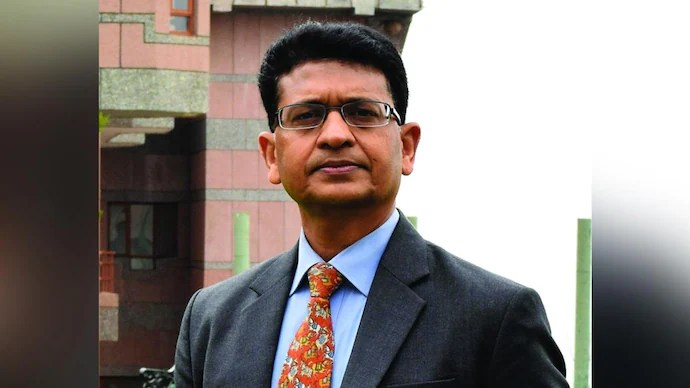
Dr Mukesh Jain is a Gold Medallist engineer in Electronics and Telecommunication Engineering from MANIT Bhopal. He obtained his MBA from the Indian Institute of Management Ahmedabad. He obtained his Master of Public Administration from the Kennedy School of Government, Harvard University along with Edward Mason Fellowship. He had the unique distinction of receiving three distinguished awards at Harvard University: The Mason Fellow award and The Lucius N. Littauer Fellow award for exemplary academic achievement, public service & potential for future leadership. He was also awarded The Raymond & Josephine Vernon award for academic distinction & significant contribution to Mason Fellowship Program. Mukesh Jain received his PhD in Strategic Management from IIT Delhi.
Mukesh Jain joined the Indian Police Service in 1989, Madhya Pradesh cadre. As an IPS officer, he held many challenging assignments including the Superintendent of Police, Raisen and Mandsaur Districts, and Inspector General of Police, Criminal Investigation Department and Additional DGP Cybercrime, Transport Commissioner Madhya Pradesh and Special DG Police.

Dr. Mukesh Jain has authored many books on Public Policy and Positive Psychology. His book, ‘Excellence in Government, is a recommended reading for many public policy courses. His book- “A Happier You: Strategies to achieve peak joy in work and life using science of Happiness”, received book of the year award in 2022. After this, two more books, first, A ‘Masterclass in the Science of Happiness’ and the other, ‘Seeds of Happiness’, have also been received very well. His book, ‘Policing in the Age of Artificial Intelligence and Metaverse’ has received an extraordinary reception from the police officers. He is a visiting faculty to many business schools and reputed training institutes. He is an expert trainer of “Lateral Thinking”, and “The Science of happiness” and has conducted more than 300 workshops on these subjects.
 School Of Happiness by Mukesh Jain