
Have you ever met someone and just knew what kind of person they were—without them even saying a word? Maybe it was a firm, confident handshake (or a weak, awkward one). Or maybe it was the way they shifted in their seat, hesitated before answering, or flashed a smile that didn’t quite reach their eyes. Our brains are wired to pick up on these tiny signals, often without us even realizing it. And the crazy part? Studies show we start forming impressions within milliseconds—and they’re often spot on.
But what if you could take this instinct to the next level? What if you could consciously read people like an open book—not through some mystical sixth sense, but through research-backed science? Whether you’re in a business meeting, a social setting, or just trying to figure out if someone’s being honest with you, sharpening this skill can give you a serious edge. By paying attention to body language, facial expressions, tone of voice, microexpressions, and those tiny behavioral quirks, you can get a pretty accurate read on someone’s confidence, stress levels, trustworthiness, and true emotions—in under 30 seconds. Sounds like a superpower, right? Well, it kind of is. And this guide will show you exactly how to develop it, using science, real-world examples, and expert research.
1. The Science of First Impressions
First impressions are formed with remarkable speed and are significantly influenced by nonverbal cues. Research by Janine Willis and Alexander Todorov at Princeton University found that individuals assess traits such as trustworthiness, competence, and likeability within just 100 milliseconds of exposure to a stranger’s face. In their study, participants were shown unfamiliar faces for varying durations—100 ms, 500 ms, and 1,000 ms—and asked to evaluate traits like attractiveness, likeability, competence, trustworthiness, and aggressiveness. The judgments made after a 100 ms exposure correlated highly with those made without time constraints, suggesting that this brief exposure is sufficient for forming an impression. Regarding the influence of nonverbal cues on first impressions, it’s important to clarify a common misconception. Albert Mehrabian’s research in the 1960s led to the often-cited “7%-38%-55% rule,” which suggests that 7% of communication is verbal, 38% is vocal (tone of voice), and 55% is facial expressions. However, Mehrabian himself has emphasized that these findings specifically pertain to the communication of feelings and attitudes, particularly when verbal and nonverbal messages are incongruent. Therefore, it’s inaccurate to generalize this rule to all forms of communication. In professional settings, nonverbal behaviors such as eye contact, gestures, and facial expressions play a crucial role in establishing rapport and trust. For instance, in negotiations, positive nonverbal cues can enhance perceptions of trustworthiness and competence, leading to more favorable outcomes. In summary, while first impressions are formed rapidly, they are complex and influenced by a combination of facial features, nonverbal behaviors, and contextual factors. Understanding the nuances of these elements can aid in managing and improving interpersonal interactions. Example: If someone maintains good eye contact, offers a firm handshake, and has an open posture, they immediately appear confident and approachable. On the other hand, a weak handshake, avoiding eye contact, or slouched shoulders might create an impression of low confidence or anxiety.
2. Facial Expressions: The Universal Language of Emotion
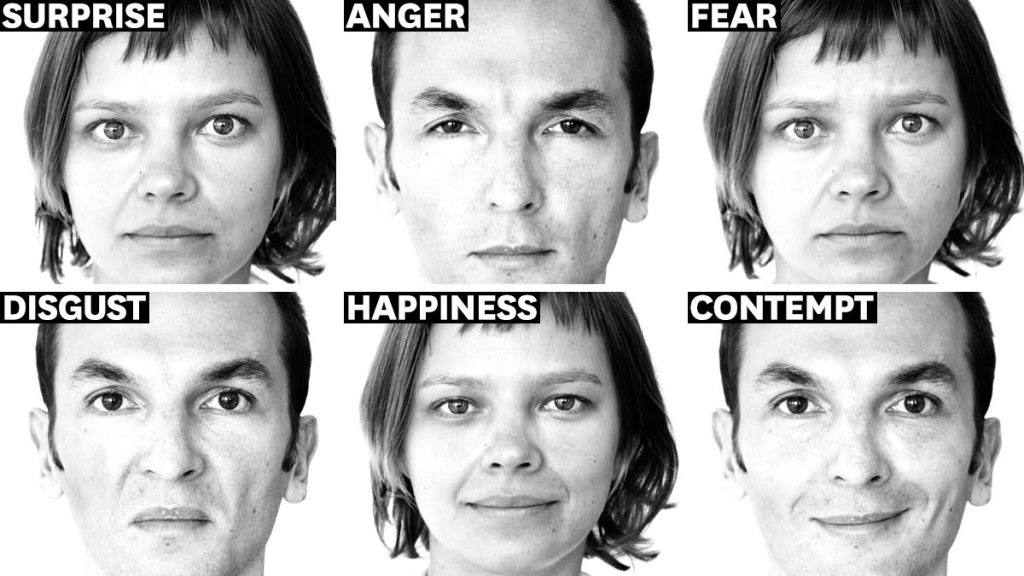
Dr. Paul Ekman, a pioneering psychologist, conducted extensive research into human emotions and facial expressions, leading to significant insights into how we communicate nonverbally. His studies revealed that certain emotions—namely happiness, sadness, anger, fear, surprise, and disgust—are universally recognized across diverse cultures. This universality suggests a shared human experience in emotional expression. Ekman’s research involved cross-cultural studies where participants from various backgrounds, including isolated communities with minimal exposure to external cultures, were asked to identify emotions depicted in photographs of facial expressions. The high level of agreement among participants in recognizing these basic emotions provided strong evidence for their universal nature. In addition to identifying universal emotions, Ekman discovered the phenomenon of microexpressions—brief, involuntary facial expressions that occur as rapid flashes, often lasting less than a second. These microexpressions can reveal a person’s genuine emotions, even when they attempt to conceal them. For example, someone might smile and verbally express satisfaction, but a fleeting microexpression of disgust or doubt could betray their true feelings.
The study of microexpressions has practical applications in various fields, including psychology, law enforcement, and interpersonal communication. By training individuals to recognize these subtle cues, it becomes possible to gain deeper insights into others’ emotional states, enhancing empathy and understanding in social interactions. Ekman’s work underscores the complexity of human emotions and the sophisticated ways in which they are expressed and perceived, highlighting the importance of nonverbal communication in our daily lives.
3. Body Posture: Confidence vs. Discomfort
Posture significantly influences perceptions during social interactions, conveying messages about an individual’s confidence, openness, and engagement. An upright posture, characterized by straight shoulders and an open stance, typically signals confidence and attentiveness. Conversely, slouched shoulders or crossed arms can suggest discomfort, defensiveness, or disengagement. The concept of “power posing” gained prominence through a 2010 study by Dana R. Carney, Amy J.C. Cuddy, and Andy J. Yap, published in Psychological Science. The researchers proposed that adopting expansive, open postures—referred to as “high-power poses”—for as little as two minutes could lead to hormonal changes, including increased testosterone levels and decreased cortisol levels. These hormonal shifts were associated with enhanced feelings of power and a greater tolerance for risk. The study suggested that such poses could be beneficial in high-stress situations, like job interviews or public speaking engagements. However, subsequent research has cast doubt on these findings. A 2015 replication study by Eva Ranehill and colleagues, published in Psychological Science, failed to reproduce the hormonal effects reported in the original study. While participants reported feeling more powerful after adopting high-power poses, the study did not observe significant changes in testosterone or cortisol levels. This led to ongoing debates within the scientific community regarding the robustness of the power posing effects.
In professional settings, nonverbal cues, including posture, play a crucial role in communication. For instance, during a job interview, an interviewer who leans back with crossed arms may be perceived as skeptical or dominant, whereas leaning forward with open hands can indicate engagement and interest. Maintaining good posture—such as sitting up straight with shoulders back—demonstrates attentiveness and confidence. A slight forward lean can convey genuine interest in the conversation. While the physiological impacts of power posing remain under scrutiny, the psychological effects of adopting certain postures are noteworthy. Assuming an open and expansive posture can enhance self-perception of confidence, which may positively influence performance in evaluative situations. Therefore, being mindful of one’s posture and nonverbal cues can be a valuable strategy in both personal and professional interactions.
4. Eye Contact: The Trust Indicator
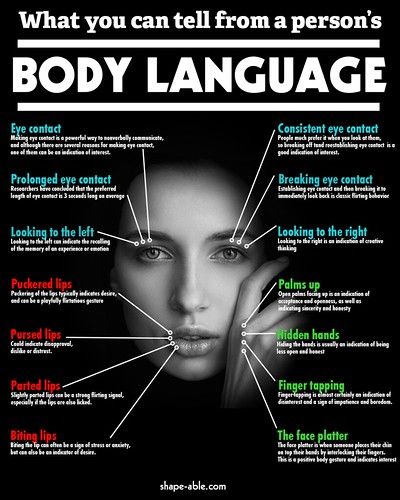
Eye contact is a fundamental aspect of nonverbal communication, conveying messages about confidence, honesty, and engagement. Research indicates that maintaining appropriate eye contact can significantly influence interpersonal perceptions and trust. A study conducted by the Cornell University Food and Brand Lab examined the impact of eye contact in marketing, particularly how cereal box characters’ gazes affect consumer trust and connection. The researchers found that characters making direct eye contact with consumers fostered feelings of trust and increased the likelihood of product selection. This suggests that even inanimate representations utilizing eye contact can enhance perceived trustworthiness. In human interactions, appropriate eye contact serves as a powerful tool for conveying emotions and thoughts, offering a rich tapestry of non-verbal cues that shape our interactions and relationships. Mastering the art of eye contact, along with understanding micro-expressions and other non-verbal cues, can significantly enhance communication skills across various contexts. However, the dynamics of eye contact are nuanced. While steady eye contact can signal confidence and honesty, excessive or intense staring may be perceived as intimidating or aggressive. Conversely, avoiding eye contact can suggest discomfort, dishonesty, or nervousness. Rapid blinking or darting eyes are often associated with anxiety or evasiveness.
Example: Consider a scenario where you ask a colleague for feedback on your presentation. If they maintain appropriate eye contact, it conveys engagement and sincerity. However, if they avoid eye contact or exhibit rapid eye movements, it might indicate discomfort or reluctance to provide honest feedback. Understanding the subtleties of eye contact can enhance interpersonal communication, allowing individuals to navigate social interactions more effectively and build stronger connections.
5. Gestures & Hand Movements: The Silent Communicators
Gestures play a pivotal role in reinforcing verbal communication, often conveying messages that words alone cannot. Open palm gestures, for instance, are universally associated with honesty and openness. Throughout history, the open palm has been linked to truthfulness, allegiance, and submission. Conversely, concealing one’s hands—such as placing them behind the back or in pockets—can suggest secrecy or insecurity. Research has delved into the impact of specific gestures on perceptions of honesty. A study published in the journal Social Psychological and Personality Science explored the “hand-over-heart” gesture. The findings revealed that individuals performing this gesture were perceived as more trustworthy compared to those with neutral hand positions. Moreover, participants who placed their hand over their heart were more inclined to admit their lack of knowledge, indicating that this gesture not only influences how others perceive us but also affects our own behavior. In the realm of public speaking and leadership, the use of hand gestures significantly impacts audience perception. A study highlighted by Psychology Today emphasized that speakers who employ appropriate hand movements are perceived as more engaging and charismatic. Gestures can underscore key points, illustrate concepts, and convey enthusiasm, thereby enhancing the overall effectiveness of communication.
Example: Consider a scenario where two individuals are presenting the same information. The first speaker keeps their hands hidden, perhaps in their pockets or behind their back, while the second speaker uses open palm gestures and expressive hand movements. The audience is likely to perceive the second speaker as more honest, engaging, and confident, attributing these qualities to their effective use of gestures.
Understanding and consciously utilizing hand gestures can significantly enhance communication, making interactions more impactful and fostering trust between individuals.
6. Mirroring: The Connection Trick
Mirroring, the subconscious imitation of another person’s gestures, posture, or speech patterns, plays a significant role in human communication. This behavior fosters rapport and trust between individuals. Research in nonverbal communication has demonstrated that mirroring can significantly enhance interpersonal connections. The phenomenon known as the “chameleon effect” describes this unconscious mimicry. A study published in the Journal of Personality and Social Psychology found that individuals who mirrored their interaction partners were perceived more favorably, leading to increased rapport and smoother interactions. Neuroscientific research has identified mirror neurons as a possible underlying mechanism for this behavior. These neurons activate both when an individual performs an action and when they observe the same action performed by others, facilitating understanding and empathy.
Example: Consider a scenario where you’re conversing with a colleague. If they subconsciously adopt your sitting posture, use similar hand gestures, or match your speech rhythm, it’s likely they feel comfortable and aligned with you. This nonverbal synchronization indicates a positive connection and mutual understanding. However, it’s important to note that mirroring should be subtle and natural. Overt or deliberate mimicry can be perceived as insincere or manipulative, potentially leading to negative social outcomes. In summary, mirroring serves as a powerful tool in communication, enhancing rapport and trust when employed naturally within social interactions.
7. Tone of Voice: The Hidden Emotional Layer
Dr. Albert Mehrabian, a psychologist at the University of California, Los Angeles, conducted pioneering research in the 1960s that explored the relative impact of verbal and nonverbal elements in communication, particularly in conveying feelings and attitudes. His findings led to the formulation of the “7%-38%-55% Rule,” which posits that in situations where verbal and nonverbal cues are incongruent, only 7% of the message’s emotional impact is derived from the actual words spoken, 38% from the tone of voice, and 55% from facial expressions and other nonverbal cues. It’s important to note that Mehrabian’s research specifically addressed the communication of emotions and attitudes. The “7%-38%-55% Rule” applies primarily to situations where there is a discrepancy between verbal and nonverbal messages. In such cases, individuals are more likely to trust the nonverbal cues over the spoken words. For example, if someone says, “I’m fine,” but their tone is flat and their facial expression is downcast, observers are inclined to believe the nonverbal signals indicating that the person is not fine.
However, this rule has often been misinterpreted and overgeneralized to suggest that the majority of all communication is nonverbal, which is not accurate. Mehrabian himself has cautioned against such broad applications, emphasizing that his findings are relevant only in specific contexts involving emotional or attitudinal communication. In summary, while words convey explicit content, the tone of voice and nonverbal cues play a crucial role in expressing emotions and attitudes. A steady, confident tone can project assurance, whereas a shaky or high-pitched voice may suggest anxiety or uncertainty. Being mindful of these aspects can enhance the effectiveness of communication, especially in conveying genuine feelings and building trust.
8. Personal Space: Respecting Boundaries
The concept of personal space is a fundamental aspect of nonverbal communication, influencing how individuals interact and perceive each other in various social contexts. Anthropologist Edward T. Hall introduced the term “proxemics” in the 1960s to describe the study of how people use space in communication. He identified four distinct zones that delineate interpersonal distances:
- Intimate Distance: Ranging from physical contact to about 18 inches (46 cm), this zone is reserved for close relationships, such as those with family members, close friends, and romantic partners.
- Personal Distance: Extending from 18 inches to 4 feet (1.2 meters), this space is typically maintained during interactions with friends and acquaintances.
- Social Distance: Spanning 4 to 10 feet (3 meters), this zone is common in formal interactions, such as those with colleagues or strangers.
- Public Distance: Beyond 10 feet, this space is utilized for public speaking or addressing large groups.
These zones are not rigid and can vary based on cultural norms, personal preferences, and situational factors. For instance, in some cultures, closer proximity during conversations is customary, while in others, maintaining a greater distance is preferred. Research has shown that violations of these personal space expectations can lead to discomfort or perceptions of aggression. A study published in the Journal of Environmental Psychology found that when individuals feel their personal space is invaded, they may exhibit avoidance behaviors, such as leaning away or stepping back, to reestablish a comfortable distance.
Example: During a conversation, if someone subtly leans away or steps back, it may indicate that they are uncomfortable with the proximity. Conversely, standing too far apart might be perceived as disengagement or aloofness. Being attuned to these nonverbal cues can enhance interpersonal communication by allowing individuals to adjust their positioning to match the comfort levels of others. Understanding and respecting personal space is crucial in fostering positive social interactions and building rapport. By being mindful of proxemic cues, individuals can navigate social situations more effectively, ensuring that their communication is both respectful and effective.
9. The Feet Tell the Truth
Foot positioning serves as a subtle yet revealing indicator of an individual’s true intentions and focus during social interactions. While people often consciously control their facial expressions and hand gestures, the orientation of their feet tends to remain under less conscious regulation, making it a more genuine reflection of their feelings and interests. Research in nonverbal communication highlights that the direction in which a person’s feet point can signify their attention and intentions. For instance, if an individual’s torso is facing you during a conversation, but their feet are angled toward an exit or another person, it may indicate a desire to leave or shift their attention elsewhere. This phenomenon occurs because, in social settings, people often subconsciously align their feet with their primary interest or intended direction.
Former FBI agent and body language expert Joe Navarro emphasizes the significance of foot orientation in his work. He notes that our feet and legs are often neglected in the study of body language, even though they are very accurate transmitters of valuable information. For example, during a conversation, if someone’s feet are pointed toward the door, it often indicates a desire to leave, even if they are verbally engaging in the discussion.
Example: At a networking event, you engage in a conversation with a colleague whose torso faces you, suggesting engagement. However, upon observing their feet, you notice they are pointed toward the exit. This discrepancy between upper body orientation and foot direction may indicate that, despite appearing attentive, your colleague is subconsciously inclined to leave the conversation, possibly due to discomfort or a pressing commitment elsewhere. Understanding these nonverbal cues can enhance interpersonal communication by providing deeper insights into others’ unspoken intentions and feelings. By paying attention to foot positioning, individuals can better assess the true engagement levels of their conversation partners and respond accordingly.
10. Microexpressions: The Secret Clues
Microexpressions are involuntary facial expressions that occur briefly, typically lasting less than half a second, and reveal a person’s genuine emotions before they can consciously mask them. These fleeting expressions can provide valuable insights into an individual’s true feelings, even when their verbal communication or deliberate facial expressions suggest otherwise.Dr. Paul Ekman, a pioneering psychologist in the study of emotions and facial expressions, identified seven universal emotions that are commonly expressed through microexpressions: happiness, sadness, anger, fear, surprise, disgust, and contempt. His research demonstrated that these microexpressions are consistent across different cultures, indicating a universal human experience in emotional expression. The brevity of microexpressions makes them challenging to detect. They can appear and disappear in as little as 1/25th of a second, often going unnoticed by the untrained eye. However, with training, individuals can learn to recognize these subtle cues, enhancing their ability to understand others’ true emotions.
Example: Imagine sharing a humorous anecdote with a colleague. They respond with a laugh, but you notice a fleeting expression of annoyance flash across their face before they smile. This brief microexpression suggests that, despite their outward display of amusement, they may actually find the story irritating or are experiencing negative emotions related to the content or context of the anecdote. Understanding and recognizing microexpressions can significantly enhance interpersonal communication by providing deeper insights into the unspoken emotions of others. This skill is valuable in various fields, including psychology, law enforcement, and everyday social interactions, as it allows for a more nuanced understanding of human behavior and emotional responses.
The Ultimate Conclusion: Becoming a Human Lie Detector
Ever wish you could read people like an open book? Imagine walking into a meeting, a party, or even a casual coffee shop and instantly knowing who’s confident, who’s nervous, who’s genuinely interested in the conversation, and who’s just putting on a show. It might sound like a scene straight out of Sherlock Holmes, but in reality, this isn’t about mind-reading—it’s about mastering the subtle, unspoken language of human behavior. And guess what? You already have the ability. You just need to sharpen it. We all think we listen to what people say, but the truth is, a huge chunk of communication—some studies say as much as 90%—happens nonverbally. The way someone tilts their head, how they hold their hands, the flicker of microexpressions that cross their face before they compose themselves—all of these signals carry crucial information. And once you learn to recognize and interpret them, you’ll start seeing the world in an entirely new way.
Think about it—have you ever met someone who said all the right things, but something about them just felt…off? Maybe their smile didn’t quite reach their eyes, or their handshake was too limp or too forceful. Maybe they nodded along while you were talking, but their feet were pointed toward the door as if they were ready to escape. These tiny details might seem insignificant, but they tell a much bigger story about what’s really going on beneath the surface.
Mastering nonverbal communication is like unlocking a secret superpower. It helps you:
✅ Build instant rapport – Whether in business, friendships, or dating, people naturally connect better with those who seem to “get” them.
✅ Detect deception – Spot red flags early by noticing inconsistencies between words and body language.
✅ Boost your influence – People who understand and use body language effectively come across as more persuasive and confident.
✅ Navigate social situations with ease – Whether you’re giving a presentation or making small talk at a networking event, reading the room can give you a major edge.
But Here’s the Catch… While learning to decode body language and microexpressions is an incredible skill, it’s not about using it to manipulate or judge people unfairly. The real power lies in using this knowledge ethically—to foster better conversations, build trust, and create meaningful connections. Because every movement, every glance, and every pause in conversation tells a story. The only question is—are you ready to start reading it?
———————————————————————————————
 School Of Happiness by Mukesh Jain