
What is Moonshot Thinking?
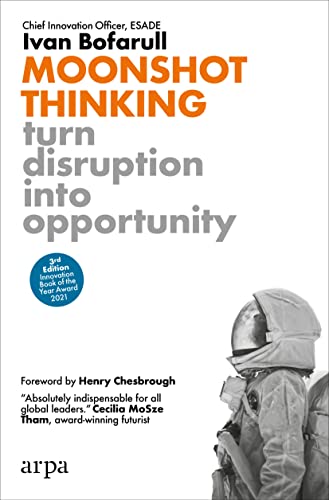
Moonshot thinking is the audacity to dream beyond limits, to set goals so ambitious they seem almost impossible—until they’re not. It’s about igniting the fire of curiosity, tackling the world’s grandest challenges, and unleashing innovation that propels humanity forward at an exponential pace rather than inching forward with small improvements. It is the belief that radical solutions exist if only we dare to seek them.
The term originates from President John F. Kennedy’s electrifying 1962 speech where he vowed to land a man on the moon—not because it was easy, but because it was hard. At the time, America lacked the technology, infrastructure, and resources to achieve such an audacious goal, but that promise set a movement into motion. Just seven years later, in 1969, the Apollo 11 mission turned an impossibility into reality, forever changing the trajectory of human ambition.
Today’s youth live in an era of unprecedented opportunities, a time when moonshot thinking is not just an option but a necessity. The world faces enormous challenges—climate change, lack of quality education, poverty, inequality, and the next frontiers of technology. Solving these requires bold dreamers who are unafraid to take risks, step outside the norm, and embrace failure as a stepping stone to extraordinary success. The greatest minds of our time—Peter Diamandis, Steven Kotler, Elon Musk, and Ray Kurzweil—champion moonshot thinking as the key to unlocking revolutionary breakthroughs. Their stories prove that moonshots are not just for a select few; they are for every young innovator, entrepreneur, and change-maker willing to reimagine what’s possible.
Moonshot thinking is not about waiting for the right moment—it is about creating it. The question is: What’s your moonshot?
The Philosophy of Moonshot Thinking: Insights from Experts
Peter Diamandis, co-founder of Singularity University and the XPRIZE Foundation, has built his career around the idea that the future is not something we should passively wait for—it is something we must actively create. He believes that moonshot thinking is not just about setting big goals, but about using bold, exponential thinking to tackle the world’s biggest challenges head-on. In his books Abundance and Bold, he explains how we can harness technology to transform scarcity into abundance and solve problems that once seemed impossible. According to Diamandis, we must shift from thinking in small, incremental steps to embracing exponential possibilities. Instead of improving something by just 10%, we should be thinking about how to make it 10 times better. This shift in perspective separates those who disrupt industries from those who merely improve existing systems. He encourages people to dream big, take risks, and understand that failure is not the opposite of success—it is a necessary step towards it. Every failure is a lesson that refines ideas and leads to breakthroughs. One of Diamandis’ most remarkable contributions to moonshot thinking is the XPRIZE, a competition designed to push the boundaries of innovation. The Ansari XPRIZE, for example, incentivized private companies to develop a reusable spacecraft, leading to a revolution in space travel. His philosophy shows that when ambitious goals are backed by the right incentives, extraordinary advancements can happen.
Another core idea in Diamandis’ work is the power of converging technologies. By combining breakthroughs in artificial intelligence, robotics, blockchain, and biotechnology, we can create world-changing solutions that were once the stuff of science fiction. He envisions a future where technological advancements solve global issues such as energy shortages, food insecurity, and lack of access to healthcare. Diamandis’ message to young innovators is simple but powerful: Don’t settle for improving things slightly—aim to transform the world. The future belongs to those who dare to think differently, act boldly, and persist through setbacks. The world is not changed by those who play it safe, but by those who take moonshots. What’s the impossible challenge you’re willing to tackle?
Steven Kotler, co-author of The Art of Impossible, believes that achieving moonshots requires more than just hard work—it requires tapping into a state of flow, where time seems to slow down, distractions disappear, and creativity skyrockets. Flow is the mental state where individuals feel fully immersed in what they are doing, allowing them to operate at their peak potential. It is in this state that people achieve extraordinary breakthroughs, solve complex problems, and produce their most impactful work. Kotler’s research on high performance and neuroscience reveals that flow is not a random occurrence but a state that can be trained and intentionally accessed. His studies show that people in a flow state are 500% more productive than under normal conditions. This means that by learning how to enter flow regularly, individuals can accomplish in one day what would typically take a week. One of Kotler’s key insights is that big goals act as a catalyst for flow. When we pursue audacious challenges that excite and stretch us beyond our comfort zones, our brains release dopamine, the neurotransmitter responsible for motivation and learning. This neurochemical surge enhances focus, speeds up reaction times, and sharpens creativity—essential ingredients for achieving moonshots. However, achieving flow requires more than just ambition—it requires the right environment. Kotler emphasizes the importance of surrounding oneself with curious, driven, and ambitious people who challenge conventional wisdom and push the limits of what is possible. Being part of a like-minded community fuels inspiration and increases the likelihood of achieving extraordinary breakthroughs.
Moreover, impossible goals are accomplished through small, structured steps. Even the boldest vision must begin with clear, actionable milestones. Kotler argues that breaking down moonshots into manageable parts prevents overwhelming self-doubt and makes the journey feel achievable. By maintaining steady progress, momentum builds, eventually leading to massive success. Another crucial factor in sustaining high performance is the ability to leverage curiosity and passion. Kotler describes how curiosity is the gateway to motivation, and motivation fuels the long-term persistence needed to achieve impossible goals. When individuals work on projects that genuinely fascinate them, their intrinsic drive allows them to stay committed despite setbacks. Kotler’s work proves that moonshot thinking is not just about having a big dream—it’s about learning how to unlock the brain’s full potential to make that dream a reality. By mastering flow, surrounding oneself with ambitious thinkers, setting high-challenge goals, and breaking them down into achievable steps, anyone can create breakthroughs in their field. His message to young visionaries is clear: Flow is your superpower—learn to harness it, and you can accomplish the impossible. What passion drives you? What goal makes you lose track of time? Start there, and let the journey to your moonshot begin.
Elon Musk, founder of SpaceX, Tesla, and Neuralink, has redefined moonshot thinking by challenging conventional wisdom and pioneering breakthrough industries. His approach is grounded in first principles thinking, a method that involves breaking down complex problems to their most fundamental truths and reasoning up from there. Instead of accepting industry norms as fixed, Musk questions every assumption and reconstructs solutions from the ground up. For instance, when starting SpaceX, Musk realized that rockets were exorbitantly expensive not because of some inherent cost, but due to inefficiencies in manufacturing and reuse. By rethinking rocket design from first principles, he built reusable rockets, reducing costs by a staggering margin and revolutionizing space travel.
Another key element of Musk’s success is his massive risk tolerance. He has repeatedly put his own money on the line, facing near bankruptcy before Tesla and SpaceX turned profitable. Early SpaceX launches failed multiple times before finally succeeding, proving that moonshot thinkers must be willing to endure setbacks and learn from failure rather than fearing it. Moreover, Musk is known for relentless execution. While many companies get bogged down in excessive planning, Musk emphasizes rapid prototyping and iteration. Whether it’s self-driving cars, battery technology, or interplanetary travel, he believes in taking bold actions, testing ideas in real-world scenarios, and continuously improving based on feedback.
Musk also excels at challenging existing industries. With Tesla, he disrupted the automotive industry by making electric cars mainstream. While legacy automakers dismissed EVs as impractical, Musk focused on improving battery efficiency, building a charging network, and making sustainable transportation a reality. Likewise, with Neuralink, he is pioneering brain-computer interfaces to push the boundaries of human cognition. Through first principles thinking, risk-taking, relentless execution, and industry disruption, Musk has proven that moonshot thinking can reshape entire industries. His journey is a testament to the power of thinking differently, acting boldly, and pursuing seemingly impossible dreams.
Ray Kurzweil, futurist and Google’s Director of Engineering, predicts that the world is advancing at an exponential rate, meaning technological breakthroughs are happening faster than ever before. His concept of the Law of Accelerating Returns states that computing power, AI, biotech, and nanotechnology are doubling in capability every few years, making moonshot thinking more feasible than at any point in history. Kurzweil argues that AI, nanotechnology, and biotechnology will disrupt every industry, unlocking solutions to previously unsolvable problems. From curing diseases to automating entire economies, these technologies are setting the stage for radical transformation. One of Kurzweil’s key beliefs is that moonshot thinking is all about timing. Many revolutionary ideas seem impossible until technology reaches an inflection point. For example, AI breakthroughs in the past decade have been driven by improvements in computing power, data availability, and machine learning algorithms—elements that were not feasible just two decades ago. By understanding how technologies evolve, moonshot thinkers can position themselves to ride the next wave of breakthroughs. Perhaps Kurzweil’s boldest prediction is the Singularity—the moment AI surpasses human intelligence, which he believes will happen by 2045. This could fundamentally reshape humanity, making solutions to global challenges more achievable than ever before. Whether it’s extending human lifespans, solving energy crises, or exploring space, exponential technologies are the key to unlocking these possibilities.
Kurzweil’s message is clear: The future is accelerating faster than we realize. Those who embrace moonshot thinking and position themselves at the forefront of exponential technologies will shape the next era of human civilization.
How to Apply Moonshot Thinking in Your Life
1. Set a Bold, Audacious Goal (The 10X Mindset)
Most people aim for small, incremental progress—seeking to improve something by 10%. But true moonshot thinkers set their sights much higher: they aim for 10X growth instead of just 10% improvement. Thinking 10X forces you to step outside conventional solutions and imagine radical breakthroughs that redefine industries and change the world. Ask Yourself Big Questions. To cultivate the 10X mindset, start by asking yourself:
- What’s a challenge I deeply care about? Identifying a problem that excites and motivates you will give you the endurance to persist through inevitable obstacles.
- If I could achieve anything, what would it be? Remove self-imposed limitations and allow yourself to think beyond conventional constraints.
- What would a radical solution look like? Instead of making small adjustments, consider what it would take to completely transform the system.
Why 10X is More Effective Than 10%: When you aim for 10% improvement, you often end up making marginal tweaks to existing systems. But when you aim for 10X, you are forced to rethink everything from the ground up. The effort required to achieve 10X is often the same—or even less—than making a small improvement because it compels you to innovate instead of just optimizing the status quo. Instead of making a school curriculum 10% better, create a platform to educate 1 billion students globally using AI-powered learning. Instead of improving battery efficiency by 10%, design a completely new sustainable energy system that eliminates fossil fuel dependence. Instead of reducing the cost of healthcare by 10%, leverage AI and biotechnology to provide free diagnostics and early disease detection for millions.
Great leaders, entrepreneurs, and visionaries throughout history have all embodied this mindset. When Elon Musk wanted to make space travel affordable, he didn’t aim to reduce costs by 10%—he sought to cut them by a factor of 10 by making rockets reusable. When Jeff Bezos started Amazon, he didn’t aim to make a slightly better bookstore—he sought to revolutionize global commerce. Look at the challenges around you and dare to think bigger. Don’t just settle for a little improvement—aim for something truly transformative. What bold idea excites you? What would change the world? Start today and take your first step toward making the impossible possible.
Peter Diamandis, a visionary in exponential technologies, often highlights how breakthroughs in artificial intelligence, robotics, blockchain, biotechnology, and nanotechnology are transforming industries at an unprecedented pace. What once seemed impossible—curing genetic diseases, automating entire industries, or solving global challenges like hunger and climate change—is now within reach, thanks to these technological leaps. The key mindset shift here is to stop thinking in linear terms and start thinking exponentially. Most people underestimate the power of compounding technological advancements. For example, while traditional business models aim for incremental improvements (10% better each year), leveraging exponential technologies can lead to disruptive, and game-changing solutions that grow at 10 x or even 100 x.
Instead of asking, “What can I improve by 10%?” ask, “What can I revolutionize using technology?” Consider the following:
- Artificial Intelligence (AI): AI-driven automation can eliminate repetitive tasks, freeing up time for creativity and problem-solving. For example, businesses use AI-powered chatbots to handle customer service, cutting response time and improving efficiency.
- Robotics and Automation: From warehouse robots to autonomous delivery drones, automation is redefining logistics, healthcare, and agriculture. Imagine robotic arms performing surgeries with higher precision than human hands.
- Blockchain: Decentralized technology is transforming finance, supply chains, and even governance by ensuring transparency, security, and efficiency. Cryptocurrencies, smart contracts, and decentralized finance (DeFi) are just the beginning.
- Biotechnology and Synthetic Biology: Gene editing technologies like CRISPR are making it possible to eliminate genetic diseases and even enhance human capabilities. Personalized medicine powered by AI is revolutionizing healthcare.
- 3D Printing and Nanotechnology: Printing organs for transplant, creating sustainable housing from recycled materials, and manufacturing precision-engineered nanodevices are just a few applications reshaping our future.
Think about your goals and explore how exponential technologies can automate, scale, and amplify your impact. Ask yourself: What existing processes in my work or business can be automated with AI or robotics? How can decentralization (through blockchain) create more transparency and efficiency in my industry? Can biotechnology or nanotechnology solve challenges that seem insurmountable today? How can I leverage exponential networks (crowdsourcing, open-source platforms, AI tools) to accelerate growth? Exponential technologies are not just tools; they are force multipliers. The biggest breakthroughs of the next decade will come from those who leverage them effectively. Don’t just ask what can be improved—ask how you can disrupt, automate, and scale using cutting-edge technology.
3. Think in First Principles, Not Assumptions
Most people think by analogy—they take what exists, tweak it slightly, and accept assumptions as truth. But the most transformative thinkers, from Aristotle to Elon Musk, have relied on something far more powerful: first-principles thinking. What Is First-Principles Thinking? First-principles thinking is a method of problem-solving that strips away assumptions and preconceived notions. Instead of accepting existing solutions or common wisdom at face value, this approach encourages breaking down a problem into its most basic, undeniable truths—the fundamental building blocks—and then reconstructing solutions from the ground up. Think of it as reasoning from the roots rather than from the branches. Instead of blindly following conventional knowledge, first-principles thinking forces you to ask:
- What do we absolutely know to be true?
- What assumptions are we making, and are they valid?
- How can we reconstruct a solution based purely on fundamental truths?
Take the example of Electric Cars & Battery Costs: Most people once believed, “Electric cars are too expensive to be mass-market.” But instead of accepting this as an immovable fact, Elon Musk asked, “What makes electric cars expensive?” The answer: battery costs. He then went further:
- What are batteries made of?
- Why are these materials expensive?
- Can we source or manufacture them differently?
By breaking down the problem and reassembling it with new solutions, Tesla revolutionized battery production and made electric cars more affordable. First-principles thinking is not just for entrepreneurs or scientists—it is a mindset that can transform your career, relationships, and decision-making. Instead of thinking, “I’m not good at public speaking,” ask, “What makes a great speaker?” (Confidence, clarity, practice). Instead of saying, “I can’t get fit,” ask, “What are the core elements of fitness?” (Diet, movement, consistency) Instead of assuming, “I can’t afford to travel,” ask, “What truly makes travel expensive?” (Flights? Accommodation? Can I find creative alternatives?). By constantly challenging assumptions and reducing problems to their essentials, you open new pathways for innovation, creativity, and progress. The world’s greatest breakthroughs come not from following old rules, but from rewriting them at their core.
4. Fail Fast, Learn Faster
Most people fear failure, but the truth is—failure is data. Every setback, every misstep, and every experiment gone wrong is simply a stepping stone toward success. The key is to fail quickly, extract insights, and iterate faster. When you fail fast, you shorten the learning cycle. Instead of spending months or years perfecting an idea before testing it, you launch early, test quickly, and get real feedback. This approach allows you to: Identify what works and what doesn’t before wasting resources; Avoid sunk-cost fallacy, where you invest too much in a flawed idea; and Adapt and pivot faster, making necessary course corrections. Legendary inventor Thomas Edison famously said, “I have not failed. I’ve just found 10,000 ways that won’t work.” That is the essence of rapid experimentation—seeing failures as stepping stones rather than roadblocks. Some of the world’s most innovative companies, including Google X, Tesla, and SpaceX, have mastered the art of failing fast. Google X (now X, The Moonshot Factory) embraces a culture where failure is a metric of progress. They encourage radical ideas, prototype quickly, and if an idea isn’t working, they “kill” it early to make space for better ones.
Tesla doesn’t spend years developing the “perfect” car before launching—it builds prototypes, tests them rigorously, and continuously improves through real-world learning. SpaceX learned from rocket failures rather than fearing them. Each explosion provided critical data, allowing the company to refine its technology and eventually master reusable rockets, something that was once considered impossible. The principle of failing fast applies beyond just tech and business—it is a mindset shift that can accelerate success in any field. In Business, launch a minimum viable product (MVP) instead of waiting for perfection. Let the market guide improvements. In Learning, if you are struggling with a new skill, Experiment with different methods—what works for one person may not work for you. Adapt and refine. In Personal Growth, Instead of fearing rejection, embrace it as feedback. Dating, networking, or public speaking—each “failure” is just practice. Success isn’t about avoiding failure—it’s about using failure as fuel. The faster you fail, the faster you refine your ideas, strategies, and skills. So, instead of asking “What if I fail?”, ask “What can I learn from this?” The sooner you start, the sooner you’ll succeed.
Conclusion: Dare to Think Bigger
Moonshot thinking is about breaking mental barriers, embracing failure, leveraging technology, and working towards audacious goals. The world’s biggest challenges won’t be solved by small incremental changes but by big, bold ideas that challenge the status quo. Whether you dream of revolutionizing education, solving poverty, or making India the happiest nation, the key is to take the first step and think exponentially.

 School Of Happiness by Mukesh Jain