Finding happiness in your career isn’t just about earning a paycheck or climbing the corporate ladder. It’s about discovering work that resonates with your values, brings fulfillment, and aligns with your sense of purpose. As Steve Jobs famously said, “The only way to be truly satisfied is to do what you believe is great work. And the only way to do great work is to love what you do. If you haven’t found it yet, keep looking. Don’t settle. As with all matters of the heart, you’ll know when you find it.”
But how do we measure success in life beyond just our careers? How do we ensure that we’re living a life that’s not only successful by societal standards but also deeply fulfilling? This question has intrigued philosophers, management thinkers, and spiritual leaders for centuries. Clayton Christensen, a professor of Harvard Business School in his profound book ‘How Will You Measure Your Life?’, explores this very question, offering insights into what it means to live a life that truly matters.

The Essence of Clayton Christensen’s How Will You Measure Your Life?
Clayton Christensen is widely known for his groundbreaking work on disruptive innovation, but in How Will You Measure Your Life?, he turns his attention to a more personal question—how to live a life of meaning and fulfillment. The book emerged from a question he often posed to his students at Harvard Business School: “How will you measure your life?” Christensen’s core message is that the metrics we often use to measure success—wealth, power, and prestige—are often misleading. They can lead us down paths that, while they might bring short-term satisfaction, ultimately leave us feeling empty and unfulfilled. True success, according to Christensen, should be measured by the quality of our relationships, the integrity with which we live our lives, and the positive impact we have on others.
In one powerful excerpt, Christensen writes, “The trap many people fall into is to allocate their time to whoever screams loudest, and their talent to whatever offers them the fastest reward. That’s a dangerous way to build a strategy.” This quote encapsulates a common pitfall: getting caught up in the demands of the moment rather than focusing on what truly matters in the long run.
Christensen also emphasizes the importance of aligning our daily actions with our long-term values. He argues that it’s easy to get caught up in the pursuit of immediate rewards—whether that’s a promotion, a bonus, or recognition from others—but these rewards often come at the expense of what truly matters. For Christensen, the real measure of success is whether you are living a life that aligns with your deepest values and whether you are making a positive difference in the lives of those around you.
“A strategy—whether in companies or in life—is created through hundreds of everyday decisions about how you spend your time, energy, and money,” Christensen writes. This idea underscores the importance of intentionality in our daily lives. Every decision we make about where we invest our resources is a statement about what truly matters to us. If our decisions don’t align with our values, we’ll find ourselves off course, never becoming the person we aspire to be.

Laura Nash and Just Enough: A Balanced Perspective
Laura Nash, a research fellow at HBS, in her book ‘Just Enough: Tools for Creating Success in Your Work and Life’, offers a complementary perspective on measuring success. Nash, a scholar at Harvard Business School, explores the idea that success isn’t about maximizing one area of life—like your career or wealth—but about finding the right balance across multiple areas. She argues that true success comes from finding “just enough” in all aspects of life: work, family, health, and community.
Nash’s research reveals that many people who are considered successful by traditional standards—high income, prestigious job titles, and social status—often feel a deep sense of dissatisfaction. This dissatisfaction stems from the fact that their success in one area has come at the expense of others. For example, someone who is highly successful in their career might find that their personal relationships have suffered as a result. Nash advocates for a more balanced approach, where success is measured not by how much you have in one area, but by how well you’ve integrated all the different parts of your life.
In Just Enough, Nash writes, “Success is about knowing what is enough, and balancing that with the pursuit of excellence in a way that doesn’t compromise the other important areas of life.” This philosophy encourages us to think about success not as an all-or-nothing proposition but as a holistic pursuit where different aspects of life are in harmony.

Peter Drucker: The Father of Modern Management on Personal Metrics
Peter Drucker, often regarded as the father of modern management, provides another lens through which we can view success. Drucker believed that individuals should take responsibility for managing their own lives with the same discipline and strategic thinking that they would apply to running a successful business.
Drucker emphasized the importance of self-management and setting personal goals that align with one’s values. He believed that people should be proactive in defining their own success, rather than passively accepting society’s standards. “What gets measured gets managed,” Drucker famously said, suggesting that by clearly defining and measuring our personal goals, we can better manage our lives in a way that leads to true fulfillment.
This approach aligns closely with Christensen’s idea that a life strategy is built through everyday decisions. By taking control of how we allocate our time and energy, and by measuring our progress in meaningful ways, we can ensure that we’re living a life that’s aligned with our values and aspirations.

Osho and J. Krishnamurti: Beyond Conventional Metrics
Philosophers like Osho and J. Krishnamurti have long challenged the conventional metrics of success, urging us to look beyond material achievements and societal recognition. Their teachings remind us that true success is deeply personal and can only be defined by the individual.
Osho, in his characteristic style, often spoke about the futility of chasing external validation. He believed that true success comes from within—from a deep understanding of oneself and a life lived authentically. “The real question is not whether life exists after death. The real question is whether you are alive before death,” Osho famously said. This quote captures the essence of living fully in the present, being true to oneself, and not being swayed by external metrics of success.
J. Krishnamurti, another profound thinker, emphasized the importance of self-awareness and understanding. He argued that success cannot be measured by external achievements but by the depth of one’s inner journey. Krishnamurti once said, “It is no measure of health to be well adjusted to a profoundly sick society.” This powerful statement encourages us to question societal norms and to measure success by our own standards, not by the expectations of others. Both Osho and Krishnamurti encourage us to seek success not in what we achieve externally, but in how deeply we understand ourselves and how authentically we live our lives.

Zen Wisdom: Simple Truths for Measuring Success

Zen philosophy, with its emphasis on simplicity and mindfulness, offers profound insights into measuring success. Zen teachings often use simple, yet powerful, stories to convey deep truths about life. Let’s look at a couple of Zen anecdotes that can help us rethink how we measure success. There’s a famous Zen story about a university professor who visited a Zen master to learn about Zen. The master served tea, pouring it into the professor’s cup. He kept pouring even after the cup was full, causing it to overflow. The professor exclaimed, “The cup is full! No more will go in!” The Zen master replied, “Like this cup, you are full of your own opinions and speculations. How can I show you Zen unless you first empty your cup?” This story teaches us the importance of emptying our minds of preconceived notions and societal expectations before we can truly understand what success means to us. It encourages us to approach life with an open mind and to be willing to redefine success on our own terms. Another well-known Zen story tells of a successful businessman who encounters a fisherman resting by the shore. The businessman suggests that the fisherman should work harder, catch more fish, and expand his business. The fisherman asks, “And then what?” The businessman replies, “Then you can retire, relax, and enjoy life.” The fisherman smiles and says, “What do you think I’m doing now?” This story reminds us that success isn’t about endless striving or achieving more—it’s about finding contentment in the present moment. It challenges the idea that success is something we achieve in the future and instead suggests that true success is about living fully and contentedly in the present.

Devising a Holistic Metric for Success
So, how do we measure success in a way that captures this holistic view? It starts with shifting our focus from external metrics, like income and job titles, to internal ones, like happiness, fulfillment, and the quality of our relationships. Here are some steps to help you devise a more holistic metric for success in your life:
1. Define Your Core Values
The first step in creating a holistic metric for success is to define your core values. What matters most to you? Is it family, creativity, learning, or helping others? Take some time to reflect on what truly drives you. These core values should be the foundation of your metric for success. For example, if family is a core value for you, then your success should be measured by the quality of your relationships with your loved ones, not just by your professional achievements. If creativity is important, then success might involve finding ways to express that creativity in your work or personal life.

2. Align Your Daily Actions with Your Values
Once you’ve identified your core values, the next step is to align your daily actions with those values. This means making decisions—big and small—that reflect what’s truly important to you. It’s about being intentional with your time and energy, ensuring that you’re investing in the areas of life that matter most. Osho often spoke about the importance of living with awareness and intention. He said, “Be—don’t try to become.” This quote emphasizes the importance of being present in your actions, rather than constantly striving to achieve something in the future. Aligning your actions with your values allows you to live authentically and with purpose.
3. Evaluate Your Success in Multiple Dimensions
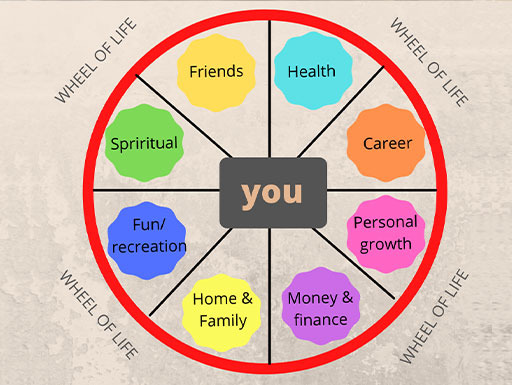
Rather than focusing solely on one aspect of life—such as your career—consider how you’re doing across several dimensions. A holistic metric for success should include areas like work, relationships, health, personal growth, and community involvement. Ask yourself questions like:
- Am I doing work that is meaningful and fulfilling?
- Are my relationships with family and friends strong and supportive?
- Am I taking care of my physical and mental health?
- Am I continuing to learn and grow as a person?
- Am I contributing to my community in a meaningful way?
By evaluating your success across these different dimensions, you’ll get a clearer picture of how well-rounded and fulfilling your life really is.
4. Practice Gratitude and Reflection
A key part of measuring success is regularly taking stock of where you are and how far you’ve come. This involves practicing gratitude and reflection. By regularly reflecting on your life and expressing gratitude for what you have, you can keep your focus on the positive aspects of your life and maintain a sense of balance. Gratitude has been extensively researched in positive psychology and is known to enhance well-being. Keeping a gratitude journal, where you write down things you’re thankful for each day, can help you maintain a positive outlook and appreciate the progress you’re making. This practice helps you recognize the value in your life right now, rather than constantly striving for more.
Reflection, on the other hand, allows you to evaluate whether your actions are aligned with your values and whether you’re moving toward your version of success. As J. Krishnamurti often emphasized, self-awareness is crucial for living an authentic life. He once said, “To understand yourself is the beginning of wisdom.” By regularly reflecting on your actions and decisions, you can ensure that you’re living a life that’s true to your values.
5. Avoid the Trap of Comparison
It’s easy to fall into the trap of comparing yourself to others, especially in today’s social media-driven world. But comparison is often the enemy of happiness and fulfillment. Instead of measuring your success by how you stack up against others, focus on your own journey and what success means to you personally.
Zen philosophy teaches us that comparison is a source of suffering. The Buddha is often quoted as saying, “Comparison is the thief of joy.” This wisdom reminds us that true contentment comes from within, not from comparing ourselves to others. By defining success on your own terms, you can create a life that is uniquely fulfilling, free from the pressures of societal expectations.
6. Embrace Flexibility and Adaptability
Life is unpredictable, and what matters to you today might change in the future. That’s why it’s important to build flexibility into your metric for success. Be open to reevaluating your values, goals, and priorities as you grow and evolve.
For instance, early in your career, you might prioritize professional achievements, but as you get older, family and personal well-being might take precedence. Being adaptable allows you to continuously align your life with what matters most at any given time.
This adaptability is echoed in the teachings of Osho, who often spoke about the fluidity of life and the importance of remaining open to change. He said, “Life is not static, it is a continuous movement. It is a flow, not a stagnancy.” Embracing this flow allows you to live more fully and to measure success not by rigid standards, but by how well you navigate the changing tides of life.
The Role of Legacy in Measuring Success
Another important dimension of measuring success is considering the legacy you leave behind. This isn’t just about how you’re remembered after you’re gone, but about the impact you have on others during your lifetime. In How Will You Measure Your Life?, Christensen emphasizes that our legacy is defined by the lives we touch and the positive influence we have on others.
Reflecting on your legacy can help you prioritize actions that contribute to the well-being of others, whether it’s through mentoring, volunteering, or simply being a supportive friend or family member. This outward focus, combined with an inward understanding of your values, can provide a powerful metric for success.
J. Krishnamurti’s teachings often focused on the importance of relationships and how we interact with others. He believed that true success is reflected in the quality of our relationships and the love and compassion we show to others. As he said, “The ending of sorrow is the beginning of wisdom.” By cultivating positive relationships and leaving a legacy of kindness, you create a life that is not only successful but also deeply meaningful.
Conclusion: Creating Your Own Metric
Measuring success in life isn’t about ticking off a list of accomplishments or comparing yourself to others. It’s about living in a way that aligns with your values, brings you joy, and allows you to make a positive impact on those around you. By defining your own metric for success—one that takes into account all dimensions of your life—you can create a life that is truly meaningful and fulfilling.
So, as you think about your own life, ask yourself: How will you measure it? What does success mean to you? And are you living in a way that reflects your values and brings you closer to your true purpose? The answers to these questions will guide you in creating a life that’s not just successful by conventional standards, but one that’s deeply satisfying and truly your own.
In the end, the ultimate measure of success isn’t how much you’ve achieved or how much you’ve accumulated, but how well you’ve lived and how deeply you’ve loved. As Osho said, “Live in joy, in love, even among those who hate.” Success, in its truest sense, is about living a life of purpose, passion, and peace—one that you can look back on with pride and satisfaction.

About The Author:
Mukesh Jain has been a civil servant belonging to the Indian Police Service, with rich administrative experience and brilliant academic background. A Gold Medallist Engineer in Electronics and Telecommunication Engineering from MANIT Bhopal, he obtained his MBA from the Indian Institute of Management Ahmedabad. He also obtained his Master of Public Administration from the Kennedy School of Government, Harvard University along with Edward Mason Fellowship. Mukesh Jain has the unique distinction of receiving three distinguished awards at Harvard University: The Mason Fellow award and The Lucius N. Littauer Fellow award for exemplary academic achievement, public service & potential for future leadership. He was also awarded The Raymond & Josephine Vernon award for academic distinction & significant contribution to Mason Fellowship Program. Mukesh Jain received his PhD in Strategic Management from Department of Management Studies, Indian Institute of Technology, Delhi.
Mukesh Jain has published many academic papers in international journals and have been a prolific contributor to national journals on the subjects of governance, happiness and public policy. His book, ‘Excellence in Government: A Blueprint for Reinventing the Government’, is a recommended reading for many public policy courses. His book- “A Happier You: Strategies to achieve peak joy in work and life using science of Happiness”, received book of the year award in 2022. After this, two more books, first, ‘A Masterclass in the Science of Happiness’ and the other, ‘Seeds of Happiness’, have also been received very well. He is a visiting faculty to many business schools and reputed training institutes of India and is an expert trainer of “Lateral Thinking”, and “The Science of happiness” and has conducted more than 300 workshops on these subjects.

For Happiness workshops and Keynote speaker assignments, he can be reached at mukesh.harvard@gmail.com
 School Of Happiness by Mukesh Jain