Mukesh Jain

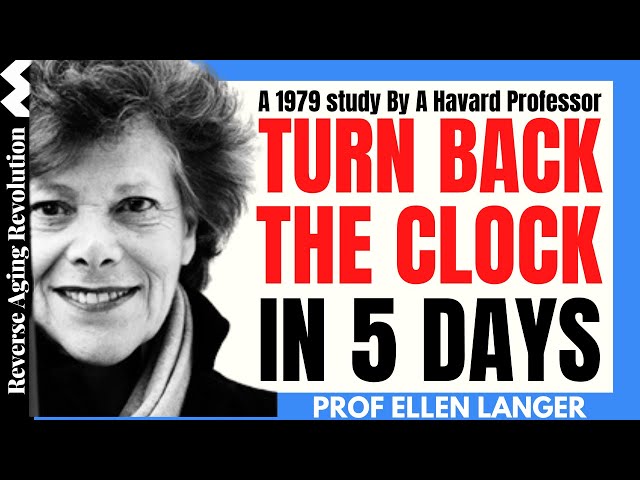
In the year 1981, renowned Harvard social psychologist Ellen Langer invited eighty men in their late 70s to live in a residential retreat for seven days. The environment was recreated to match the socio-physical environment of the year 1959. The men were asked to talk, feel, and pretend as if they were living in the era when they were in their prime. Upon arrival at the retreat, the men were asked to carry their own luggage, no matter how heavy it was. Some stooped while others used canes while walking. No assistance was provided as they entered their new home. They all went through various tests that measured their physical and mental functions, including cognition, memory, flexibility, hearing, and vision.
The home had no mirrors and only contained portraits from their younger days. They were welcomed by Ed Sullivan on a black and white television. All the books and magazines were from the year 1959. The radio played oldie favorites such as Perry Como and Jack Benny. Twice a day, researchers led discussions on topics like the need for bomb shelters to protect the country against Soviet Powers, Castro’s advance in Havana, and other topics that were popular in that era. Participants were asked to speak about all these events using the present tense as if they were living it now. They were playing out this “as if” scenario and not merely thinking about it.
As the study neared its end, participants improved in all parameters they were tested on in the beginning. The man who came in on a wheelchair walked out with a cane. Another man who couldn’t wear his socks unassisted hosted the final evening dinner party. On the second to last day, men who looked frail and weak were playing touch football on the lawn. Improvements were marked on parameters of physical strength, hearing, vision, IQ, gait, posture, dexterity, memory, decreased symptoms of arthritis and overall well-being. The intelligence score was significantly higher for 63% of the participants. Langer later said, “Wherever you put the mind, you are necessarily putting the body.” While narrating later about the study and its findings to a hall full of audience, Ellen Langer narrated: “At the end of the [monastery] study, I was playing football with these men, some of whom gave up their canes,” she tells the audience. “It is not our physical state that limits us,” she explains—it is our mindset about our own limits, our perceptions, which draws the lines in the sand.
Ellen Langer demonstrated this idea time and again in several other studies. In her research, Langer aimed to test the hypothesis that the vision of Air Force pilots deteriorates as they age. She recruited two groups of participants for the study: a group of 20 Air Force pilots aged 45 to 60, and a control group of 20 non-pilots aged 45 to 60. The participants were tested on a range of visual tasks, including the ability to distinguish between fine lines, detect movement, and perceive depth.
In the first phase of the study, Langer found that the pilots performed significantly better than the control group on all of the visual tasks. This result was surprising, given the common assumption that pilots’ vision deteriorates with age. Langer attributed the pilots’ superior performance to the fact that they were required to undergo regular vision testing and training as part of their job. However, in the second phase of the study, Langer aimed to investigate whether the pilots’ superior performance was due to their training or whether it could be attributed to their beliefs about aging and vision. She conducted a clever experimental manipulation in which half of the pilots were told that their vision would deteriorate as they aged, while the other half were told that their vision would remain stable.
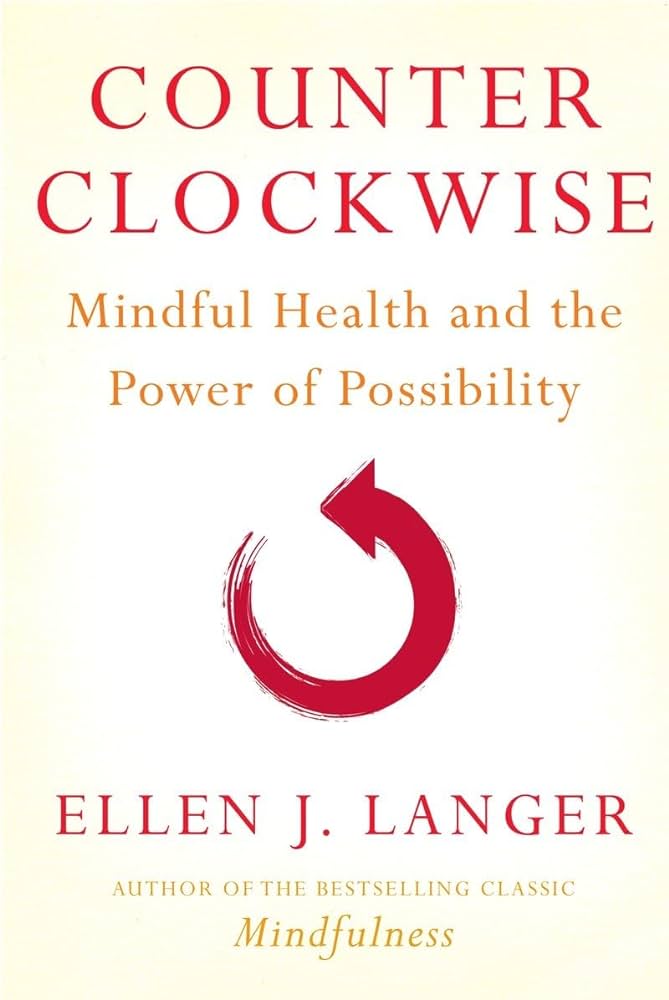
Langer found that the pilots who were told that their vision would deteriorate showed a significant decline in performance on the visual tasks, while the pilots who were told that their vision would remain stable maintained their superior performance. Langer concluded that the pilots’ beliefs about aging and vision were a crucial factor in their performance, and that these beliefs could be changed through psychological interventions. Langer summarized her findings in an article published in the Journal of Personality and Social Psychology, where she wrote:
“The results of this study suggest that the subjective experience of aging is a critical factor in the maintenance of perceptual abilities. The beliefs that people hold about aging can limit or enhance their performance, and these beliefs can be modified through psychological interventions”.
 School Of Happiness by Mukesh Jain