Mukesh Jain
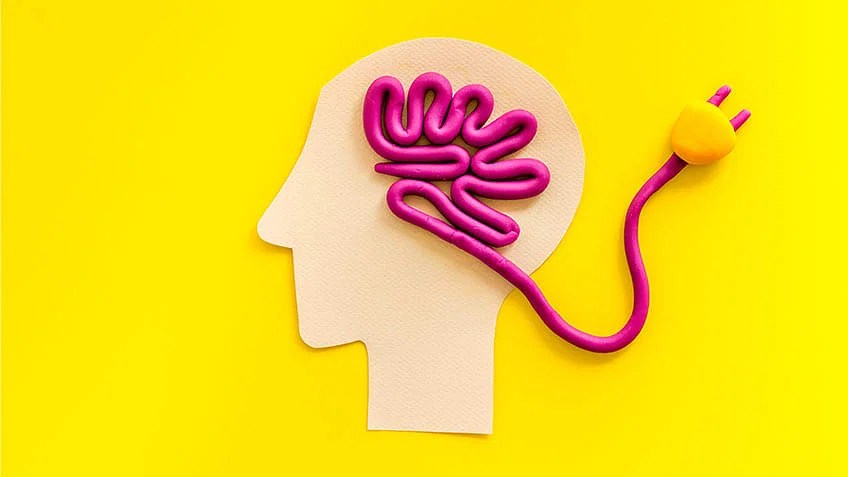
Once upon a time, there were two salesmen who were sent to a remote village to sell shoes. The first salesman arrived at the village and saw that no one there wore shoes. He thought to himself, “What a waste of time! How am I going to sell shoes to people who don’t even wear them?” So, he sent a message back to his boss saying, “There is no market for shoes here. I’m coming back.”
The second salesman, on the other hand, arrived at the same village and saw the same thing. But instead of giving up, he saw an opportunity. He thought to himself, “Since no one wears shoes here, I can sell them on the basis of how much cleaner and safer it would be for them to wear shoes.” So, he stayed in the village and began to sell shoes.
As it turned out, the second salesman sold many shoes and made a lot of profit, while the first salesman missed out on a great opportunity. The only difference between the two salesmen was their mindset – the second salesman had a growth mindset, while the first salesman had a fixed mindset.
This story illustrates how our mindset can shape our perception of the world and the opportunities that are available to us. It also shows that with the right mindset, we can turn obstacles into opportunities and achieve success.
This simple short story provides one of the best examples of how a single situation may be viewed in two quite different ways – negatively or positively. Thus, regardless of what it is you want to accomplish, the path to success must begin by adopting the right mindset.
Mindset is a term used to describe a set of beliefs, attitudes, and assumptions that shape an individual’s perception of the world, their approach to challenges, and their ability to achieve goals. It has been studied extensively in the fields of management and psychology and has been found to be a critical factor in determining an individual’s success in various domains. Attitudes, beliefs, and assumptions play a significant role in shaping one’s mindset, which in turn affects their behavior, motivation, and achievement.
Your mindset is a set of beliefs that shape how you make sense of the world and yourself. It influences how you think, feel, and behave in any given situation. Mindsets can influence how people behave in a wide range of situations in life. For example, as people encounter different situations, their mind triggers a specific mindset that then directly impacts their behavior in that situation. Your mindset is your filter for the world. You can choose to see limitations or opportunities. “Mindset is everything. The way we choose to see the world shapes our thoughts and determines our actions,” said John G. Miller.
Mahatma Gandhi used to say, “Your beliefs become your thoughts, your thoughts become your words, your words become your actions, your actions become your habits, your habits become your values, and your values become your destiny.”
The three components of mindset, namely, attitudes, beliefs and assumptions are building blocks of any field whether it is science, economics, politics, education, or religious practices. Attitudes, beliefs, and assumptions form the basis of scientific inquiry, and scientists rely on them to form hypotheses and design experiments. For example, in the field of biology, the belief that all living organisms are made up of cells and that genetic material is passed down from one generation to the next is a fundamental assumption that underpins much of biological research. In physics, the attitude that the laws of nature are consistent and predictable is a belief that has driven much of the development of modern physics.
In the field of economics, attitudes, beliefs, and assumptions are crucial in shaping economic policies and decision-making. For example, the belief that free markets are the most efficient way to allocate resources is a fundamental assumption that underpins many economic policies, such as deregulation and privatization. On the other hand, the belief that government intervention is necessary to address market failures, such as income inequality or environmental externalities, is a belief that underpins many social welfare policies. Daron Acemoglu, Turkish economist, and professor at MIT, said: “Economics is not just a collection of theories and models, it’s a way of thinking about the world that helps us understand the complex interactions between individuals, institutions, and markets.”
Attitudes, beliefs, and assumptions are also crucial in the field of education, both in terms of how teachers teach and how students learn. For example, a teacher who believes that intelligence is fixed and that some students are simply “smart” while others are not may have low expectations for certain students and may not provide them with the support and encouragement they need to succeed. In contrast, a teacher who believes that intelligence can be developed and that all students have the potential to learn may provide more opportunities for struggling students to catch up and succeed.
Your mindset is the way you think about yourself and the world around you. It’s like wearing glasses that color the way you see things. Mindsets are formed through a complex interplay of various factors, including genetics, experiences, environment, and socialization. Here are some key factors that can shape the formation of mindsets:
Genetics: Research has shown that genetic factors can influence personality traits that are associated with mindsets, such as openness to experience and conscientiousness. Some aspects of our mindset, such as temperament and personality traits, may be inherited genetically. For example, some people may be naturally more optimistic or pessimistic, which can influence their mindset.
Environment: The environment in which a person grows up can also influence their mindset. For instance, if someone grows up in an environment where success is highly valued and rewarded, they may develop a growth mindset and believe that effort and hard work can lead to success. Our environment, including our family, peers, and cultural background, can shape our mindset. For example, if we grow up in an environment where failure is stigmatized and success is highly valued, we may develop a fixed mindset that emphasizes the importance of innate abilities and natural talent. Our environment includes our family, community, culture, and the physical world around us. The environment can influence our mindset in several ways: Our family can shape our mindset by modeling certain beliefs and attitudes. For example, if our family values effort and hard work, we may be more likely to develop a growth mindset that emphasizes the importance of effort and perseverance. Our community and culture can also shape our mindset. For example, if we live in a community that values natural talent and innate abilities, we may be more likely to develop a fixed mindset that reinforces the belief that our abilities are set in stone. Our physical environment can also impact our mindset. For example, if we live in a safe and supportive environment, we may be more likely to develop a growth mindset. Conversely, if we live in a stressful or unsafe environment, we may be more likely to develop a fixed mindset that focuses on survival rather than growth.
Socialization: The beliefs and values of the people around us, such as family, peers, and teachers, can also shape our mindset. If those around us have a growth mindset and encourage us to learn and grow, we are more likely to develop a growth mindset ourselves.
Neuroplasticity: Our brain has the ability to change and adapt based on experiences and learning. This means that with deliberate practice and effort, we can develop a growth mindset and change our fixed mindset beliefs.
Education: Education can play a significant role in shaping our mindset. For example, teaching students about the brain’s plasticity and how practice and effort can change neural connections can help promote a growth mindset. Additionally, providing students with opportunities to take on challenging tasks, receive feedback, and learn from mistakes can help develop a growth mindset.
Experiences: Personal experiences, both positive and negative, can shape one’s mindset. For example, if someone has had repeated failures in a particular area, they may develop a fixed mindset and believe they are not capable of succeeding in that area. Our experiences, including successes and failures, can shape our mindset. For example, if we experience repeated failures, we may develop a fixed mindset that reinforces the belief that we’re just not good enough. Conversely, if we experience success after putting in effort and overcoming challenges, we may develop a growth mindset that emphasizes the importance of hard work and perseverance.
Experiences can have a significant impact on shaping our mindsets. Our experiences can influence the way we perceive ourselves, our abilities, and the world around us, which can ultimately affect our mindset. Here are some ways in which experiences can determine mindsets:
• Success and Failure: Our experiences of success and failure can shape our mindset. If we experience repeated successes, we may develop a growth mindset that emphasizes the importance of effort and hard work. Conversely, if we experience repeated failures, we may develop a fixed mindset that reinforces the belief that we are not capable of success. It is important to note that our reactions to failure can also influence our mindset. If we view failure as an opportunity to learn and grow, we are more likely to develop a growth mindset.
• Feedback: The type of feedback we receive can also impact our mindset. If we receive feedback that emphasizes our innate abilities or natural talent, we may develop a fixed mindset that reinforces the belief that our abilities are set in stone. Conversely, if we receive feedback that emphasizes the importance of effort and hard work, we may develop a growth mindset.
• Challenging Tasks: The type of tasks we take on can also shape our mindset. If we take on challenging tasks that require effort and perseverance, we may develop a growth mindset that emphasizes the importance of hard work. Conversely, if we avoid challenging tasks and stick to what we are already good at, we may develop a fixed mindset that reinforces the belief that our abilities are set in stone.
• Role Models: Our experiences with role models can also impact our mindset. If we have role models who emphasize the importance of effort and hard work, we may develop a growth mindset. Conversely, if we have role models who emphasize innate abilities and natural talent, we may develop a fixed mindset.
According to Carol Dweck, a professor of psychology at Stanford University, mindset refers to the way people think about themselves, their abilities, and their potential for growth and development. In her book, “Mindset: The New Psychology of Success,” Dweck proposes that people can have either a fixed or growth mindset. Those with a fixed mindset believe that their abilities and intelligence are fixed and cannot be improved, whereas those with a growth mindset believe that they can develop their abilities and intelligence through effort and perseverance.
Management expert Peter Drucker believed that mindset plays a critical role in determining an individual’s success. In his book “The Effective Executive,” Drucker argues that mindset is essential for effective leadership, and that leaders must develop a “results-oriented” mindset that focuses on achieving outcomes rather than just completing tasks.
Stephen Covey, also emphasized the importance of mindset in his book “The 7 Habits of Highly Effective People.” Covey identified a “paradigm shift” as a critical aspect of mindset, referring to a change in an individual’s underlying assumptions and beliefs about themselves and the world around them. He argued that by adopting a new paradigm or mindset, individuals can transform their lives and achieve greater success.
Father of positive psychology, Martin Seligman proposed the concept of a “positive mindset.” Seligman argued that a positive mindset is characterized by optimism, resilience, and the ability to find meaning and purpose in life. He suggested that by developing a positive mindset, individuals can improve their mental health, well-being, and overall quality of life.
Famous management expert Edgar Schein proposed the concept of “organizational culture,” which he described as a shared set of beliefs, values, and assumptions that shape the behavior of individuals within an organization. Schein argued that organizational culture and mindset are closely related, with the former shaping the latter. He suggested that by understanding and managing organizational culture, leaders can foster a positive mindset among employees and improve organizational performance.
Mindset is a complex and multifaceted concept that has been studied extensively in the fields of management and psychology. Various experts have identified different types of mindsets, including fixed, growth, results-oriented, positive, and organizational. Regardless of the type of mindset, there is a consensus that it plays a critical role in determining an individual’s success in various domains, including personal and professional life.
 School Of Happiness by Mukesh Jain