Mukesh Jain
In social settings, it is not unusual to encounter a friend who mentions about a book that has changed her or his life. You can always see the so-called ‘self-help books’ available in bookstores at railway stations and airports. Happiness has become fad today, with the market full of books, quotes, blogs on the topic, articles in periodicals, newspapers and magazines, television, documentaries etc. Unfortunately, most of these articles / information pieces are relatively uniformed and not supported by scientific evidence or empirical data. Posters or advertisements promoting a revolutionary self-help book capable of transforming your life are not rare, with titles like “Transform yourself into…. something”.
Despite our fascination with many self-help titles, there are many problems with the Self-Help Industry. The most important shortcoming of self-help books is that they work with a ‘one-size fits all’ approach. A book will narrate a story on how a particular person starting from extremely poor childhood made it big and then prescribes the readers to follow the strategy to achieve the same thing. These books presume that there are no individual differences in people and a recommendation made to one person will be as effective to another. Their prescription is not tailored to the individual characteristics or personality of the reader or his specific circumstances. Unfortunately, this is completely wrong. People are so different from each other in their attitudes, skills, and circumstances that what is applicable to me is not necessarily applicable to you.
The other problem is that self-help recommendations are not scientifically validated.
Two US researchers Norah Dunbar and Gordon Abra conducted a survey of self-help literature and presented a paper to the International Communications Association in 2006. Their paper “Popular self-help books on communications in relationships: who is writing them and what advice are they giving” found that the majority only used anecdotal evidence and did not use any research conclusions.
By applying the scientific method, researchers can disentangle cause and effect and can study a phenomenon systematically, without biases or preconceptions. Thus, if a book or an article in a periodical proclaims that daily meditations make people happier or that a natural herb alleviates headaches, only a true double-blind experiment in which participants are randomly assigned to the meditation (or natural herb) condition and others to a control group can determine if these claims are true. Audience of a book can be much more confident in its conclusions than in those of a single individual providing advice based on his or her limited experience and assumptions.
Personal Experience and Common Sense are commonly used by experts to prove a point. Most motivational speakers and self-help authors use this technique to put forward an argument. Personal experience or “seeing is believing” though is a strong argument. Unfortunately, many a times it may misguide us. Most self-help authors and motivational speakers thrive on a kind of pseudoscience: pushing a series of stories as a hypothesis of a phenomenon.
Another mistake made by these self-help experts is overgeneralization. Overgeneralization is the phenomenon when somebody concludes that an event occurring in a particular circumstance will occur in many similar circumstances. We often generalize from what we know to unknown areas. For example, from my personal experience, I have personally known five people who are extremely fluent in English. All of them are very successful in their respective careers. Can I conclude that all people having fluency in language tend to succeed in their careers? Authors of the self-help books typically fall in the trap of overgeneralization. They quote a few examples of people who made it big following a strategy and then tend to generalize that this is fool-proof strategy for everyone to follow.
Another trap used by the self-help authors is the Halo Effect. The halo effect occurs when we make general assumptions about a source with good prestige or reputation. For example, if a book or speaker quotes a report from a prestigious institution and presumes it to be a work of excellence without going in depth, he is guilty of halo effect. Self-help books use stories from the life of celebrities and other well-known experts.
Many self-help books and motivational speakers are fond of quoting so called experts and authorities. Often, we accept something as being true because someone with expertise or in a position of authority says it is so or because it appears in an authoritative, trusted source. There is an inbuilt fallacy in accepting the arguments of an authority figure. First of all, in this era of information overload and social media, among so many self-proclaimed experts, it is really difficult to judge about the authenticity of skills and knowledge levels of so-called experts. Who decides who is or is not a genuine expert or authority? More important than this is authorities speaking about a field they know nothing about. We are familiar with commercials in which a movie star or football hero tries to convince us to buy a soap or toothpaste or a hair oil?
Finally, correlation does not equal causation. So while an entrepreneur might credit action X with result Y, it could have just have been a result of the myriad other actions that were in play at that point in time. Scientists often confuse the two — by accident or deliberately — so you can sure as hell bet that your Silicon Valley tech bro does too.
Many self-help books amount to hastily written business cards that are full of anecdotal advice and ‘because this worked for me, it’ll work for you too’. Such anecdotes can be subject to confirmation bias, cherry-picking, luck, the narrative fallacy, non-replicability, asymmetry of circumstance, or just plain old nonsense. The reality is that everybody’s circumstances, capabilities and goals are different. There is nuance in our lives and in our respective pursuits. And a simple one-size-fits-all piece of advice usually fits nobody.
Rather than expecting one piece of advice to change your life, read widely and you will begin to see patterns emerge. Advice that tends to stand the test of time and run the gamut of literature. Apply it and see if it works for you. If it doesn’t, move on to something else.
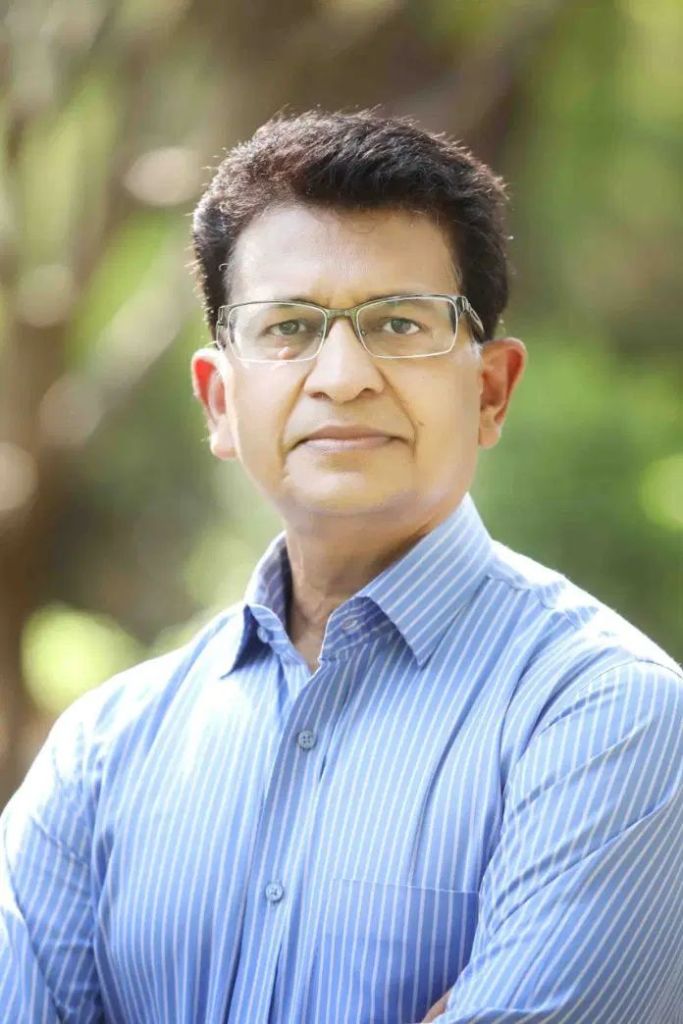
Dr Mukesh Jain is a Gold Medallist engineer in Electronics and Telecommunication Engineering from MANIT Bhopal. He obtained his MBA from the Indian Institute of Management Ahmedabad. He obtained his Master of Public Administration from the Kennedy School of Government, Harvard University along with Edward Mason Fellowship. He had the unique distinction of receiving three distinguished awards at Harvard University: The Mason Fellow award and The Lucius N. Littauer Fellow award for exemplary academic achievement, public service & potential for future leadership. He was also awarded The Raymond & Josephine Vernon award for academic distinction & significant contribution to Mason Fellowship Program. Mukesh Jain received his PhD in Strategic Management from IIT Delhi.
Mukesh Jain joined the Indian Police Service in 1989, Madhya Pradesh cadre. As an IPS officer, he held many challenging assignments including the Superintendent of Police, Raisen and Mandsaur Districts, and Inspector General of Police, Criminal Investigation Department and Additional DGP Cybercrime, Transport Commissioner Madhya Pradesh and Special DG Police.
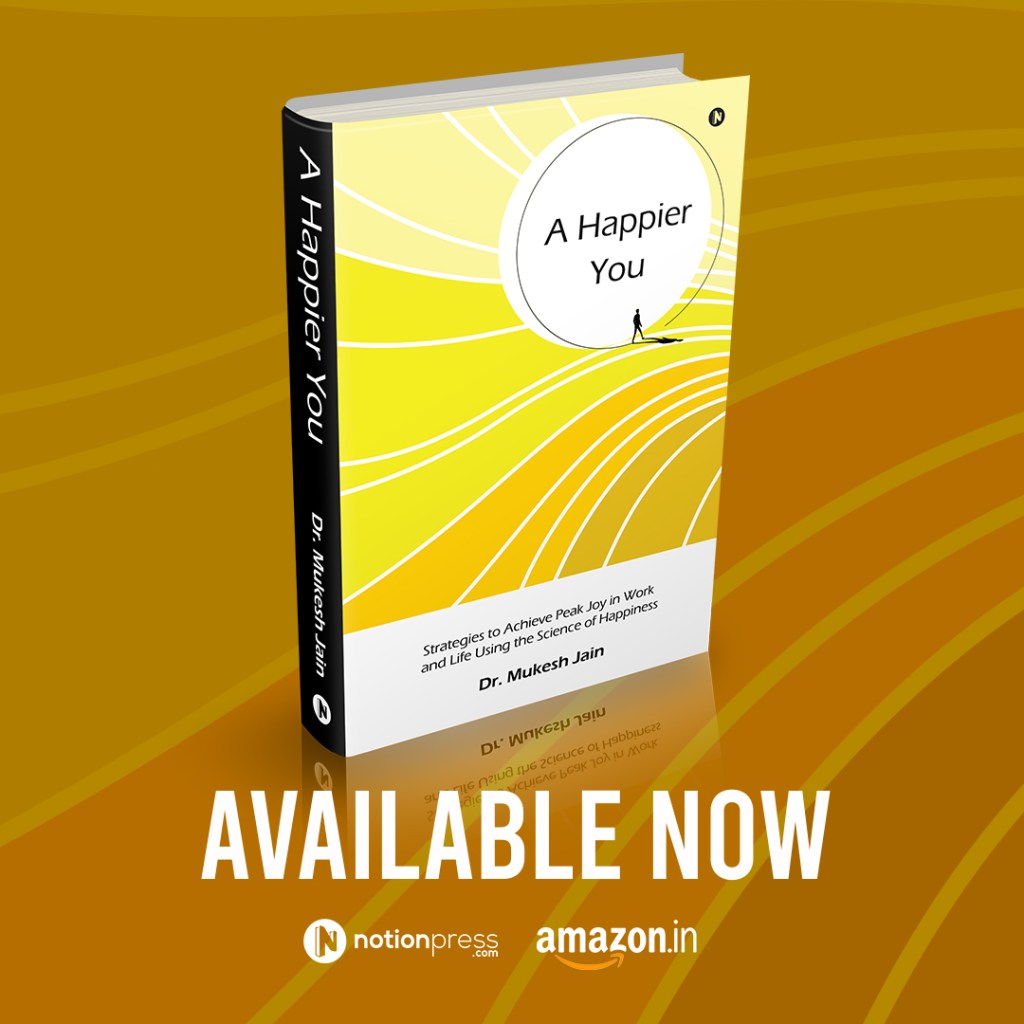
Dr. Mukesh Jain has authored many books on Public Policy and Positive Psychology. His book, ‘Excellence in Government, is a recommended reading for many public policy courses. His book- “A Happier You: Strategies to achieve peak joy in work and life using science of Happiness”, received book of the year award in 2022. After this, two more books, first, A ‘Masterclass in the Science of Happiness’ and the other, ‘Seeds of Happiness’, have also been received very well. He is a visiting faculty to many business schools and reputed training institutes. He is an expert trainer of “Lateral Thinking”, and “The Science of happiness” and has conducted more than 300 workshops on these subjects.
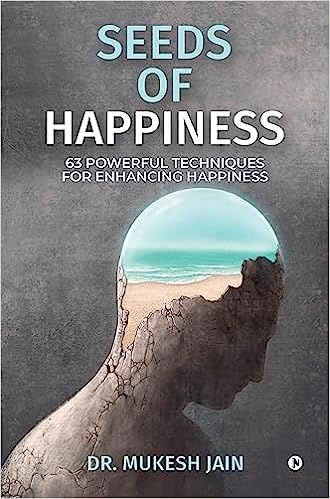

 School Of Happiness by Mukesh Jain