Mukesh jain
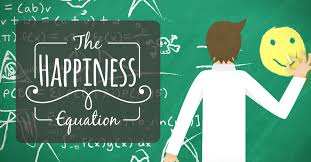
Ask yourself when the last time did you utter the phrase: “I’ll be happy when I…” Probably recently, right? Whether the end of that statement includes getting “a better car,” or “a bigger house,” or finding “true love” or “the dream job,” we’re all guilty of delaying our joy and making the gratification dependent on a future outcome.
There is an equation of life which has been taught to us subtly or not so subtly by our parents, teachers, and our bosses. That is: If you work hard, you will become successful, and once you become successful, then you will be happy. We have been, since our childhood, brought up to believe that hard work is a necessary precursor to Success, which in turn is a prerequisite to Happiness in life.

Belief in this happiness equation has conditioned all aspects our life and what motivates us in life. In our day-to-day life we tend to aspire for good grades, admission to a prestigious educational institute, getting selection to a dream job, or losing five kilograms of weight etc, which will presumably make us happy.
Success first, happiness second! That is our Happiness Equation or Happiness formula.
The only problem is that this formula is broken. Ask anyone or yourself whether the success equation you have believed in for whole of your life really works!
The reply is “No”!
The equation is broken at two places. First, many people will say that hard work does not always result in success. There are many things other than hard work which contribute to your success. Second, and more important, success does not always lead to happiness.
We have experienced that the equation of success we believe in is broken and still we keep believing in it and keep working for the next admission, or raise, or promotion or the dream house, which may give us the illusory happiness. If happiness depends on success, then every student getting admission to Harvard or IIMs/IITs or every worker getting a promotion, everyone who has ever accomplished a goal of any kind should be happy. But we do not really see many successful students, workers, and achievers really happy after their accomplishments. With each victory, their success goalposts keep getting pushed further and further out.
More important insight about this happiness equation is the fact that it actually works backward. More than three decades of ground-breaking research in the fields of positive psychology and neuroscience has proven that the relationship between success and happiness works the other way around. With millions of research studies conducted all over the world, we may now assert with certainty that happiness is the precursor to success, not merely the result.
This “success central hypothesis” has created a wrong perception of our work universe. We have started believing: Success first, happiness second. Only when I will get admission in IIT or IIM then I will be happy. Or I will just get that dream job and I will be happy forever. Only if I lose 5 kgs of weight, I will be happy.
All emotions are responses to our perceptions, and behaviors are responses to the emotions. If your perception is false, then the emotional response is bound to be false. This wrong perception for hundreds of years, was the result of our wrong paradigm or worldview that success causes happiness. Now, decades of research by positive psychology researchers tell us conclusively that opposite is the case. Not only our paradigm or worldview about success-happiness relationship was wrong, but it was exactly opposite. Almost like, what Copernicus proved. Earth is not the center, but Sun is!
Success or hard work is not the center around which happiness moves; Happiness is the center around which success moves.
Happiness is the starting point, not the end result!
When we are happy – when we are in a positive and grateful mindset or in a frame of kindness or mindfulness, we are more efficient, more productive, more creative – in total, we are much smarter, and thus more successful. The new paradigm is – Happiness at the center, and success revolves around it. With the new paradigm, everything changes. Our perceptions, our emotions and our behaviors change completely. Now, we will start with happiness, so that we can feel great. We will connect more, we will be able to make high quality connections, we will be better at problem solving. We will thus end up doing better work. What does better work lead to? Big success.
The new happiness equation suggested by Positive psychology is this:

Shawn Achor, a Harvard psychologist, and author of the book ‘The Happiness Advantage’, wrote in an article in the Harvard business review with a title “The Happiness Dividend” that – “A decade of research proves that happiness raises nearly every business and educational outcome: raising sales by 37%, productivity by 31%, and accuracy on tasks by 19%, as well as myriad of health and quality of life improvements. These conclusions of Shawn Achor were based on his own studies conducted with the famous auditing and tax accounting firm KPMG in 2009. In the New York and New Jersey offices of KPMG, he conducted this study in a group of managers. Half of the managers were provided a three hour of introduction to the basic concepts of positive psychology, its research findings and how to apply these principles and research conclusions to the personal life at work. Using a battery of standard psychology metrics these managers were evaluated three times – just before the training, a week after completion of the training, and four months after training.
There was significant improvement on every single positive metric for the trained group between first evaluation and the second evaluation (a week after the training). This indicated that in this short term, the training was a success. The HR Managers of KPMG were sceptical about long-term sustained effects of the training. Because, as all HR Managers know, that most motivational talks or trainings, workshops have a kind of “honeymoon effect”, in which the participants feel totally changed immediately after the training, but immediately return to their original state of motivation and enthusiasm, once they are back to their ‘real life’. But to the satisfaction and surprise of everyone, in this case, the positive effect not only held for entire four months (till third evaluation) but was significantly higher than the first evaluation and also was substantially higher as compared to managers in the central group.
It took 140 years for the Copernicus Revolution to spread and getting accepted widely. Positive psychology research has only completed about 30 years, and we are on the verge of the second revolution in our worldview.
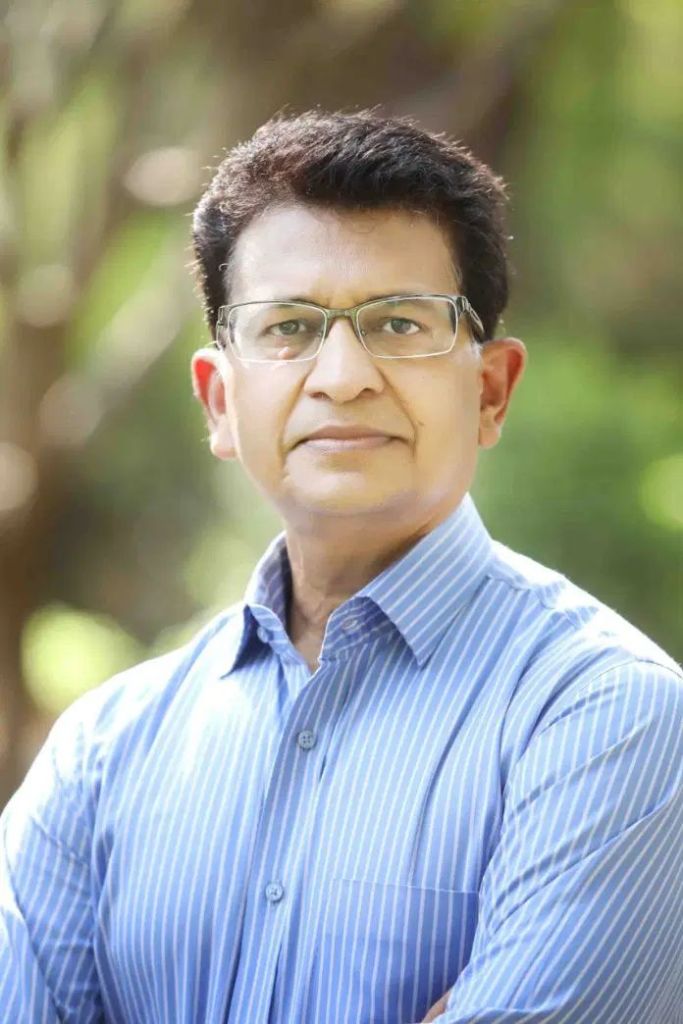
Dr Mukesh Jain is a Gold Medallist engineer in Electronics and Telecommunication Engineering from MANIT Bhopal. He obtained his MBA from the Indian Institute of Management Ahmedabad. He obtained his Master of Public Administration from the Kennedy School of Government, Harvard University along with Edward Mason Fellowship. He had the unique distinction of receiving three distinguished awards at Harvard University: The Mason Fellow award and The Lucius N. Littauer Fellow award for exemplary academic achievement, public service & potential for future leadership. He was also awarded The Raymond & Josephine Vernon award for academic distinction & significant contribution to Mason Fellowship Program. Mukesh Jain received his PhD in Strategic Management from IIT Delhi.
Mukesh Jain joined the Indian Police Service in 1989, Madhya Pradesh cadre. As an IPS officer, he held many challenging assignments including the Superintendent of Police, Raisen and Mandsaur Districts, and Inspector General of Police, Criminal Investigation Department and Additional DGP Cybercrime, Transport Commissioner Madhya Pradesh and Special DG Police.
Dr. Mukesh Jain has authored many books on Public Policy and Positive Psychology. His book, ‘Excellence in Government, is a recommended reading for many public policy courses. His book- “A Happier You: Strategies to achieve peak joy in work and life using science of Happiness”, received book of the year award in 2022. After this, two more books, first, A ‘Masterclass in the Science of Happiness’ and the other, ‘Seeds of Happiness’, have also been received very well. He is a visiting faculty to many business schools and reputed training institutes. He is an expert trainer of “Lateral Thinking”, and “The Science of happiness” and has conducted more than 300 workshops on these subjects.

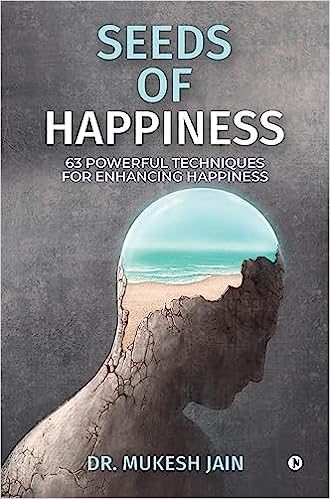

 School Of Happiness by Mukesh Jain