Mukesh Jain

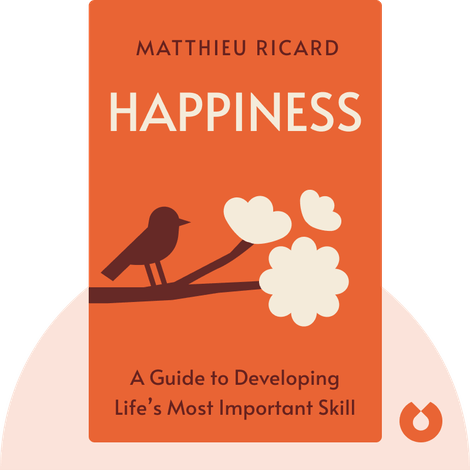
“The Art of Happiness” is a collaborative work by Matthieu Ricard, a Buddhist monk, and Howard Cutler, a psychiatrist. Published in 1998, the book explores the concept of happiness from both Western psychology and Eastern philosophy, blending Ricard’s insights derived from his years of Buddhist practice with Cutler’s psychiatric perspectives. The essence of the book lies in its exploration of the nature of happiness, the factors influencing it, and practical strategies for cultivating a happier and more fulfilling life.
The narrative begins by challenging common misconceptions about happiness. It suggests that happiness is not merely the absence of suffering but a profound state of well-being and contentment that can be cultivated through intentional practices. Ricard introduces the idea that happiness is a skill that can be developed and enhanced over time.
Central to the book is the concept of mental training, drawing heavily from Ricard’s background in Tibetan Buddhism. The authors propose that individuals can transform their minds and emotions through deliberate and sustained mental training. This transformation, they argue, leads to an enduring sense of happiness that transcends external circumstances.
The book delves into the role of altruism and compassion in the pursuit of happiness. Ricard emphasizes the interconnectedness of all beings and advocates for the practice of altruism as a means of enhancing one’s own well-being. The authors explore how cultivating compassion can create a positive feedback loop, benefiting both the giver and the receiver.
Ricard and Cutler discuss the impact of negative emotions on happiness and present techniques to manage and overcome them. Mindfulness, a central theme in the book, is introduced as a key practice for developing awareness and breaking free from habitual patterns of thinking that contribute to unhappiness.
The intersection of modern psychology and ancient wisdom becomes evident as the authors examine the concept of the self. They challenge the notion of a fixed and independent self and discuss how this understanding can lead to a more profound sense of happiness.
Throughout the book, Ricard shares personal anecdotes and experiences from his own journey as a monk. These real-life examples serve to illustrate the practical application of Buddhist principles in everyday life, making the teachings accessible to readers of various backgrounds.
Here are some quotes from “The Art of Happiness” that encapsulate key themes and insights:
“Happiness is a state of inner fulfillment, not the gratification of inexhaustible desires for outward things.”
“The more you care for the happiness of others, the greater is your own sense of well-being.”
“It is important to recognize that being happy is not the result of chance or coincidence. Unlike stumbling on a gold mine, achieving lasting happiness requires effort and training.”
“The very motion of our life is towards happiness.”
“Happiness doesn’t come automatically. It requires effort and no small measure of courage.”
“Compassion and altruism are not a sign of weakness, but a sign of strength.”
“The greatest degree of inner tranquility comes from the development of love and compassion.”
“One’s own happiness should include the happiness of others.”
“It’s not a question of learning much. On the contrary. It’s a question of unlearning much.”
“Ultimately, the reason why love and compassion bring the greatest happiness is simply that our nature cherishes them above all else.”
“We are the architects of our own happiness.”
“Happiness is not a state to arrive at, but a manner of traveling.”
“The secret to happiness is to train your mind to dwell in the present moment.”
“To be fully engaged in our lives, we need to cultivate a sense of joy and purpose.”
“It is not our circumstances that create our discontent or contentment, but rather the way we see and evaluate them.”
“One of the enemies of happiness is adaptation.”
“Cultivating a generous spirit is a powerful means for opening the heart and mind.”
“Happiness is a byproduct of a life well-lived.”
“The essence of love and compassion is understanding, the ability to recognize the physical, material, and psychological suffering of others.”
“True happiness is closely linked to moral goodness.”
“The more we think of others, the happier we become.”
“Inner tranquility is based on a trust in your own integrity.”
“The happiness that arises when we bring happiness to others is true and lasting.”
“There is a fundamental difference between the desire for happiness and the desire for wealth or success. Happiness is a relative state; it does not depend on external conditions.”
“Compassion allows us to recognize that each individual is doing what he or she perceives as being in their best interest.”
“Happiness is a skill, and like any other skill, it needs to be trained and developed.”
“The more we increase our ability to love and be compassionate, the happier we become.”
“Happiness is not achieved by the conscious pursuit of happiness; it is generally the by-product of other activities.”
“The pursuit of happiness is in our hands. We have to train our mind and transform our way of thinking.”
“The source of a happy life is within us. Troublemakers in many parts of the world are often not aware of this.”
“A disciplined mind leads to happiness, and an undisciplined mind leads to suffering.”
“Understanding the nature of suffering can contribute significantly to one’s happiness.”
“We are the architects of our own happiness.”
“Happiness is not a state to arrive at, but a manner of traveling.”
“The secret to happiness is to train your mind to dwell in the present moment.”
“To be fully engaged in our lives, we need to cultivate a sense of joy and purpose.”
“It is not our circumstances that create our discontent or contentment, but rather the way we see and evaluate them.”
“One of the enemies of happiness is adaptation.”
“Cultivating a generous spirit is a powerful means for opening the heart and mind.”
“Happiness is a byproduct of a life well-lived.”
“The essence of love and compassion is understanding, the ability to recognize the physical, material, and psychological suffering of others.”
“True happiness is closely linked to moral goodness.”
“The more we think of others, the happier we become.”
“Inner tranquility is based on a trust in your own integrity.”
“The happiness that arises when we bring happiness to others is true and lasting.”
“There is a fundamental difference between the desire for happiness and the desire for wealth or success. Happiness is a relative state; it does not depend on external conditions.”
“Compassion allows us to recognize that each individual is doing what he or she perceives as being in their best interest.”
“Happiness is a skill, and like any other skill, it needs to be trained and developed.”
“The more we increase our ability to love and be compassionate, the happier we become.”
“Happiness is not achieved by the conscious pursuit of happiness; it is generally the by-product of other activities.”
“The pursuit of happiness is in our hands. We have to train our mind and transform our way of thinking.”
“The source of a happy life is within us. Troublemakers in many parts of the world are often not aware of this.”
“A disciplined mind leads to happiness, and an undisciplined mind leads to suffering.”
“Understanding the nature of suffering can contribute significantly to one’s happiness.”
Dr Mukesh Jain is a Gold Medallist engineer in Electronics and Telecommunication Engineering from MANIT Bhopal. He obtained his MBA from the Indian Institute of Management Ahmedabad. He obtained his Master of Public Administration from the Kennedy School of Government, Harvard University along with Edward Mason Fellowship. He had the unique distinction of receiving three distinguished awards at Harvard University: The Mason Fellow award and The Lucius N. Littauer Fellow award for exemplary academic achievement, public service & potential for future leadership. He was also awarded The Raymond & Josephine Vernon award for academic distinction & significant contribution to Mason Fellowship Program. Mukesh Jain received his PhD in Strategic Management from IIT Delhi.
Mukesh Jain joined the Indian Police Service in 1989, Madhya Pradesh cadre. As an IPS officer, he held many challenging assignments including the Superintendent of Police, Raisen and Mandsaur Districts, and Inspector General of Police, Criminal Investigation Department and Additional DGP Cybercrime, Transport Commissioner Madhya Pradesh and Special DG Police.
Dr. Mukesh Jain has authored many books on Public Policy and Positive Psychology. His book, ‘Excellence in Government, is a recommended reading for many public policy courses. His book- “A Happier You: Strategies to achieve peak joy in work and life using science of Happiness”, received book of the year award in 2022. After this, two more books, first, A ‘Masterclass in the Science of Happiness’ and the other, ‘Seeds of Happiness’, have also been received very well. He is a visiting faculty to many business schools and reputed training institutes. He is an expert trainer of “Lateral Thinking”, and “The Science of happiness” and has conducted more than 300 workshops on these subjects.


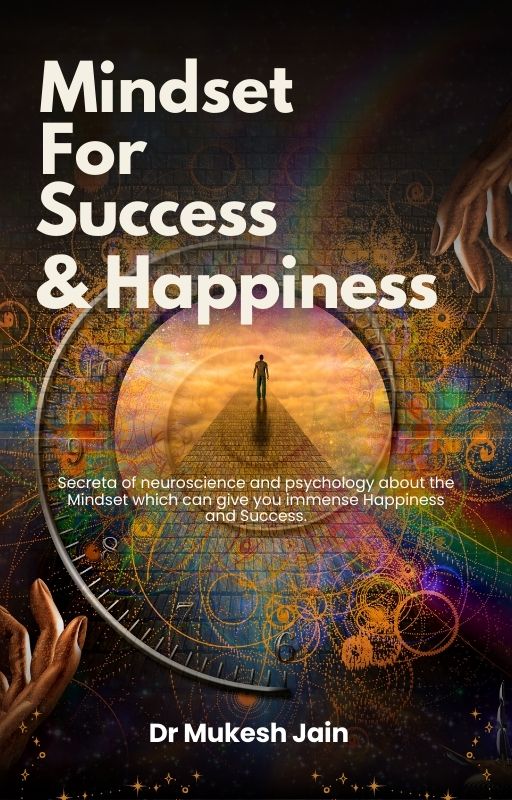

 School Of Happiness by Mukesh Jain