Mukesh Jain

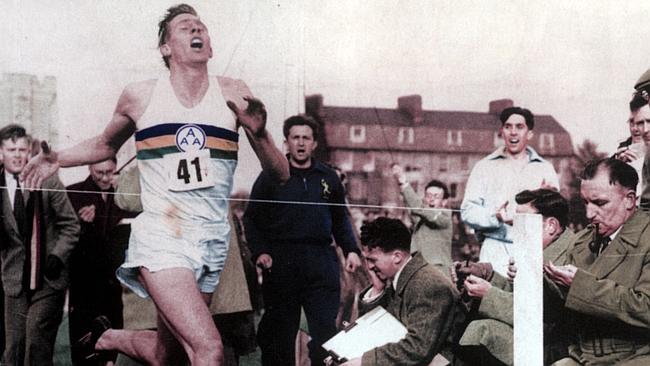
Sir Roger Bannister’s historic achievement of running a mile in less than four minutes is a seminal moment in the history of athletics. The event took place on May 6, 1954, at Iffley Road Track in Oxford, England. Roger Bannister, a British middle-distance runner, accomplished this remarkable feat, breaking what was then considered an elusive barrier in the sport of running.
Roger Bannister, born on March 23, 1929, was not only an accomplished athlete but also a medical student at the time of his record-breaking run. He had competed in the 1952 Helsinki Olympics, where he finished fourth in the 1500 meters, an experience that fueled his determination to achieve the sub-four-minute mile.
The chosen venue for the historic run was the Iffley Road Track at the University of Oxford. Bannister selected this track because of its cinder surface, which was considered favorable for running. The date of May 6, 1954, was strategically chosen, taking into account weather conditions and Bannister’s training schedule.
On that historic day, Roger Bannister, along with two pace-setters, Chris Chataway and Chris Brasher, took to the track to attempt the sub-four-minute mile. The race unfolded with precision and strategy. Chataway and Brasher provided crucial pacing for Bannister, helping him maintain the necessary speed to break the barrier.
Chris Chataway led the first two laps, with Chris Brasher taking over for the third lap. Both pace-setters played a crucial role in maintaining the required speed for Bannister to achieve the record. Bannister himself had meticulously planned the pacing strategy, aiming for a negative split, where the second half of the race is faster than the first.
The Historic Moment:
As Roger Bannister entered the final straightaway, the stadium erupted in anticipation. With a final burst of speed, he crossed the finish line in 3 minutes and 59.4 seconds. The announcement of the time, “Three minutes and…” by the race announcer created a moment of suspense before revealing the seconds, and when the final time was announced, it signaled the breaking of the four-minute barrier.
The achievement was met with a mix of disbelief, joy, and celebration. Roger Bannister had not only broken a significant barrier in athletics, but he had also achieved what was considered by many to be an impossible feat. The image of Bannister breaking the tape with a determined expression on his face became an iconic representation of human achievement.
Roger Bannister’s accomplishment had a profound impact on the world of sports. It shattered the psychological barrier associated with the four-minute mile, inspiring subsequent generations of runners to believe in their ability to break records. Bannister’s achievement is often cited as one of the defining moments in the history of athletics.
While Bannister’s record of 3:59.4 seconds stood for only 46 days before being broken, the psychological barrier had been irrevocably shattered. The sub-four-minute mile became a benchmark for middle-distance runners, and numerous athletes went on to achieve this milestone in the years that followed.
The four-minute mile run by Roger Bannister on May 6, 1954, is a landmark moment in sports history. It transcended the confines of athletics, symbolizing the triumph of human will, determination, and the relentless pursuit of excellence. Bannister’s achievement continues to inspire and remains a testament to the power of breaking barriers and redefining what is possible in the realm of human achievement.
Sir Roger Bannister’s feat shattered the prevailing belief that running a mile in less than four minutes was physiologically impossible. The achievement showcased the remarkable capabilities of the human body and challenged the understanding of physical limitations. Bannister’s success spurred further exploration into the boundaries of human performance and inspired subsequent generations of athletes to aim higher and push their limits.
The four-minute mile had long been considered an unattainable goal, representing a psychological barrier that seemed insurmountable. Bannister’s achievement demonstrated the power of mental resilience and determination in overcoming perceived limitations. It inspired athletes to rethink their own potential, illustrating that breaking psychological barriers is often the first step toward pushing physical boundaries.
Bannister’s accomplishment had a cascading effect on the world of athletics. Once the four-minute barrier was broken, other middle-distance runners began achieving similar feats. The psychological impact of knowing that it was possible to run a mile in less than four minutes spurred a wave of record-breaking performances. The event opened the floodgates of possibility, leading to a paradigm shift in the expectations and aspirations of athletes.
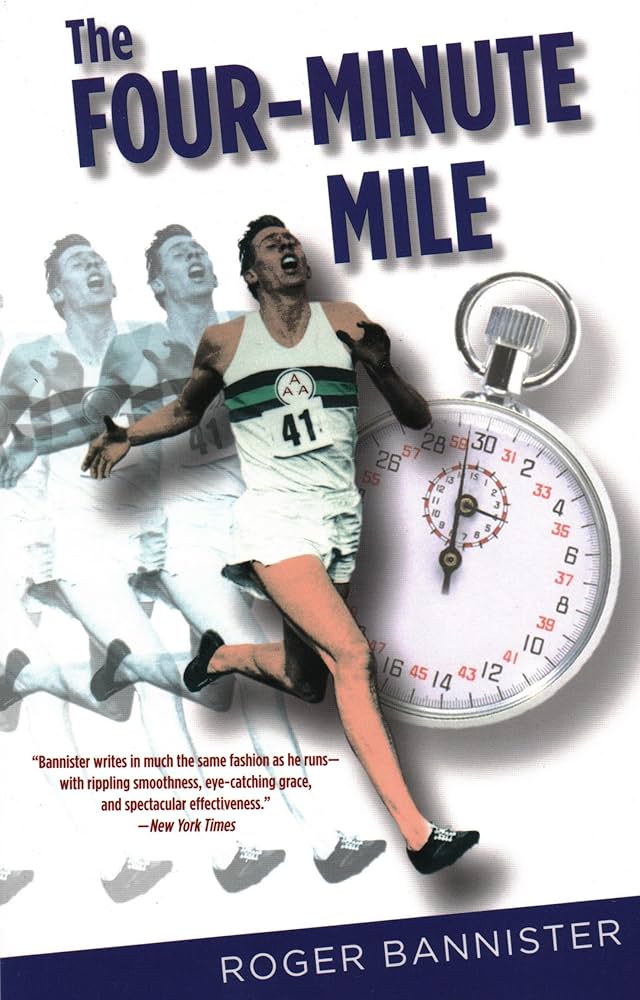
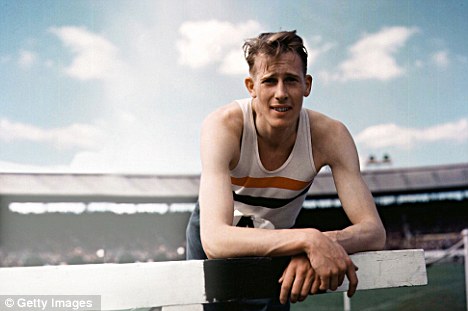
Bannister’s sub-four-minute mile became a symbol of untapped human potential and the pursuit of excellence. It inspired people from various walks of life to reflect on their own aspirations and encouraged them to strive for greatness in their respective fields. The achievement resonated beyond the running track, becoming a metaphor for overcoming challenges and achieving what was once deemed impossible.
The four-minute mile has become a cultural symbol of achievement and perseverance. It is often referenced in motivational literature, speeches, and popular culture as a metaphor for overcoming challenges and reaching ambitious goals. The phrase “breaking the four-minute mile” is used metaphorically to describe any significant breakthrough or achievement.
In summary, the phenomenon of the four-minute mile represents far more than a record-breaking athletic feat. It symbolizes the triumph of human determination over perceived limitations, sparking advancements in sports science, inspiring subsequent achievements, and leaving an enduring legacy in the cultural and social fabric of society. Sir Roger Bannister’s historic run continues to stand as a testament to the power of human potential and the relentless pursuit of excellence.
Dr Mukesh Jain is a Gold Medallist engineer in Electronics and Telecommunication Engineering from MANIT Bhopal. He obtained his MBA from the Indian Institute of Management Ahmedabad. He obtained his Master of Public Administration from the Kennedy School of Government, Harvard University along with Edward Mason Fellowship. He had the unique distinction of receiving three distinguished awards at Harvard University: The Mason Fellow award and The Lucius N. Littauer Fellow award for exemplary academic achievement, public service & potential for future leadership. He was also awarded The Raymond & Josephine Vernon award for academic distinction & significant contribution to Mason Fellowship Program. Mukesh Jain received his PhD in Strategic Management from IIT Delhi.
Mukesh Jain joined the Indian Police Service in 1989, Madhya Pradesh cadre. As an IPS officer, he held many challenging assignments including the Superintendent of Police, Raisen and Mandsaur Districts, and Inspector General of Police, Criminal Investigation Department and Additional DGP Cybercrime, Transport Commissioner Madhya Pradesh and Special DG Police.
Dr. Mukesh Jain has authored many books on Public Policy and Positive Psychology. His book, ‘Excellence in Government, is a recommended reading for many public policy courses. His book- “A Happier You: Strategies to achieve peak joy in work and life using science of Happiness”, received book of the year award in 2022. After this, two more books, first, A ‘Masterclass in the Science of Happiness’ and the other, ‘Seeds of Happiness’, have also been received very well. He is a visiting faculty to many business schools and reputed training institutes. He is an expert trainer of “Lateral Thinking”, and “The Science of happiness” and has conducted more than 300 workshops on these subjects.


 School Of Happiness by Mukesh Jain