
We all want to be happy, and there are countless ideas about how to achieve it. But not many of those ideas are based on science and most of them are anecdotal.
My blog “The Masterclass of Happiness” explores the roots of a happy and meaningful life. In Last 30 years or so research in positive psychology has provided us some of the most provocative and practical lessons on what makes people happy and how this cutting-edge research can be applied to our own lives. This research is cross-disciplinary spanning the fields of psychology, neuroscience, evolutionary biology, and beyond.
What we get as an outcome from this masterclass is some practical strategies for tapping into and nurturing our own happiness, including research-based activities that foster social and emotional well-being.
Most people believe that happiness is far too subjective, too vague. Yet the evidence is changing this view rapidly. A generation of studies by psychologists, economists, sociologists, and neuroscientists has shown that happiness, though indeed a subjective experience, can be objectively measured, assessed, correlated with observable brain functions, and related to the characteristics of an individual. Plethora of studies have converged on the common intervention strategies to enhance our happiness levels.
Coming up with a formal definition of happiness can be tricky. After all, shouldn’t we just know it when we feel it? In fact, we often use the term to describe a range of positive emotions, including amusement, joy, pride, and contentment.
But to understand the causes and effects of happiness, researchers first need to define it. For most, the term happiness is interchangeable with “subjective well-being,” which is typically measured by asking people about how satisfied they feel with their lives (evaluative), how much positive and negative emotion they tend to feel (affective), and their sense of meaning and purpose (eudaimonic). In her 2007 book ‘The How of Happiness’, positive psychology researcher Sonja Lyubomirsky elaborates, describing happiness as “the experience of joy, contentment, or positive well-being, combined with a sense that one’s life is good, meaningful, and worthwhile.”
–I’ll be happy when…I’m married to the right person.
–I can’t be happy when…I’m single.
–I’ll be happy when…I’m rich.
–I can’t be happy when…the best years of my life are over.
Many of us buy into the myths of happiness. We fervently believe that, if we’re not happy now, we’ll be happy when that perfect job and romantic partner come along, when we are well-to-do, with a grand house and kids. When fulfilling these goals doesn’t make us as happy as we expected, we feel there must be something wrong with us or we must be the only ones to feel this way. Others, by contrast, are dreading turning points that we are sure will usher great misery – finding the wrong partner or no partner at all, losing our money or our jobs, enduring a worrisome health condition, or getting old. In this book, I draw on the latest scientific research to show that believing in these happiness myths can have toxic consequences. Not only do our false expectations turn foreseeable life transitions into full-blown crisis points, but, worse, they also steer us to make poor decisions and impair our mental health. If we are convinced, for example, that a certain kind of marriage, job, and prosperity would make us happy (and it doesn’t), then misunderstanding the power of “hedonic adaptation” may compel us to jettison perfectly good marriages and jobs, harm our relationships with our children, and squander our money. If we are positive that divorce or singlehood or old age would make us miserable forever, then not recognizing the power of resilience and the rewards of singlehood and aging may lead us to remain in a bad marriage, settle for a poor romantic match, or undergo unnecessary cosmetic surgery. The good news is that by practicing the recommendations in this book – how to slow hedonic adaptation, cope with adversity, pursue new goals, and grow and flourish– we can transform our crisis points into straightforward passages of life and forge our way to a happy and fulfilling life.
In the fast-paced and demanding world we live in, the pursuit of happiness has become a universal quest. We often find ourselves on a continuous search for joy and contentment, hoping to unlock the secrets to a fulfilling life. What if the key to true happiness lies not in external circumstances, but within ourselves? Welcome to the masterclass of happiness, where the focus shifts from the pursuit of happiness to the cultivation of it within.
To embark on the masterclass of happiness, it’s essential to first understand what happiness truly means. It goes beyond fleeting moments of pleasure; instead, it encompasses a deep sense of well-being and contentment. Experts often refer to two types of happiness: hedonic happiness (pleasure-oriented) and eudaimonic happiness (meaning and purpose-oriented). The masterclass explores the balance between these dimensions to create a lasting and profound sense of joy.
The masterclass of happiness is an enlightening journey that transcends the conventional pursuit of fleeting pleasures. By understanding the various facets of happiness, practicing mindfulness, embracing gratitude, nurturing meaningful connections, and pursuing passion and purpose, individuals can unlock the secrets to a more fulfilling life. It’s a transformative experience that empowers individuals to take control of their happiness and cultivate a lasting sense of joy from within. So, are you ready to enroll in the masterclass of happiness and embark on a journey to inner fulfillment? The key is in your hands.
Mukesh Jain
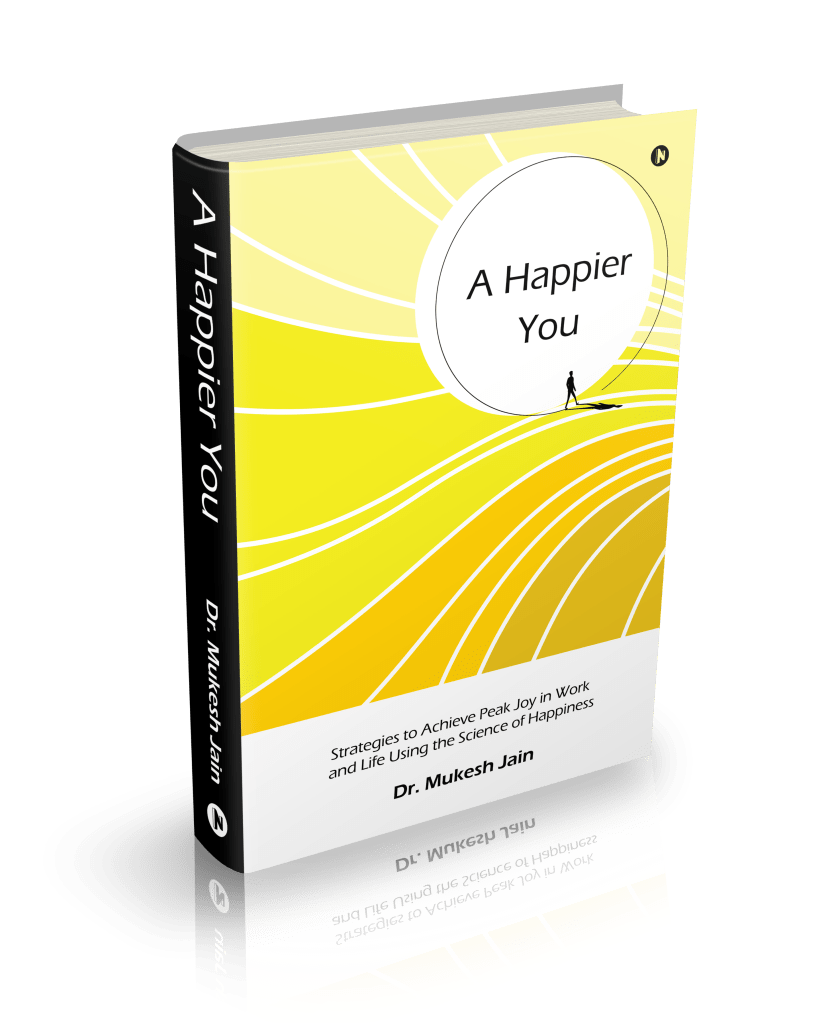
Author of “A Happier You’
 School Of Happiness by Mukesh Jain